In 1956, Fritz ter Meer became chairman of Bayer's supervisory board. Eight years earlier, this former IG Farben executive had been sentenced to seven years in prison for plunder and enslavement. It turned out that a criminal record was perfectly compatible with a supervisory role.
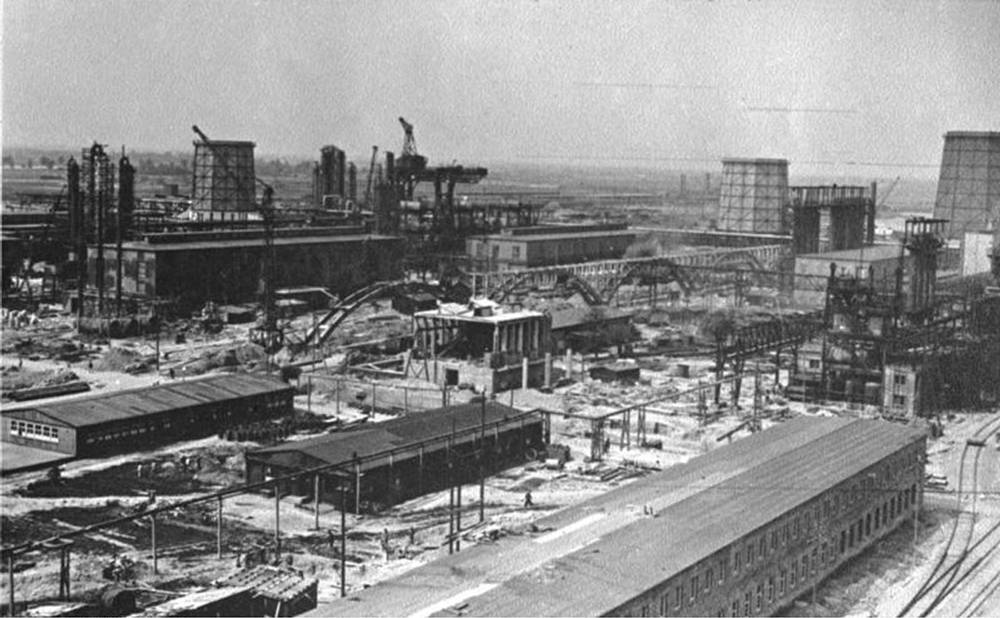
IG Farben was closely intertwined with the Nazi regime. The conglomerate used concentration camp prisoners to build its factory near Auschwitz. The postwar convictions concerned specific, concrete crimes.
Yet, the corporate world offered some of these convicted individuals a seat once again, a seat with a view, and, presumably, a well-organised schedule.
Take Friedrich Jähne, for example, a former IG Farben executive. In 1948, he was sentenced to eighteen months in prison. From 1955 to 1963, he served as chairman of Hoechst's supervisory board.
"Supervision" is a fine word, though it’s worth taking a closer look at who is actually doing the supervising.
Take Otto Ambros, for instance. He was sentenced to eight years in prison during the IG Farben trial. He had held a leadership role at the Buna plant near Auschwitz and had advocated for the use of concentration camp prisoners as forced labour. In 1972, he joined the advisory board of Grünenthal, a fact the company itself confirms.
Evidently, even after such a conviction, there was still a demand for one’s advice. Three men. Three convictions. And yet, they went on to careers in the corporate world.
The conglomerate was dismantled, but these executives still pursued further careers. It seems a new organisational chart made a stronger impression than an old court verdict.
Meanwhile, they set about burnishing their own reputations.
Bayer describes how, in 1947, Ter Meer drafted a memorandum that portrayed the leadership of IG Farben as peace-loving, patriotic entrepreneurs and scientists, framing them as victims of the Nazi regime. The suffering of the forced labourers was left entirely out of the picture.
The first thing to be polished up was their own reputation.
Anyone asking why I take a critical view of large corporations in light of this history should look again at these appointments. In these cases, executives who had been convicted were actually granted authority once again.
These facts do not make current employees guilty. They do, however, give today’s executives some homework: explain who provides oversight, what interests are at play, and who bears responsibility when things go wrong.
A lesson in context for the Dutch minister of Justice David van Weel: This would also be a useful read for Brussels, especially as the industry calls for trust and faster procedures.
It is easy enough to print an anniversary brochure. A history of accountability, however, requires a lot more paper.
After their convictions, the executives were welcomed back. For them, the phrase "never again" left a surprising amount of room for "see you on Monday."