As the war in the Middle East further intensifies, Iran appears to be recalibrating its strategy around the region’s most critical commodity: energy. By targeting Gulf oil and gas infrastructure, Tehran is attempting to raise the economic cost of the conflict globally, turning oil markets, shipping routes, and energy security into central battlegrounds in what it views as an existential fight for survival.
By Marita Kassis
The war currently unfolding across the Middle East has a strategic logic that is becoming increasingly clear. Operational goals may shift from one strike to the next, but the broader strategic conversation is far more coherent. Beneath the fluctuating daily exchanges of missiles and retaliatory strikes lies a deeper contest centred on energy.
For Iran, this conflict is existential. It is not simply about military confrontation or regional hegemony, nor is it only about preserving strategic deterrence. It is about survival within a geopolitical order increasingly shaped by oil, gas, shipping lanes, and control over them.
Recent developments point to a shift in the tactical dynamics of the conflict. According to multiple security and market reports, the number of missiles launched appears to have somewhat decreased, yet the impact of those strikes has grown significantly. Tehran seems to be recalibrating away from volume and toward effectiveness. The goal is no longer to demonstrate military capability, but to impose cost.
A widely circulated analysis captured the logic well: it is not about how many missiles Iran launches, but about how impactful each strike becomes. That observation reflects the strategic logic guiding Tehran’s approach: it is about strategic pressure.
Energy, oil, and gas sit at the centre of that pressure.
The Gulf remains one of the most consequential energy hubs in the global economy. Saudi Arabia alone produces roughly 10–10.5 million barrels per day, while Iraq produces around 4.3 million barrels per day, making both critical suppliers to global markets. Qatar’s LNG sector remains equally pivotal, supplying roughly 20% of global liquefied natural gas exports.
At the same time, the Strait of Hormuz carries about one-fifth of global oil and LNG flows — nearly 20 million barrels per day, making it the most critical maritime energy chokepoint in the world, according to the Guardian.
That is precisely why energy infrastructure has become central to this war’s logic.
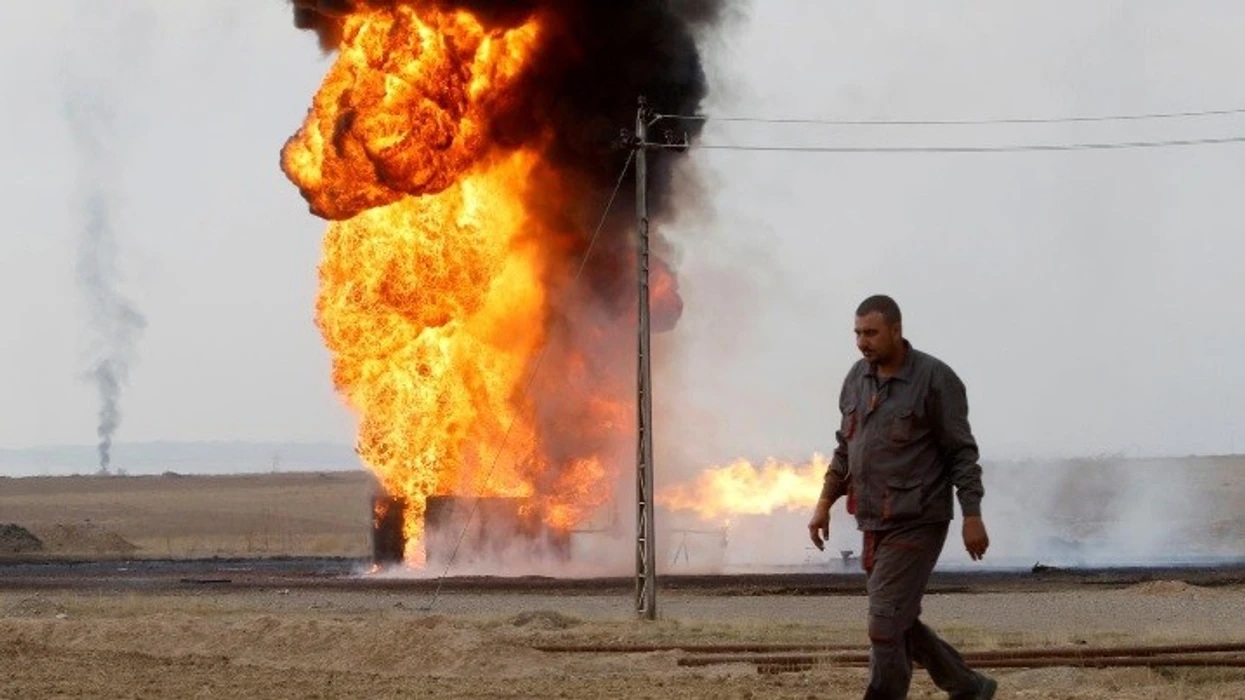
Recent strikes and disruptions have already targeted or affected some of the region’s most strategic facilities. Saudi Arabia’s Ras Tanura refinery, capable of processing about 550,000 barrels per day, was forced to suspend operations following drone attacks. Bahrain’s Sitra refinery, with a capacity of roughly 380,000 barrels per day, also declared force majeure after strikes.
Meanwhile, Qatar temporarily halted LNG operations amid security threats, while Israel targeted Iranian fuel depots and infrastructure linked to exports from Kharg Island, Iran’s main oil export terminal.
Recent strikes and disruptions have already targeted or affected some of the region’s most strategic facilities. Saudi Arabia’s Ras Tanura refinery, the kingdom’s largest domestic refinery, capable of processing about 550,000 barrels per day, was forced to halt operations after a drone strike, according to Reuters reports citing sources familiar with the incident.
Bahrain’s Sitra refinery, which processes roughly 380,000 barrels per day, also declared force majeure after an attack on the refinery complex, disrupting operations at the Bapco-operated facility.
According to further reporting by Reuters, Qatar halted production at its massive Ras Laffan LNG facility. It is preparing to declare force majeure on LNG shipments following strikes on regional energy infrastructure, raising immediate concerns across global gas markets, given that the country supplies around 20% of the world’s liquefied natural gas.
These disruptions illustrate the reality on the ground, moving the conflict from military confrontation to economic warfare, placing the Gulf’s energy infrastructure and, by extension, global energy security directly in the line of fire.
The market response has been immediate and volatile. Oil prices surged dramatically as the conflict escalated. Brent crude briefly spiked to nearly $119 per barrel, and WTI approached $119 as well, their highest levels since 2022, before retreating amid expectations of diplomatic intervention and potential strategic reserve releases, according to various online sources.
Prices have since eased but remain elevated. According to Gulf News, as of March 11, Brent is trading around $85–$88 per barrel, while WTI is hovering between $83–$86, reflecting continued market anxiety tied to the war and disruptions in the Strait of Hormuz.
The spill over into global markets is already visible. Oil and gas prices have surged, energy stocks have rallied, airlines and transport companies have taken heavy losses, and Middle Eastern equity markets have come under pressure. Insurers have begun reconsidering “war-risk coverage” for vessels operating in Gulf waters, while refiners across Asia are scrambling to secure alternative crude supplies as tanker traffic through the region slows.
This is no longer a regional energy shock; it is quickly transforming into a global market event.
The logic behind Iran’s scheme is clear, and it pushes the war’s strategic narrative directly into the political arena.
The first scenario revolves around regime change. For Washington and its allies, the ultimate objective would be a leadership in Tehran more aligned with the international system and less confrontational toward the West, particularly the United States.
In such a scenario, sustained military and economic pressure could gradually weaken the regime’s internal structure until a political transition becomes possible. But that path would take time, further destabilise the region, and risk drawing the United States into the kind of prolonged war it has repeatedly said it wants to avoid.
Iran, however, appears to be betting its existence on a second scenario.
The duration and trajectory of the war may depend heavily on Tehran’s ability to impose real economic pain on the Gulf’s energy infrastructure. Oil fields, gas installations, export terminals, refineries, and maritime shipping routes represent the region’s most valuable assets. By threatening these systems, Iran can dramatically raise the cost of war, not only for its immediate adversaries but for the global economy at large.
If Gulf energy infrastructure remains vulnerable, the consequences will ripple rapidly through global markets. Prices will remain elevated, shipping will become more expensive and more limited, and energy security concerns will deepen across Europe, Asia, and beyond. Analysts warn that a prolonged disruption could push oil back above $100 per barrel and add up to 0.6–0.7 percentage points to global inflation.
Analysts now warn that continued disruption to energy flows through the Gulf could push Brent prices back above $95–$100 per barrel in the coming months and significantly increase global inflationary pressure.
At the same time, Iran’s regional network, from Lebanon to Iraq and Yemen, remains tied to the trajectory of this war. These proxy structures gain relevance as the conflict intensifies, even as they become more exposed to direct Israeli targeting.
Lebanon is already paying a severe humanitarian price: over 800,000 people have been displaced in just days of fighting, including roughly 200,000 children, according to UN agencies. As of mid March, over 850 people were killed, according to Lebanese authorities, including at least 111 children and 67 women,
This is not simply a regional escalation without end. For Iran, it is an existential war. And in that war, energy remains the one weapon capable of inflicting damage not only on its enemies but also on the Gulf, global markets, and the wider international system.