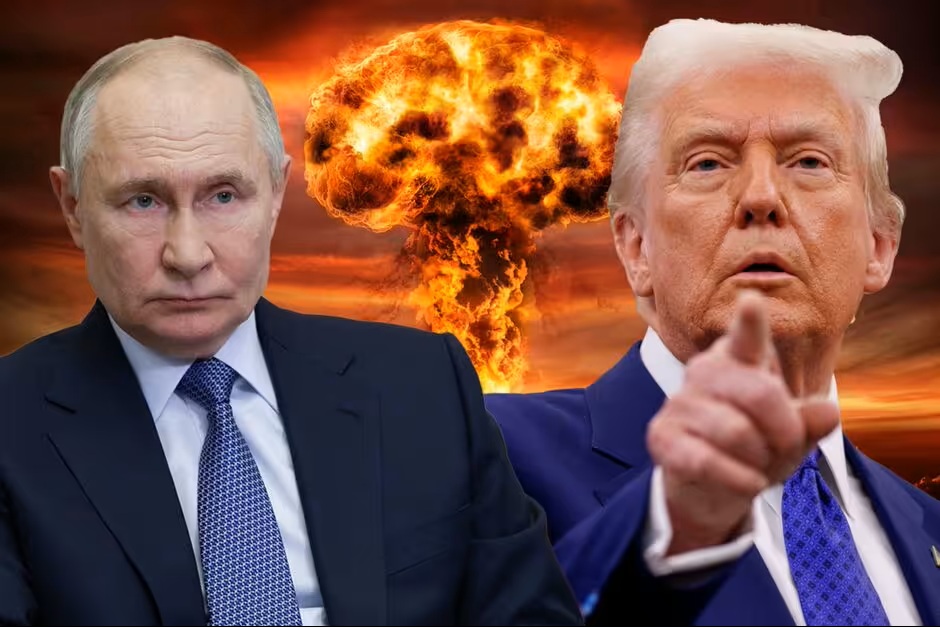
Europe underestimates its vulnerability, three Dutch professors recently argued in an article in a prominent Dutch newspaper. The countries of the European Union (EU) and the United Kingdom are trapped in a ‘two-front conflict’. Besides the threat from Russia, the US under Donald Trump is now said to be another danger. An opinion increasingly disseminated by the Dutch left and in neighbouring countries. A gross disregard of reality, here is why.
By Anton van Schijndel
The most obvious point is that Russia and the US are not aligned culturally, economically, or militarily; the ties with our American friends are too strong and far-reaching for that.
What about Russia?
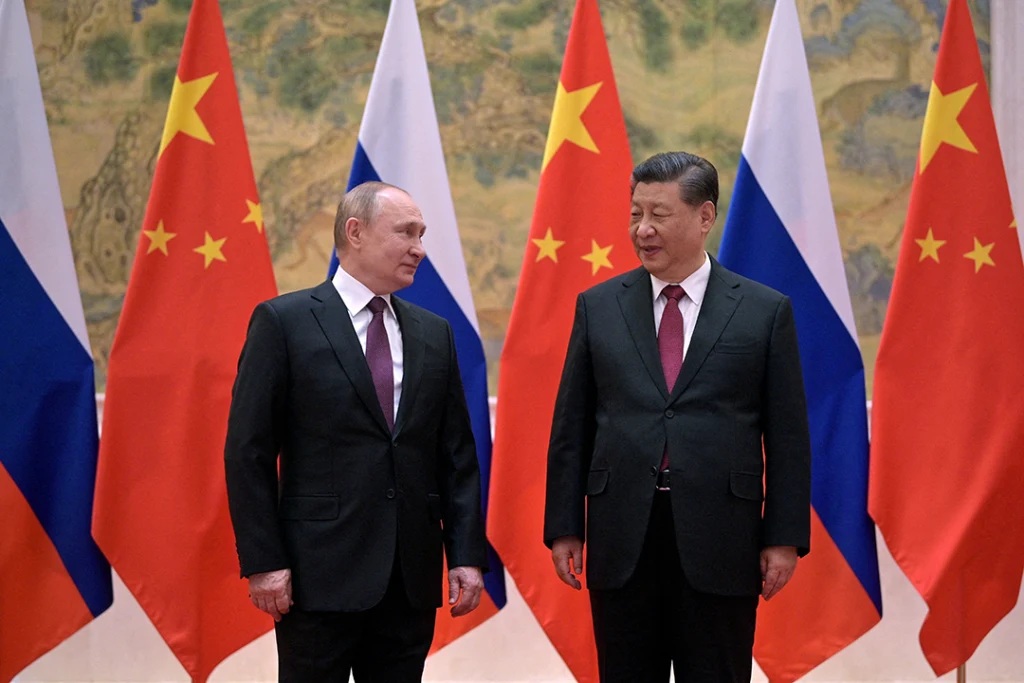
The hard lesson is that NATO's advance to the gates of Moscow—via the membership promised to Ukraine in 2008 at the NATO summit—has proven to be a bad idea. Defying the Russian bear, contrary to all basic principles of geopolitics, has backfired spectacularly.
The whole idea that every country may choose for itself which alliance it wishes to join turned out to be nothing more than that: an idea of armchair academics—there are many of them in the Netherlands.
As if that were not enough, that same political left-wing clique (and their supporters in the media) warn against critical voices from new political movements on the right. They devote grand words to the democratic rule of law, but without examining its basic elements.
They conclude that freedom of speech, which naturally also includes the freedom to receive political opinions, must be curbed. Quite strange. In the wording of the professors: ‘Too serious to soothe the threat of therapeutic understanding for populism. We must dare to name who our friends and who our enemies are.’
Democracy stands or falls on the expression of all possible opinions, and indeed that includes those broadcast by Russia Today. Russia had and has a point that pushing for the ‘eventual’ admission of its western neighbour, Ukraine, is inconceivable from a balance of power perspective.
The Dutch jurist and former Minister of Justice, Ernst Hirsch Ballin, a member of the Christian Democrats, was right years ago: democracy and the rule of law cannot be separated. The rule of law sets strict limits on democratic majority decision-making.
In a constitutional state—in which free elections and fundamental rights are enshrined—democracy can thus never abolish itself. While Geert Wilders, leader of the Dutch Freedom Party, calls for the destruction of the democratic legal order with proposals for a ban on the Quran and the closure of mosques, the professors go no further than pointing fingers at my party, Forum for Democracy (FvD). A moderate right-wing party founded eight years ago that has been demonised by the establishment from day one.
The party grew spectacularly in local elections last week. It advocates for the restoration of a sovereign Netherlands independent of Brussels directives, binding referendums, and elected mayors. That sounds more like a political model like Switzerland than right-wing populism.
In the article, the professors wrote: ‘It is suspected that Russia supports the electoral campaigns of far-right parties, including that of Forum for Democracy. This gives the Russian threat a distinctly internal aspect.’
I would then laconically repeat: "suspect." There is not a shred of evidence. If there is, then present it. Their failure to call a spade a spade indicates a lack of scientific integrity. Such allegations coming from academics are reprehensible.
As a matter of fact, FvD is an outlier in that it conducts proper opposition to the articles of faith of the ruling political class, such as the migration flow (‘required by the European Convention on Human Rights’), the climate agenda (‘required by the Dutch Supreme Court’), as well as the resulting industrial decline.
Perhaps the broader pattern that remains out of sight in the three professors' argument is their lack of a genuine understanding of the rule of law.
Let me explain, insofar as necessary. The enemy from within is, of course, not the Netherlands' largest party by number of members, but rather the view, widespread within the political class and the senior civil service, that FvD’s political agenda goes far beyond the bounds of acceptable debate. Think of withdrawal from the straitjacket of the European Union, and ‘eventually’ from NATO as well.
Democracy is best realised from the bottom up. Our policy establishment and broad segments of the population are growing ever more apart. Next year, there will be national elections in France, Germany and the Netherlands. A resounding ‘No’ to the political class seems near.
And we will take it from there.
Anton van Schijndel is a Dutch politician and jurist who currently serves as the FvD faction leader in the Amsterdam municipal council. Born in Amsterdam in 1960, he previously served in the House of Representatives for the VVD (2005–2006) before joining FvD. Beyond politics, he is an experienced corporate lawyer. This is his first contribution to The Liberum.
[…] Trump made an exception for Iran; we will have to wait and see how that plays out. Crucially, the EU is too diverse to act on foreign and military matters at a moment's notice. So there is little choice but to appease our American friends to maintain their significant military presence in Europe. And for Trump, the president-dealmaker, this principle applies: quid pro quo.Anton van Schijndel is a Dutch politician and jurist who currently serves as the FvD faction leader in the Amsterdam municipal council. Born in Amsterdam in 1960, he previously served in the House of Representatives for the VVD (2005–2006) before joining FvD. Beyond politics, he is an experienced corporate lawyer. His previous contribution can be read here. […]