In the West, India is sometimes viewed through a collection of familiar stereotypes, from online scams to images of pollution, litter, and cows roaming the streets. The reality, however, is far more diverse and nuanced – especially in the southern state of Kerala.
By Nikola Mikovic
Although the world’s most populous country is gaining popularity as a tourist destination, foreign visitors remain relatively few, 9.15 million in 2025, far below the 35.17 million recorded in neighbouring China. On my flight to Kochi, Kerala’s business capital, I was among just a handful of foreign passengers.
At the train station, I met another foreign traveller – a hippie-style plumber from Scotland who had come to Kerala to spend six months “finding himself.” I deliberately chose one of the lowest-class carriages to experience everyday India.
For just $1, I travelled around 220 kilometres in a wonderfully colourful atmosphere: people constantly getting on and off, the train doors left open the entire time, and overhead fans keeping everyone cool.
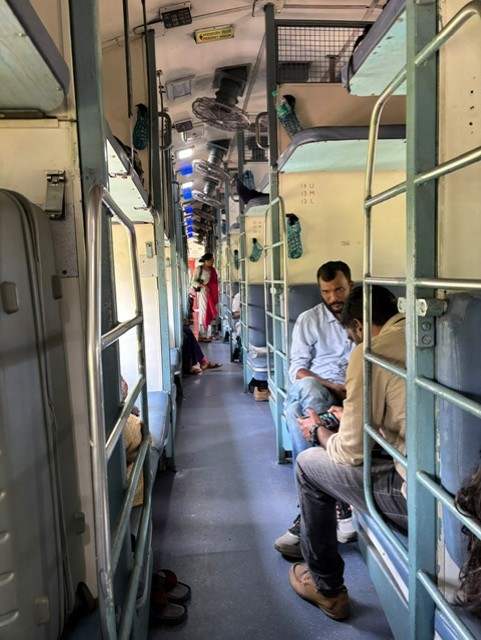
While riding in a lower-class carriage, very similar to the old Soviet “platskart,” where passengers sit, lie down, eat, and chat, the Scotsman and I discussed the meaning of life and the purpose of our visits to India. He was visiting Kerala for spiritual reasons, while I was there to cover the Kerala Travel Mart – India’s largest tourism trade event. Or at least, that’s what I thought I had come for.
“I first came here in February. I spent four months in Kollam. Now I’m going to stay for at least six months – maybe seven. India has changed me a lot,” he told me.
“Will it change me, too?” I asked.
“That’s for you to find out.”
As he left the train in Kollam, I continued to Thiruvananthapuram, Kerala’s capital (very difficult to pronounce, which is why foreigners still often call it by its old name, Trivandrum). On the way, I noticed well-maintained houses with brightly coloured facades, surrounded by large fences.
Because many families in Kerala have relatives working in the wealthy Gulf states, they receive remittances that they often invest in their homes. The state authorities and local businesses, for their part, seem focused on investing in Kerala’s tourism potential.
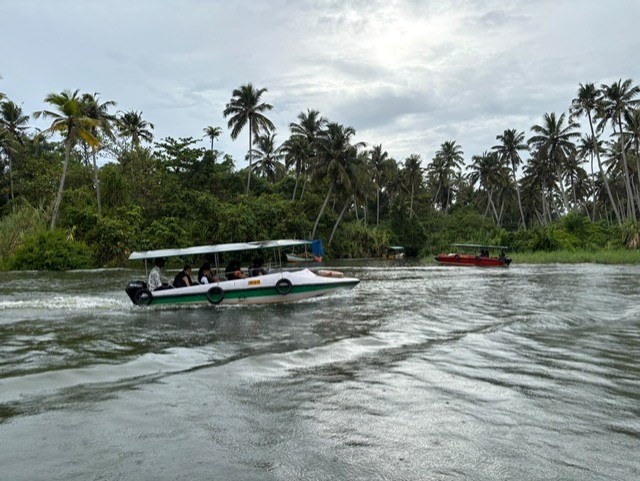
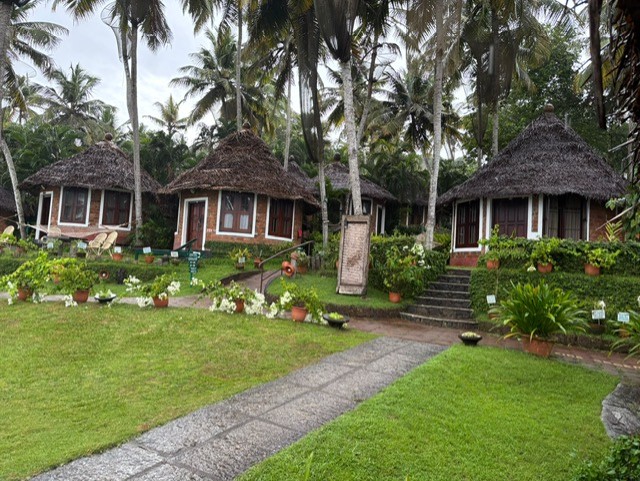
Hotels and resorts are everywhere. Some are only accessible by boat, tucked away among Kerala’s peaceful backwaters and lush greenery. Others are set along long, crystal-clear beaches on the outskirts of cities that are relatively small by Indian standards, with populations of 300,000 to 500,000.
Many guests come to South India not only to swim in the Arabian Sea but also to experience Ayurveda, an ancient Indian system of traditional medicine and wellness. Some come for the Indian food, which is fantastic – if you like it spicy. But for the average European, it is…just too spicy. At least it is cheap by European standards, as is almost everything else in Kerala.
Besides walking the busy streets of South Indian towns and cities, I took an auto-rickshaw on several occasions, paying an average of $0.50 for relatively long rides. Unlike in the Middle East and North Africa, nobody in India pestered me to get into their vehicle or enter their shop and buy things I didn’t need. Indians are indeed very welcoming and easygoing, never pushy or intrusive. At least, those in Kerala.
It's hard to say how things are in the rest of the country, as every state in India is a world of its own, with its own languages, cultures, and traditions. No two states are quite the same.
“What you have seen so far is maybe 0.5% of India,” a local travel blogger told me as we walked the perfectly safe streets of Kollam late at night.
It was an indirect invitation to come back and experience other parts of Bharat (India’s official constitutional name). Maybe I will. After all, nowhere else in the world have I seen locals use beaches not for swimming, but to perform rituals and say farewell to their dead.
One day, I witnessed a Hindu funeral ceremony on the Kerala coast. From a nearby temple, people carried what seemed to be the ashes and bone fragments of a deceased man on a banana leaf and immersed them in the sea.
The next day, I saw Indian Christians attending Mass at the local Catholic church, and their worship was not entirely different from that of their Hindu compatriots: they were barefoot and knelt on both knees while praying. Their ancestors may have converted to Christianity centuries ago, but culturally, they still seem to belong to the Hindu tradition.
Festivals are undoubtedly part of that tradition. Whether they are Hindu, Christian, or Muslim, Indians often celebrate festivals with music playing through loudspeakers in the streets all day and late into the night. For European ears accustomed to quieter surroundings, all of this can sometimes feel like an overwhelming amount of noise, much like the frequent honking of car horns, something India is famous for.
But that’s India, loud, vibrant, and full of life, yet incredibly friendly and hospitable.
In Europe, the world’s most populous country is often viewed through a narrow lens. The best way to understand India beyond familiar stereotypes is to visit. Kerala could be a good place to start.