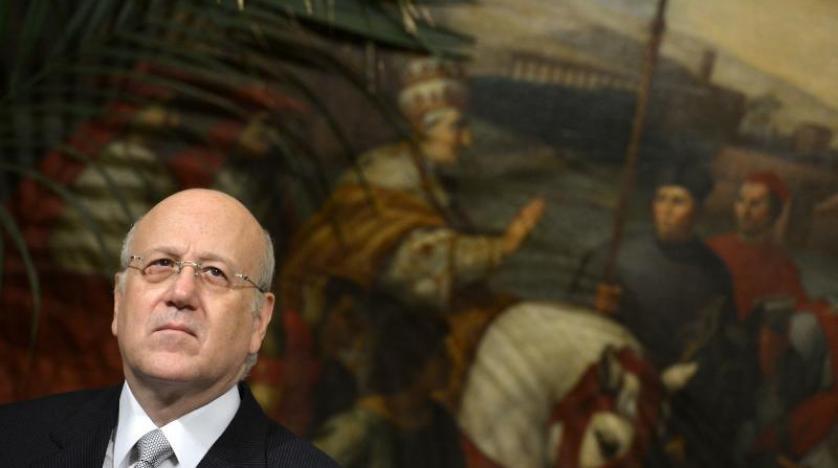
Lebanese Prime Minister Najib Mikati announced on Friday that he will soon call a cabinet session, saying that the situation in the country is “very difficult and the people should not have to deal with more crises.”
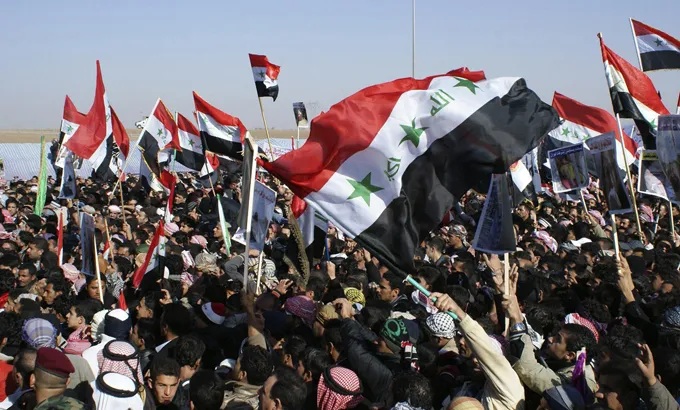
His remarks came after protesters stormed the Ministry of Health building in Beirut on Friday morning in opposition to the lifting of subsidies on medicines, which has caused prices of vital health care treatments to skyrocket.
Arab News learned from a source close to Mikati that Information Minister George Kordahi will submit his resignation from the government during the soon-to-be-held cabinet session. Kordahi’s recent statements regarding Saudi Arabia prompted the Kingdom and other Gulf states to cut diplomatic and economic ties with Lebanon.
The Iran-backed Lebanese political group Hezbollah has insisted that Kordahi should not resign to defuse the diplomatic crisis, citing “national sovereignty.”
President Michel Aoun recently told a Lebanese military delegation that “Lebanon always seeks better relations with the Arab countries, especially the Gulf.”
He added: “We hope that what led to a problem with these countries will be quickly resolved. It is important that the interests of the Lebanese people not be harmed and that they do not pay for what is happening.”
In an interview with the Arabic-language daily Al-Akhbar, published on Friday, Aoun said he was not enthusiastic about the information minister being dismissed during the cabinet session, and would prefer that the decision be made personally by Kordahi.
Mikati visited Aoun on Friday morning and informed him of his intention to hold a cabinet session. He then headed to the General Labor Union headquarters, where he announced: “There are over 100 items on the cabinet’s agenda, (so we need to hold) a session soon to manage the state’s affairs and expedite the public budget and refer it to parliament for approval, in parallel with approving the required reforms (to reach an) agreement with the International Monetary Fund.”
Cabinet sessions were suspended less than a month after Mikati formed his government in September, as Hezbollah and the Amal Movement called for the removal of Tarek Bitar, the judge leading the probe into the August 2020 Beirut Port blast, accusing Bitar of “politicizing” the investigation.
Following the deadly clashes between supporters of Hezbollah and the Amal Movement protesting Bitar’s handling of the investigation on one side and the Lebanese Armed Forces and unidentified gunmen on the other in Tayouneh on October 14 this year, Hezbollah and the Amal Movement refused to attend cabinet sessions, with Hezbollah claiming the LAF was responsible for the clashes and calling for the arrest of LAF affiliates involved in the incident.
The successive crises have worsened Lebanon’s already disastrous economic collapse. The Lebanese pound has continued to lose value; it is currently being traded at 23,000 Lebanese pounds to the dollar.
“Lebanon has no choice but to resort to the IMF, and negotiations may last until 2022,” Mikati said. “But through the IMF, our country is giving a certain signal to the world that Lebanon can recover and must be supported.
“The world does not want Lebanon to fall and is ready to help us,” he continued. “And when I say the world, I also mean the Arab countries. But we need to do the required work first. We have hit an unprecedented inflation rate due to the years and years of subsidies, which we can no longer provide since the public treasury is unable to bear it.”
He announced that steps would be taken “at the beginning of December to secure aid for 250,000 families from the World Bank, amounting to $245 million.” Mikati said the payment process would begin at the end of 2021 or the beginning of 2022.
“There is assistance intended for 40,000 families residing in villages 700 meters above sea level, worth $165 per family,” he added. “We will also cooperate with the UN Food Program, which will allocate $600 million to the Lebanese, starting at the beginning of next year.”
Mikati also referenced the smuggling and illegal storage of subsidized medicines for chronic and cancerous diseases and noted that an investigation into the lack of subsidized baby formula in the market showed that it was “used for nutritional purposes in dairy factories.”
Mikati stressed that the government had no intention of selling any of the state’s assets at the moment. “It’s not the right time,” he said. “Our current priority is to reform all sectors and improve the electricity supply.”
Ali Darwish, an MP in Mikati’s parliamentary bloc, said Mikati had “intensified his political consultations in search of a way out of the political crisis.”
Darwish told Arab News: “Everyone was convinced of the need to hold cabinet sessions. Everyone agreed on the need to defuse crises, and that judicial issues should only be resolved within the judiciary itself. When paralysis affects the public sector and the health sector, no party, including Hezbollah, has any interest in obstructing solutions, because everyone will be affected.”
Source: Arab News