In the 17th century, the Mauritanian poet Deyloul expressed a profoundly insightful image:
“My Mauritania is the black of the eye and the white of the eye; united together, I can see.” This metaphor transcends its original context. It illuminates the whole of Africa. The Arab Maghreb and sub-Saharan Africa are the black and white of the African eye. Separated, the vision is incomplete. United, the continent sees clearly and moves forward.
By Abdarahmane Wone
This was precisely the intention of our predecessors, the founders of the Council for the Development of Social Science Research in Africa (CODESRIA), an institution where I was responsible for managing communications and with which I worked closely.
They envisioned Africa as an intellectual, cultural, and political space without artificial barriers, where Dakar, Johannesburg, and Accra naturally engage in dialogue with Rabat, Cairo, or Tunis. Their Pan-Africanism was neither a slogan nor a pose, but a demand for coherence, historical depth, and intellectual rigour.
This African unity is not merely political or academic; it is also spiritual. Many West African Muslims, particularly within the Tijaniyya Sufi order, say they only feel truly at peace once they are in Fez, near the mausoleum of Sheikh Ahmed Tijani.
This living spiritual link between Senegal, Mauritania, Niger, Nigeria, and Morocco serves as a reminder that the North and South of the Sahara are not separate entities, but rather components of a shared human and cultural history.
Within this context, a football final between Morocco and Senegal should not become a pretext for discord. Sport is about emotion, passion, and legitimate pride. But it must never overshadow what is essential: the fraternity between peoples bound by history, spirituality, exchange, and everyday struggles.
After the final whistle, everything must return to normal. Not through forgetting the competition, but out of loyalty to who we are. Winning or losing does not diminish the dignity of a people. What matters is our collective ability to reject the rhetoric of rejection, often inherited from imported divisions, foreign to the African soul.
Morocco and Senegal each embody a proud, open, and creative Africa. Their sporting confrontation must remain a celebration of African excellence, not a symbolic rift between the North and South of the continent.
Returning to Deyloul, like returning to the intellectual legacy of CODESRIA and the profound spiritual ties that bind Fez to West Africa, is to recall a simple truth: without the other, I cannot see.
Without the Maghreb, sub-Saharan Africa loses a part of its vision. Without sub-Saharan Africa, the Maghreb sees with one eye closed.
For Africa to continue to see, after the final, as after any ordeal, the black and white of the eye must remain united.
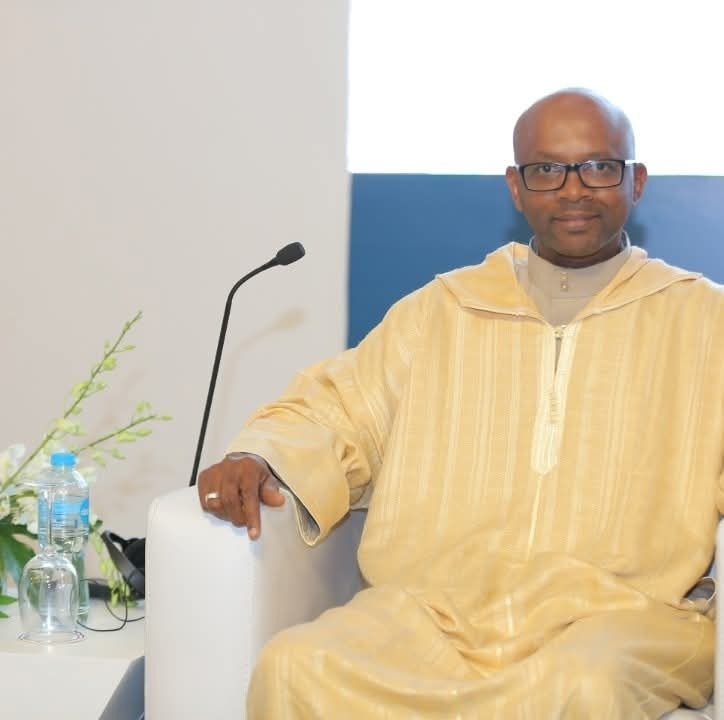
Abdarahmane Wone is a panafricanist, a Human rights activist and a Communications Specialist. He is currently heading the Communications Unit of TrustAfrica. This is his first contribution to The Liberum.