Given the avowed pacifism of the supposedly liberal modern world order, reconciliations have been conspicuously rare in recent history. While after 1945 the share of war-related deaths has been much lower than during most periods of the written history of humankind, those conflicts that happened tended to be incredibly hard to stop or resolve.
The crystallisation and instrumentalisation of national identities, the proliferation of mass education that makes it harder to let go of embedded enmities, and the level of technological development that enabled sophisticated partisan wars have all made resolving conflicts an equation with too many unknowns.
In some sense, democracy with free and universal elections is not very supportive of top-down resolution processes for ethnopolitical conflicts, since it turns them into benchmarks of popular legitimacy and encourages conflict-based electoral mobilisation by political parties.
In this regard, the process unfolding between Armenia and Azerbaijan since 2023 is nothing short of extraordinary. The two countries became involved in a bitter, zero-sum conflict as soon as they reestablished their independence in 1991, the first phase ending with the ceasefire of 1994, whereby Armenian-backed separatist forces gained control over almost 20% of Azerbaijani territory.
The next 26 years saw numerous rounds of negotiations mediated by a range of international actors, from regional states to great powers and international organisations. None of them succeeded, while the space of consensus had been shrinking until it reached the point of no return.
In 2020, a new war broke out, with Azerbaijan eventually liberating most of its occupied territories. Russia dispatched its “peacekeeping mission” to the former Nagorno-Karabakh region, freezing the status quo for a while. Still, in 2023, Baku fully reintegrated itself after a lightning-fast 24-hour military operation.
Although the decades of hostility left Armenians and Azerbaijanis uncompromisingly opposed to each other on almost everything, they came to share one belief: a profound scepticism regarding external attempts to resolve the conflict in a fair, inclusive and efficient manner.
While Europe-led negotiation formats lacked consistency and failed to push back against various spoilers, Moscow’s goals were clearly to prolong the conflict to preserve its traditional leverage over Baku and Yerevan. This is why, despite overwhelming bitterness and mistrust, Azerbaijan and Armenia finally decided to switch to a bilateral negotiation format in 2024.
And voila- this approach worked. The countries finally agreed on the text of the Peace Agreement in March 2025, and the relationship between the leaders, Aliyev and Pashinyan, started to take shape. In July 2025, they held a breakthrough meeting in Abu Dhabi, which paved the way to the historic event in the White House, where the peace treaty was initialled in the presence of President Trump.
The much-publicised handshake among the three leaders symbolised hope for a peaceful and prosperous South Caucasus and was soon followed by several important steps.
The plan for the construction and exploitation of the would-be TRIPP, the route to pass through Armenia and Azerbaijan, was announced; for the first time, some Armenian and Azerbaijani officials travelled to each other’s countries; Baku initiated transit through its territory, and then direct export of certain goods to Armenia.
Finally, in October, an initiative aimed at bringing together the best representatives of the countries’ civil societies was launched under the title of “Bridge of Peace”, and the groups of five paid visits to Yerevan and Baku, respectively.
In the continuation of this opening, a much larger Azerbaijani delegation of 20 people, including the author of this article, recently visited Armenia, this time crossing a land border at its first-ever delimited and demarcated section.
For 1.5 days, representatives of the two countries’ media, think tanks, humanitarian and grassroots organisations spoke about their visions for peace and the prospects for regional integration and economic cooperation.
However, while governments are quite successfully pushing forward all the tracks above, it is people-to-people contacts that hold the key to unlocking the foundations for comprehensive normalisation. And it must be recognised that, given all the bitter background, the willingness of Azerbaijanis and Armenians to talk to each other respectfully and constructively is spectacular.
There is a genuine feeling on both sides that no sense is left in the perpetuation of the hatreds and of the impending risks of a new round of violence. The symbolism of the Washington meeting and the prospects promised by the TRIPP road and nascent trade links have raised the floodgates for a future-oriented, optimistic worldview.
With a long history of failed diplomatic efforts behind them, the two nations don’t want to entrust their fate to big powers, nor do they nurture utopian visions of the future. While recognising their different interpretations of history and natural resentments, the members of the “Bridge of Peace” believe they have a unique chance to build a new framework for interacting with each other, based on moderation and focused not on the scores of the past but on shared benefits and chances that can open up for the whole region once Baku and Yerevan firmly leave their feuds behind.
The recent start of fuel export to Armenia has boosted public attention to the ideas of restoring natural gas supply from Azerbaijan, establishing joint alternative energy clusters, or transporting Armenia’s mineral resources via the Azerbaijani rail network.
History is full of ironies: two old enemies decided to put their swords aside precisely at the moment when the world is living through the greatest geopolitical crisis since 1945. But the truth is that the excruciating toll of the war in Ukraine and the worrying concentration of instability in the Middle East have put Azerbaijan and Armenia in an existential dilemma, in which continuing the conflict carries the huge risk of turning the South Caucasus into a spillover of those great-power confrontations.
The peace process has already begun to ease the region's geopolitical tensions. Whereas Baku has moved to normalise relations with France and expand cooperation with the EU, Yerevan has established diplomatic relations with Pakistan, a country that until 2025 had not even recognised Armenian sovereignty. There is direct evidence that these developments have been enabled by the reciprocal actions of the two leaders.
Building good neighbourly relations will require not only political will but also years of exhausting work to establish institutional mechanisms and a legal basis for cooperation. But as the famous Chinese proverb says, a road of 1,000 li starts with just one step.
Against all odds, the two leaders, Aliyev and Pashinyan, now promote the vision of reconciliation for the sake of common prosperity, and this vision can be an antidote against the creeping chaotisation of Eurasia.
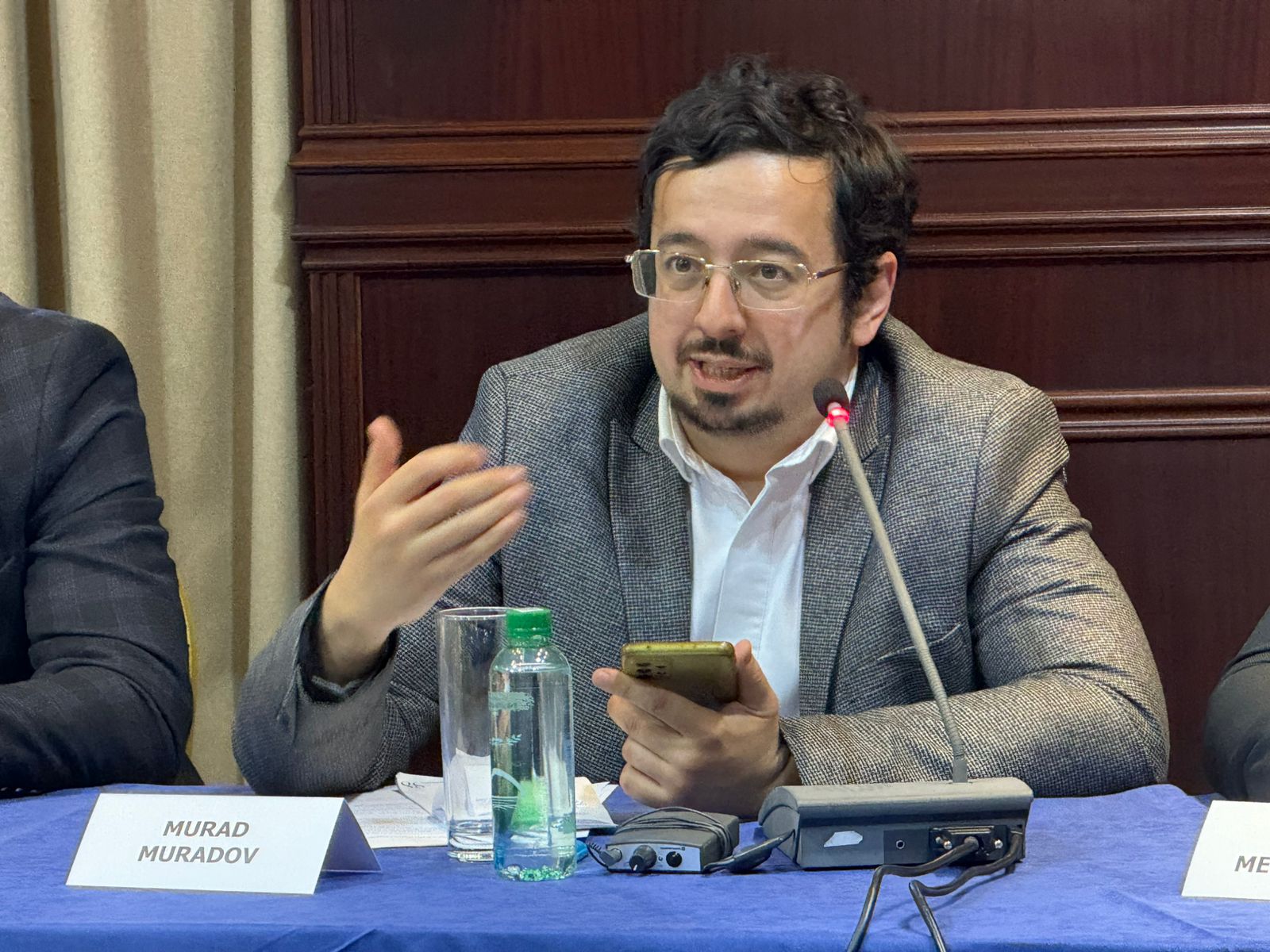
Murad Muradov is the cofounder and deputy director at the Topchubashov Centre. One of Baku’s most prominent independent think tanks. This is his first contribution for The Liberum.