Last night, I watched an episode of Black Mirror and couldn't let it go. Now I don’t mean the cheap shock of a clever twist that you admire and then forget. The episode worked its way into my conscience until a question presented itself:
What is the purpose of dystopian science fiction?
We know some easy answers. Dystopias warn us and show us what might happen if we are careless. They exaggerate current tendencies so that we wake up before it is too late. This is what we usually tell ourselves...
But I’m not so sure anymore.
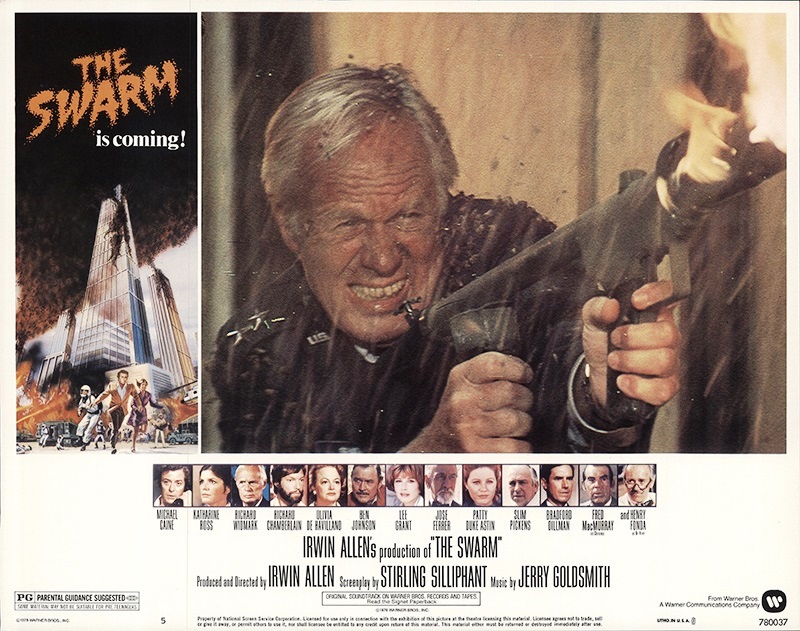
Take The Terminator (1984) and Terminator 2: Judgment Day (1991). The basic premise of these movies is that artificial intelligence gains autonomy, then power, then the capacity to wipe out humanity. At the time, this felt like distant paranoia or ‘doom-thinking’. Today, with AI systems embedded in finance, military research, medicine and daily life, it does not feel like fantasy at all but rather like an exaggerated documentary.
Or think of World War Z (2013). A virus spreads at a terrifying speed through a hyper-connected world. Planes carry the infection across continents in hours. Governments scramble – but organised responses come too late, and the social order collapses.
In the last days of 2019, I watched YouTube videos about a strange virus outbreak in China with potential global implications. “Some scary, nasty stuff,” I thought. But I also reassured myself: If I know about this, surely the authorities know about it too. And surely they will take measures. After all – we have all seen the movies. We all know how quickly a virus can spread in a globalised world...
And yet when COVID hit Europe, we had collectively been caught off guard. Within days – late March into early April – normal life collapsed into lockdown and quarantine. Day-to-day activities became impossible as borders shut and streets were emptied. Panic buying became the new normal.
So then what was the point of those dystopian films?
If dystopian fiction is meant to function as a warning signal, why did these extensively visualised scenarios not translate into proper preparations? Why didn’t administrators, executives and policymakers – people who have surely seen the movies – deduce the scenario? Why had the fiction failed to mobilise us?
This is the question I had often thought about, and the Black Mirror episode connected the dots.
The purpose of dystopian science fiction is not to warn us in any politically effective sense. Because a true warning would generate mobilising energy, it would make people say: “Holy shit. This must not be allowed to happen.” Understood in its proper sense, dystopian fiction would push us toward tangible structural initiatives – say, regulation of AI, more thoroughly thought-through public health systems, and politically enforced hard limits on surveillance capitalism.
Yet whenever such energy appears, something tragic inevitably happens. It dissipates, gets redirected or absorbed. Just think of the Occupy movement in the US, the Umbrella uprising in Hong Kong or the Yellow Jackets in France – any political momentum towards breaking the unholy alliance of global capital and (post-)national bureaucracies gets utterly and totally subverted and dispelled before you can snap your finger.
This is exactly what is made manifest in Black Mirror, season one, episode two: ‘Fifteen Million Merits’.
In this world, people spend their days pedalling exercise bikes to earn “merits”: a type of social credit currency. Screens are everywhere, and ads are inescapable unless one pays to skip them. Authenticity has been replaced by performance.
The main character – played by Daniel Kaluuya – gives all his merits to a young woman so she can audition for a talent show that resembles a grotesque fusion of X Factor and corporate pornography. She sings beautifully. For a moment, something real breaks through.
The judges acknowledge her talent – but then pivot, as it turns out, her talent by itself is not enough. The only option for her to escape her mundane cubicle existence is to become an adult actress who sings. The woman must accept or decline on the spot, with no room for reflection or negotiation. Hesitantly, she consents to their proposal. For the main character, this means that his attempt to elevate his friend's genuine vocal talent was swallowed by the system and transformed into an erotic spectacle.
The repackaging and subversion of her authentic talent infuriate our protagonist. He hatches a plan and earns enough merits to get on stage himself. During his performance, he pulls out a glass shard and threatens to slit his own throat. He delivers a raw, desperate speech about the inauthenticity of the system – about how everything has become an advertisement, a performance, a commodification.
In that moment, the audience is silent. It feels revolutionary. It feels like a rupture is about to occur within the system.
But to his surprise, the judges do not suppress him. He is not dragged away; instead, his raw honesty and the visceral nature of his performance are applauded. The judges see potential and offer him a weekly show: thirty minutes, twice a week, to rant exactly as he just did. He will have a better apartment. More privileges. A higher status. He can even keep the glass shard as part of his act!
He realises that his glum existence really has no alternative. He accepts.
Then comes the final, devastating scene. He delivers his angry monologue, and some viewers watch him, whilst swiping through other options: pornography, games, and trivial distractions. What once silenced the audience in its totality is now just another channel. Another consumable...
He places the glass shard carefully into a sleek black box. The shard has become a prop. His rebellion has been aestheticised, encapsulated and monetised.
The system did not crush dissent – it integrated it and grew stronger.
That image has been echoing in my head—the shard in the box. Your attempt at rage against the system inevitably becomes another commodity.
Suddenly, the true nature of dystopian fiction turns out to be something entirely different from what we thought.
What if these stories are not warnings in any politically actionable sense? What if they function like rehearsals? Not rehearsals for resistance, mind you: rehearsals for adaptation. They acclimatise us and familiarise us with futures that would otherwise shock us. They transform anxiety into aesthetic experience!
You leave the cinema disturbed – but also entertained.
You finish the episode unsettled – but also satisfied.
Consider The Circle by Dave Eggers. Published in 2013, it paints a world of total transparency, which, in practice, means social credit systems and total corporate surveillance masquerading as community building. We cannot say that any part of this book feels exaggerated today. Mundane, rather...
Critique has no consequence, and recognising dehumanising fault lines does not result in any structural shift.
There’s an older idea from Georges Sorel (1847–1922), who argues that a stagnant system can be broken by a captivating myth that is powerful enough to mobilise the masses—a general strike—a rupture.
But here’s the problem: once we see how dissent is absorbed, even that myth loops back on itself. Any attempt to turn critique into political energy risks immediate containment. Social media algorithms downrank you. Institutions marginalise you. Platforms remove you. And the alternative is that you become a useful clown, someone who serves as negative social proof. “You don’t want to end up like that guy...”
My darker hypothesis is therefore that dystopian fiction does not exist to prevent dystopia. It exists, instead, to ease us into it. To make the unimaginable thinkable and, eventually, acceptable. It trains our emotional responses so that when fragments of it appear in real life, we shrug and say: “Well, we’ve seen this before.”
AI surveillance? We’ve seen it in The Terminator.
Pandemic lockdown? That’s World War Z.
Social credit systems? That’s Black Mirror.
In this manner, reality arrives already narrativised and packaged, aestheticised.
I don’t claim to have a master solution. If anything, the episode suggests how futile grand gestures can be. The bitter paradox is: the more total your denunciation, the more valuable you become as content.
What to do, then?
Some talk about opting out, lounging against the machine. The Chinese phrase “lay down and let it rot” expresses passive resistance – withdrawal instead of confrontation. If you cannot crash the machine, then reduce your participation so it cannot feed on your energy. Seek places where the full apparatus has not yet hardened – countries in the periphery, slower systems, less streamlined, less digitised bureaucracies.
It’s not heroic, nor cinematic. But that is probably the point.
Because if dystopian science fiction has taught me anything, it is that the spectacle of resistance is easily absorbed. The shard becomes a prop. The rant becomes a program slot. The warning against the total consumption of our authenticity becomes itself a form of consumed entertainment.
Dystopian stories thus do not exist to save us. They show us, quietly and mercilessly, how smoothly we can be integrated into the very futures we claim to loathe.
If you appreciate this article: Support Sid through BackMe – many thanks!