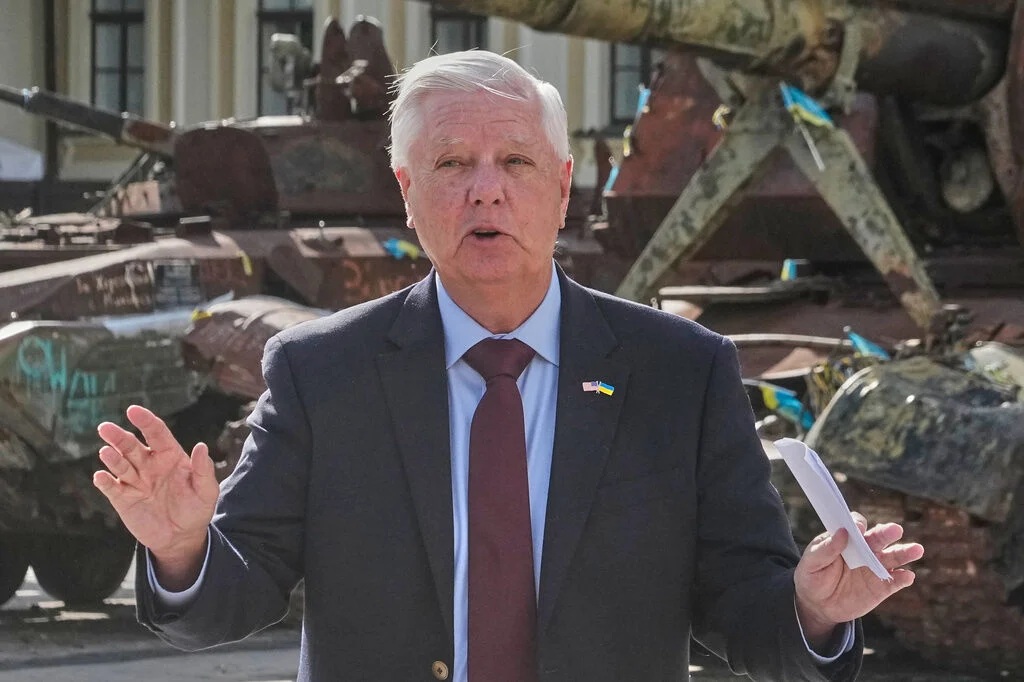
Lindsey Graham is dead. 71 years old. A brief, sudden illness, his office reports. Shortly before that, he had been in Kyiv. One might almost think world history has a sense of dark humour.
Graham belonged to that American breed of person who could spot war anywhere in the world—except when looking in the mirror. Then, he saw a statesman.
He was a senator and a professional hawk. At the mere mention of peace, he immediately suspected that someone in Moscow stood to gain from it.
Negotiating was dangerous. Escalation was a matter of responsibility. Sending weapons was a sign of leadership. And if things got even worse afterwards, that proved that too few weapons had been sent.
That’s how simple geopolitics can be when you don’t live there yourself.
Graham travelled the world the way others visit castles. Kyiv here, Israel there, some dictator somewhere who urgently needed dealing with. Always the same message: hang in there, we’ve got your back.
Safely behind you. Preferably with an ocean in between.
That’s the beauty of war tourism. You fly to a conflict zone, get photographed with the local leader, talk about freedom, and leave before anyone asks if you’d like to stay and fight yourself.
Graham preferred remaining a senator. A demanding job, too. After all, you constantly have to decide where other people should send their sons.
Moreover, every international problem seemed to require the very solution the American arms industry already had in its catalogue.
Russia? Missiles.
Iran? Missiles.
Middle East? More missiles..
Not working? Then there weren't enough of them. In Washington, that’s called foreign policy.
Peace was more complicated. It involved talks. Compromises. Perhaps even the realisation that the adversary has interests, too.
A missile doesn't have to worry about that. It follows orders perfectly.
Now Graham is gone.
The obituaries will be kind. They will write about his long career, his influence, and perhaps even his commitment to peace.
Washington can do that without batting an eye. That is where the Department of Defence was once renamed the Department of War, and ever since, every bomb dropped elsewhere has been a form of self-defence.
Speak no ill of the dead.
It is a pity that this rule applies primarily to people who actually get an obituary. The nameless dead of wars decided upon by great men from the safety of their offices get no speeches.
They get statistics. Graham gets history.
And tomorrow, Washington opens for business again. The think tanks brew coffee. The lobbyists show up. A new threat is discovered, urgently requiring a multi-billion-dollar package.
A new politician will say there is no choice. Lindsey Graham is dead. But his war has an excellent chance of survival.