“There were giants on the earth in those days… and also afterwards… when the sons of God went to the daughters of men.” – Genesis 6:4
The earth remembers giants. Across time and continents, before empires rose and borders were drawn, humanity told stories of beings who walked between heaven and earth, remembered not only for their strength but also for what they brought: knowledge, order, and the burden of choice. These beings, now faded into legend, left their marks in stone, stories, and memory.
By Nadia Ahmad
In Mesopotamia, they were the Anunnaki. In the Bible, they appeared as the Nephilim. In Greece, they walked as Gods among men. In Egypt, they ruled as divine Kings. In Mesoamerica, they returned as teachers and guides. In East Asia, they are known to this day as Avatars.
Different names, a single pattern. Cultures across the world preserved variations of the same memory, of beings who brought knowledge, guidance, and power to mankind.
The Anunnaki were not mere observers of humanity. They taught writing, governance, agriculture, and urban planning, propelling human evolution forward. Cities rose, rivers were tamed, the first laws were written in clay, as though the sky itself reached down to mould human life. This was not gradual evolution; it was divine intervention.
“Heroes of old, men of renown” Genesis 6:4. The biblical narrative tells of giants born of the union between the sons of God and the daughters of men, part divine, part human, and fully extraordinary.
Every giant stood as a living monument to the collision of the human and divine. To the ancient Greeks and Romans, they were also known as heroes: Hercules, Perseus, and Theseus, all products of this hybrid engineering.
The dawn of man: In the beginning
Humanity’s awakening unfolds with Adam, Eve, and Lilith. Lilith, the first woman in some traditions, represents knowledge and prescribed order. The tension between autonomous will and guidance from higher beings. Her shadow stretches across history, a reminder that wisdom carries risk and rebellion may bear insight. The interplay between choice, power, and consequence echoes the tales of the Anunnaki and Nephilim, setting the stage for prophetic figures and human responsibility.
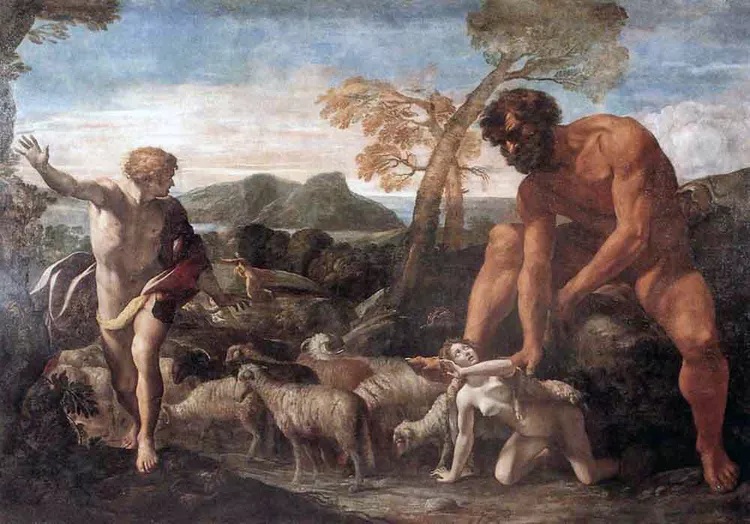
King David faced the giant Goliath in a cosmic clash, confronting the monstrous, overwhelming, and transcendent, armed with a stone and a sling. King Solomon, master of wisdom, bridges, divine insight, and human governance, allied his judgment with both spirits and scholars, mirroring the transmission of knowledge as told by the Mesopotamians.
For the Druze sect, these Kings are cosmic figures, living embodiments of knowledge and order, the same role played by the Anunnaki.
Egyptian Pharaohs also claimed divine descent. Pyramids, temples, and rituals were monuments of both power and sacred knowledge. Across cultures, one imprint appears. Advanced beings are shaping civilisation, leaving humanity with wisdom, order, and responsibility.
In Greece, the Titans and the gods tell the same story. Zeus wields authority; Athena, the bestower of wisdom, knowledge, and strategy; Apollo, the prophetic illuminator guiding mankind; Hermes and his caduceus, the mysterious connection between earth and sky.
These Gods, just as the giants and Nephilim, echo throughout mythology, shaping destiny, teaching and guiding men. These are not distant forces; they live in the actions, ideas, and fears of humankind.
Even the Celtic Druids, the Northern Vikings, the Eastern Asians, and the Mesoamericans have such tales in their histories. The Druids acted as intermediaries between human and cosmic forces, preserving sacred knowledge and guiding moral and spiritual life. Their practices and roles mirrored those of both the Anunnaki and the Nephilim, thereby continuing the cultural legacy of their divine predecessors.
In Mesoamerica, the Aztecs preserved stories of Quetzalcoatl, a being who descended from the heavens to teach human agriculture, astronomy, social order, and moral principles. Like the Anunnaki, he was an intermediary between man and the divine, transmitting knowledge and guiding man.
The promise of Quetzalcoatl’s return, a second coming, is echoed across global traditions, suggesting that the connection between man, the Anunnaki, and the Nephilim is not merely historical but an ongoing archetypal narrative.
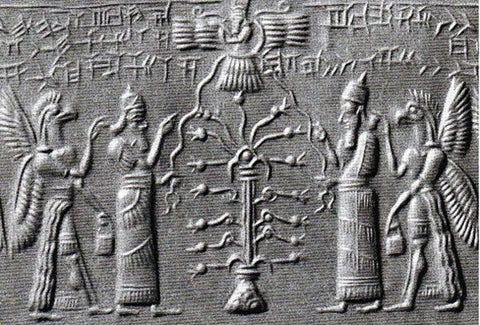
Adam and Lucifer: Bearers of knowledge and legacy
In the beginning, knowledge was withheld from humanity, until “the eyes of them both were opened” (Genesis 3:7). Adam, the first man, represents the cautious inheritor of divine order, stepping carefully into awareness, bound by responsibility and consequence.
In contrast, Lucifer, the bearer of light, embodies the restless pursuit of knowledge and the courage to cross boundaries, revealing truths as illuminating as they are perilous. Together, Adam and Lucifer form a paradox; the measured steward and the daring illuminator, two sides of the human confrontation with wisdom.
This dualism echoes in the tale of the Anunnaki, who descended to bestow knowledge upon man, bringing him from ignorance into awareness. The Nephilim, larger-than-life figures standing at the intersection of the divine and the human, illustrate the tension among power, knowledge, and moral choice. Just as Adam and Lucifer embody restraint and audacity, so too did these giants teach that knowledge carries weight and that every action ripples through generations.
Thus, the tree is not confined to Eden. It appears wherever humanity dares to reach beyond its limits, seeking power, knowledge, or insight. Its fruit is present in every act of creation, every decision that shapes lives, and every leap towards understanding.
In the Kabbalah, the “tree” of life is used to demonstrate the interactions between God and the world, the knowledge of God disseminating to man through this symbolic diagram. The Tree of Knowledge is a cross-cultural, enduring link between divine knowledge and its receiver, the sons of Adam.
Hitler and the Nazis: A modern fascination with giants
In modern history, the allure of these powers persists. Adolf Hitler and the Ahnenerbe, the Nazi research institute, scoured the earth for evidence of ancient civilisations and superior beings. Their obsession was not only political but also archetypal.
The Nazis conducted archaeological expeditions to study Mesopotamia, Egypt, and Northern Europe, seeking artefacts and texts that could reveal hidden wisdom and the origins of humanity. They were not merely looking for historical proof; they were captivated by the idea of cosmic intermediaries, the giants of legend. Hidden knowledge, ancestral power, and the dream of giants shaped Nazi ideology, technology, and global events.
Aliens: Modern echoes of the Anunnaki
In contemporary imagination, the ancient giants have taken the form of extraterrestrials. In the age of science, the same beings once referred to as the Anunnaki, Nephilim, Gods, Angels, or Avatars have returned to human consciousness under the label “UFOs”.
Ancient Sumerian texts described the Anunnaki as beings descended from the heavens with divine knowledge, who departed once their mission was complete—a straightforward parallel to modern accounts of alien visitations.
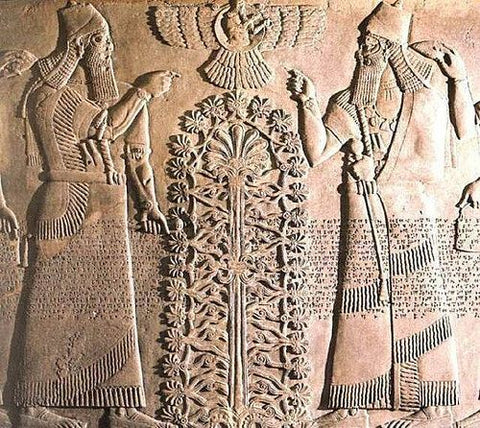
UFO researchers note striking similarities between the descriptions of alien beings and those of the Nephilim or other mythic giants: advanced intelligence, moral guidance, prophetic wisdom, and the ability to influence human development. Locations tied to ancient civilisations, Egypt, Mesopotamia, the Andes, and Mesoamerica, are hotspots of modern alien research, suggesting not a rupture, but a continuity of memory.
Some interpretations suggest that what humans describe as Gods, giants, or angels were early encounters with technologically advanced visitors. The thematic parallel between these beings, the Anunnaki and Nephilim, and modern UFOs, is too stark to dismiss.
Today, the Middle East enters another moment of tense transformation, yet those ancient echoes feel nearby. Not because giants have returned, but because the scale of human decisions, and their consequences, have once again approached something larger than ordinary history.
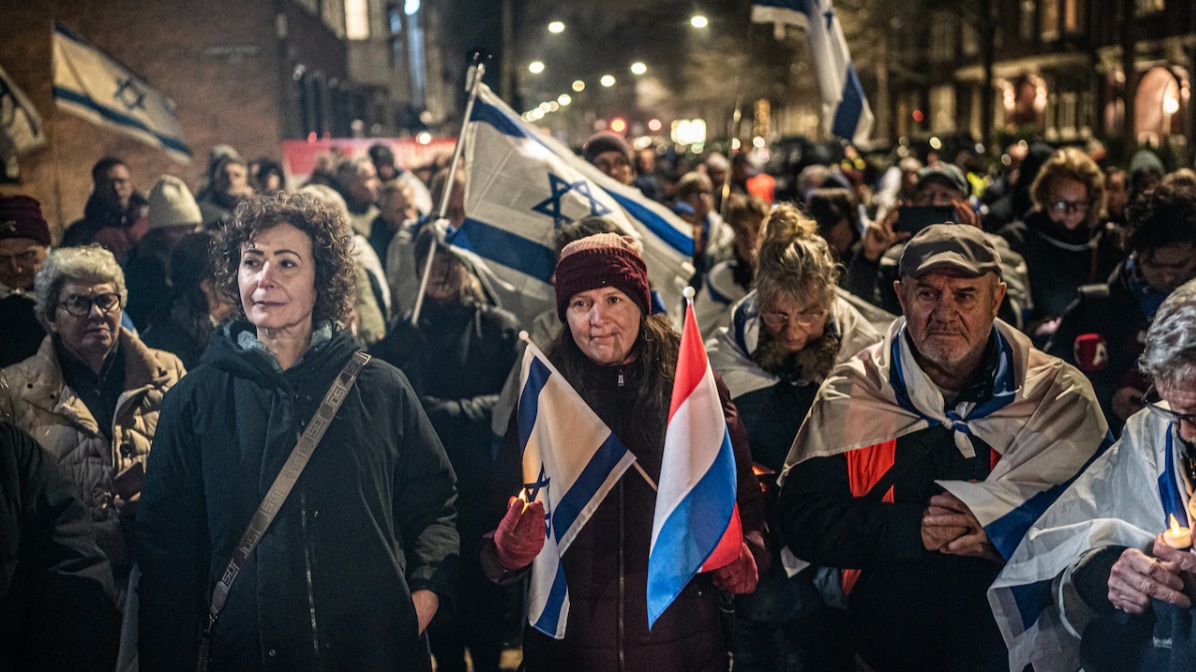
Across the deserts and fault lines of the Middle East, the confrontation between Israel and Shiaa-aligned forces led by Iran is no longer a distant tension, but an unfolding war measured in strikes, deterrence, and calculated escalation.
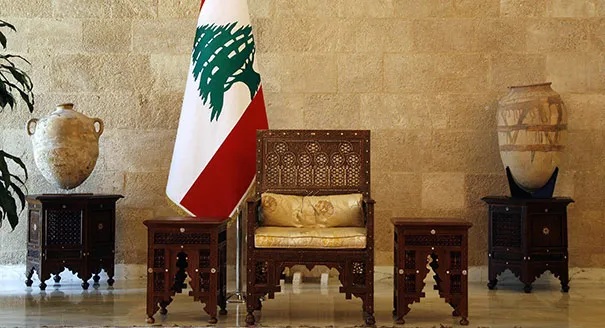
From shadow operations to direct exchanges, the region has entered a phase in which decisions are no longer symbolic but immediate, with consequences for states, alliances, and entire populations. Lebanon, through Hezbollah, stands at the edge of this dynamic, while global powers watch, intervene, and recalibrate the balance.
Yet, beyond the visible movements of armies and strategies, there is a deeper layer that many interpret this confrontation through. For some, it is tied to prophecy, the expectation of the Messiah in Jewish and Christian traditions, and the return of the Mahdi in Shia thought. These expectations do not drive missiles or dictate policy, but they shape perception, language, and meaning, giving the conflict a dimension that transcends conventional geopolitics.
In this sense, the present moment echoes older patterns embedded in human memory. The figures once described as Anunnaki and Nephilim were not merely giants of strength, but carriers of influence – beings associated with knowledge, order, and the testing of human direction.
Today, the scale has changed, but the structure remains recognisable; decisions concentrated in the hands of a few, consequences extending across nations, and a constant tension between power and responsibility.
The war, then, can be read on two levels. On one, it is a strategic confrontation shaped by security concerns, regional rivalry, and historical grievances. On another, it reflects humanity’s recurring encounter with forces that feel larger than itself – where knowledge, belief, and destiny intersect. It is in this overlap, between the political and the metaphysical, that the ancient language of giants finds its quiet resonance – not as literal beings returning, but as a way of understanding the magnitude of the moment.
Prophecy, Messiah, and Mahdi in today’s conflict
The ancient narrative of giants and divine guidance finds modern resonance in prophecy. Today’s Israel-Iran tensions are often interpreted as more than politics; they are seen as the stage where human history intersects with cosmic destiny and Messianic prophecy.
In biblical interpretations, the Messiah is a figure who restores balance, justice, and divine order. Some Evangelical commentators link contemporary events in the Middle East to signs preceding the Messiah’s arrival, seeing patterns reminiscent of the Nephilim and Anunnaki; extraordinary forces shaping human destiny.
For Shiaa Muslims, the Hidden Imam/Mahdi is a divinely guided figure who appears during times of great injustice and turmoil. His return is anticipated as a time when humanity will receive guidance to restore moral and social balance, echoing the ancient giants' role as intermediaries between divine wisdom and human society.
Common threads: both the Messiah and the Mahdi function as human conduits of cosmic guidance, bridging the gap between divine order and earthly action, much as the Anunnaki imparted wisdom and the Nephilim embodied moral responsibility.
Modern resonance: The ongoing regional tensions are interpreted symbolically as a threshold of human responsibility. Just as ancient humanity faced the consequences of knowledge given by giants, modern societies confront the consequences of choices made amidst powerful forces and prophetic anticipation.
By framing the conflict through prophecy, the narrative becomes not only geopolitical but also mythic, symbolic, and morally compelling. It emphasises that human action, wisdom, and decision-making remain central, even when the stage is set by forces larger than ourselves – be they ancient giants or divine intermediaries.
When giants walk again: Anunnaki, Nephilim, and the prophetic war of Israel and Iran
Long before modern geopolitics and advanced technology, humanity imagined a world shaped by giants — beings who stood between heaven and earth, bringing knowledge, power, and sometimes chaos. Across civilisations, stories emerged of extraordinary figures who guided humanity, challenged divine order, and left echoes that still resonate in religious prophecy and historical memory.
“We saw the Nephilim there (the descendants of Anak come from the Nephilim) … and we were like grasshoppers in our own sight, and so we were in their sight.” Numbers 13:33. From ancient Mesopotamia to the modern Middle East, humanity has long been fascinated by beings of extraordinary stature and wisdom.
The Anunnaki and Nephilim stand as archetypes of this fascination: powerful figures who imparted knowledge, shaped civilisations, and blurred the boundary between the divine and the human. Their stories echo across time, appearing not only in the Hebrew Bible but resonating in symbolic and esoteric traditions worldwide.
In the Garden of Eden, when Adam and Eve were tempted to eat from the Tree of Knowledge, the act symbolised far more than simple disobedience. Many interpretations see it as humanity’s first encounter with knowledge previously reserved for higher beings.
The apple became a timeless symbol of curiosity and enlightenment. In the modern world, the same symbol appears again — the bitten apple of the iPhone — quietly reminding us that the pursuit of knowledge remains one of humanity’s defining impulses.
Across thousands of years, humanity has repeatedly imagined powerful beings standing at the intersection of heaven and earth. Whether remembered as Anunnaki, Nephilim, angels, or Gods, these figures symbolise humanity’s attempt to understand the origins of knowledge and the responsibility that comes with it.
From Mesopotamian ziggurats to biblical prophecies and modern technological revolutions, the same question continues to emerge: how should humanity wield the knowledge it receives? In that sense, the giants never truly disappeared. They live on in stories, in symbols, and in the choices civilisations make about power, wisdom, and destiny.