“Amid missiles and shifting alliances, Lebanon stands at a historic crossroads, facing the choice between perpetual conflict and a daring path toward peace with Israel.”
“Blessed are the peacemakers, for they shall be called children of God.” (Matthew 5:9)
Where cedar trees meet the Mediterranean, Lebanon has long stood as a crossroads of civilisations, faiths, and empires. Its mountains and fertile valleys have witnessed conquest, settlement, and the ebb and flow of global powers.
By Nadia Ahmad
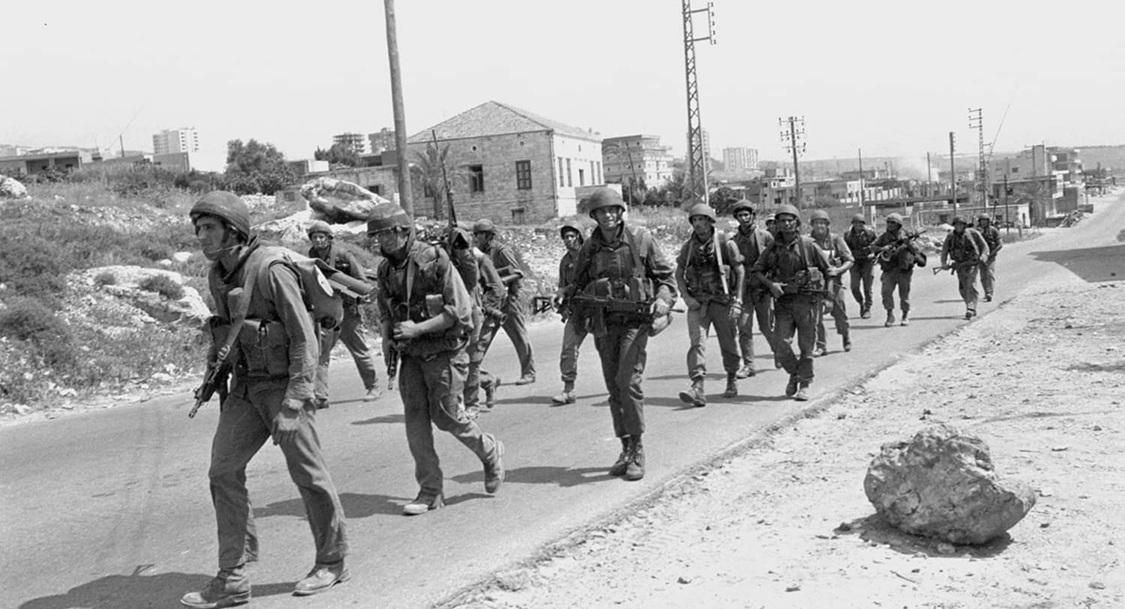
The Lebanon–Israel frontier has symbolised one of the Middle East’s most enduring confrontations: wars, proxy battles, and ideological divides have scarred both land and people. From the Arab-Israeli conflicts after 1948 to modern standoffs in southern Lebanon, the border has appeared permanent, immutable, and dangerous.
Yet beneath the rhetoric of hostility, a quieter reality is emerging. Necessity may one day compel coexistence, driven not by ideology but by the stark logic that perpetual conflict costs too much for everyone involved.
Today, as war rages between Israel and Iran—with Lebanon caught in the widening geostrategic storm—the Lebanese government has signalled readiness to negotiate directly with Israel, even hinting at eventual recognition. For a country whose constitution still defines Israel as an enemy, these statements are revolutionary.
Lebanon now stands at a crossroads, where centuries of inherited conflict meet an opportunity to define a new role: one grounded in sovereignty, pragmatic diplomacy, and human-centred peacebuilding.
A frontier built on deterrence
Southern Lebanon’s security is dominated by Hezbollah, a Shiite political-military organisation that emerged in the early 1980s. Supported by Iran, it evolved from a militia into a robust regional actor. Its missile arsenal and defensive infrastructure have created a delicate equilibrium with Israel: deterrence that is tense, complex, and ever-present.
For Israel, the border is more than a line on a map. It is a highly sensitive security environment, where missteps could trigger large-scale escalation. For Hezbollah, the frontier carries both strategic and symbolic weight, a stage upon which resistance is projected and political legitimacy maintained.
This fragile balance has endured for decades. Yet any miscalculation could ignite a confrontation that reverberates far beyond the immediate border.
Lebanon in a post-Westphalian Levant
The Levant today reflects a post-Westphalian order. Traditional state authority is challenged by:
Non-state actors such as Hezbollah and militant groups
Regional powers projecting influence across borders
Fragmented political institutions within Lebanon itself
In this context, sovereignty is both contested and essential. Lebanon’s state institutions must reclaim authority over security and diplomacy if the country is to navigate the new regional environment safely.
Yet competing actors, internal divisions, and external pressures make this reclamation an intricate and delicate task.
The wider war: Israel, the United States, and Iran
The Lebanon–Israel frontier can no longer be understood in isolation. It now sits within the broader Israel–US–Iran confrontation, which has intensified in 2026.
Coordinated Israeli and American strikes against Iranian military and nuclear targets prompted a robust response from Tehran, including missile and drone attacks across Israel and U.S. positions in the region.
Hezbollah now plays a dual role: defending Lebanese territory while serving as a strategic deterrent for Iran. Israel faces a dilemma: striking Hezbollah could weaken Iran’s northern capabilities but risks devastating Lebanon and potentially igniting a multi-front regional conflict.
For Lebanon, the stakes are existential. The country must choose whether to remain a battlefield in this wider war or to pursue a neutral, Mediterranean-centred path that prioritises internal stability, sovereignty, and diplomacy.
Internal imperatives: society under pressure
Lebanon is under severe domestic stress. Years of economic collapse, political paralysis, and failing infrastructure have left citizens struggling to survive. Electricity shortages, food insecurity, and inflation affect daily life across communities.
Southern Lebanon’s diverse population — Shiite, Druze, Christian, and Sunni — depends on stability. Farmers, shopkeepers, families, and religious groups all face tangible costs when conflict erupts. Daily life and economic survival often push societies toward pragmatic coexistence long before governments formalise peace agreements.
A durable solution requires adherence to the fundamental principle of state sovereignty: the monopoly of legitimate force belongs to the state. Multiple independent armed authorities weaken stability and risk uncontrolled escalation. Lebanon must restore full control over decisions of war and peace.
Hezbollah’s military and political presence complicates this reality. Yet incremental steps — such as regulated coordination with the Lebanese Armed Forces, border monitoring, and joint emergency planning — can allow the state to reclaim authority without provoking immediate confrontation.
Sovereignty is not an abstract principle; it is the foundation upon which Lebanon can engage diplomatically and navigate the post-Westphalian landscape.
Active neutrality as a strategy
Lebanon’s best path may lie in active neutrality, a concept championed by Bechara Boutros al-Rahi. Unlike passive neutrality, which avoids sides, active neutrality is proactive: it protects sovereignty, prevents external entanglement, and positions Lebanon as a credible mediator.
Active neutrality operates on three levels:
Diplomatic Prudence: Engage regional actors without compromising independence
Internal Stability: Strengthen governance, rule of law, and social cohesion
Regional Engagement: Facilitate controlled dialogue, joint projects, and cooperation where possible
This strategy allows Lebanon to assert independence while exploring opportunities for peace along the frontier.
Strategic Windows: Lebanon’s Future Scenarios
Looking forward, three potential “windows” frame Lebanon’s strategic choices:
Permanent Deterrence
The frontier remains tense, with Hezbollah and Israel maintaining a careful balance. Escalation risk persists, but stability is enforced through deterrence.
Lebanon gradually reasserts authority. Hezbollah integrates politically, security coordination improves, and state institutions regain decision-making power.
Strategic Peace
Lebanon pursues gradual normalisation with Israel, leveraging cultural exchanges, economic cooperation, and multilateral agreements. Sovereignty is preserved, while the frontier becomes a managed space for coexistence.
Each window presents risks and opportunities, and the path chosen will define Lebanon’s regional role for decades.
Cultural and Religious Bridges
Beyond military and political strategy, human connections offer pathways to trust. Pilgrimages, shared rituals, and joint civil projects create tangible linkages:
Jethro Sanctuary: Druze, Jewish, and Muslim visitors share heritage and rituals
Church of the Holy Sepulchre: Lebanese Christians participate in cross-border spiritual exchanges
Community Initiatives: Schools, summer camps, and joint environmental projects like cedar reforestation foster intergenerational trust
Small acts — sharing water, coordinating irrigation, trading produce, and planting cedars together — signal that cooperation is possible even amid conflict.
Practical Multilayered Coordination
A sustainable approach requires overlapping layers:
Diplomatic Channels: Manage incidents and explore negotiation frameworks
Military Coordination: Prevent local skirmishes from escalating
Economic Initiatives: Agriculture, energy, and infrastructure cooperation
Environmental Collaboration: Joint cedar and natural resource conservation
International Facilitation: Neutral bodies like the United Nations support communication without supplanting regional actors
By reinforcing each layer, Lebanon can transform confrontation into managed coexistence.
Israel’s strategic dilemma
Israel’s calculations are complex. While Hezbollah’s missile capability remains a threat, war carries enormous costs. Infrastructure destruction, civilian casualties, and potential regional escalation make restraint appealing.
The 2022 maritime boundary agreement demonstrated that even adversaries could negotiate technical solutions without full normalisation. Similar incremental measures may serve as the foundation for broader stability.
Lebanon’s cedars, long a symbol of endurance and dignity, can now serve as living bridges for peace. King Solomon requested cedar wood for the Temple in Jerusalem—an ancient example of cooperation among neighbours. Today, cross-border initiatives like joint cedar planting and ceremonial projects transform these symbols into tangible commitments.
Lebanon’s future depends on the choices it makes today. The country can remain a battlefield for external powers or claim a neutral, Mediterranean-centred position. Through sovereignty, active neutrality, strategic scenarios, and human-centred initiatives, Lebanon can move from inherited conflict to a new paradigm.
Peace will not come overnight. It requires patience, courage, and careful coordination. Yet, like the ancient cedars that have weathered millennia of storms, Lebanon’s people have the resilience to shape a different path.
If successful, the frontier that once symbolised division may become a crossroads of civilisations, where diplomacy, culture, and practical cooperation replace perpetual hostility.
“Blessed are the peacemakers, for they shall be called children of God.” Lebanon now has the chance to embody this blessing — turning a centuries-old battlefield into a beacon of coexistence, dignity, and shared future.