We all know Czechoslovakia as the birthplace of the term robot, which leapt from science fiction to science fact in Karel Čapek’s play Rossum’s Universal Robots (1920). Here’s a new Czech contribution to our sci-fi awareness from my good friend Jaroslav Olša, Jr., his book Dreaming of Autonomous Vehicles: Miloslav (Miles) J. Breuer: Czech-American Writer and the Birth of Science Fiction (Space Cowboy Books, 2026). The is a biographical study of an early pioneer of science fiction who has tragically been forgotten by history, Miles Breuer (1889-1945). The first man to anticipate autonomous cars, it emerges.
By Emad Aysha
What a lovely and highly readable work, and not too long, either. No verbose academic terminology, but structured logically, and a must-read for the sci-fi librarian. Jaroslav Olša deserves a biography in his own right, a career diplomat with a keen interest in promoting science fiction wherever and whenever it exists, including the Arab world!
Miles, or Miloslav, the son of a Czech immigrant family, was a jack of all trades who worked in everything from social science to shopkeeping to wartime doctoring. He’s one of those authors who lived in that hazy time just before the Golden Era of the pulps (1920s-30s) and the formative period of giants who founded the genre: Mary Shelly (1797-1851), Jules Verne (1828-1905), and H.G. Wells (1866-1946).
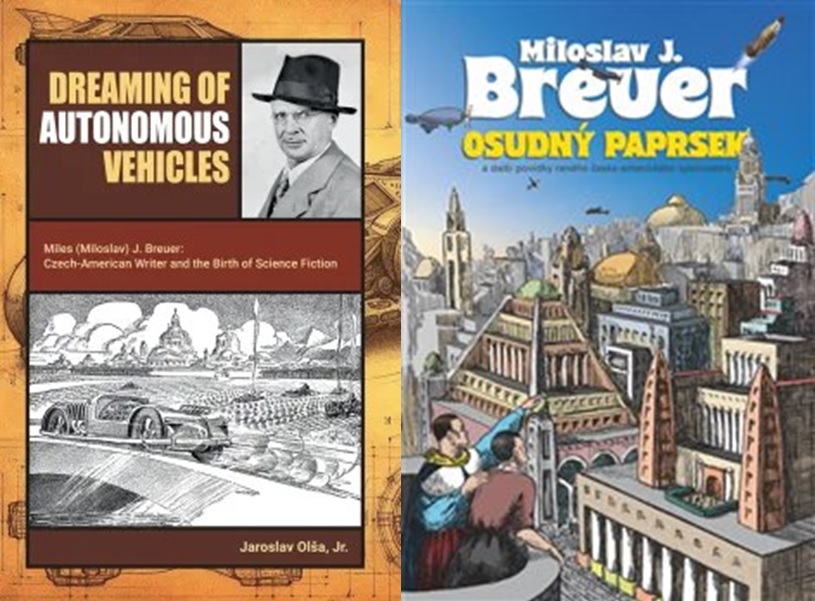
CZECH-MADE UTOPIAS: Early forays into science fiction bridging the gap between West and East that anticipated so many of the very real technological and moral dilemmas of today.
Not surprisingly, his works were mainly in short form, with novellas and the odd novel. Nonetheless, the man had a major impact on the genre and its readership, working with Hugo Gernsback (1884-1967), of Amazing Stories fame, and inadvertently inspiring Robert Heinlein to write The Moon is a Harsh Mistress (1966).
Amazingly, this latter period of science fiction is so understudied that it doesn’t even have a name. Miles himself was deeply influenced by Wells, particularly by his classic The Time Machine (1895), and worried about humanity’s future, whether biological, mechanical, or political.
He was an early pioneer of what today we call dystopia, even before the official inauguration of the subgenre in the wake of WWI. He wrote quite a few essays on the topic, too, as well as fulfilling his editing duties.
In tandem of this, he was also very well aware of the bogey of eugenics, and it seems Fascism, via his 1931 novella “The Legion of the Fittest” about a secret organisation that plans and carries out a mass extermination of the unfit majority.
It’s all to save humanity’s future. The revolution begins in the US, employing everything from thermite bombs to chemical reactions in the air to incinerate people’s lungs, then goes global. The earth is turned into a giant pleasant garden with only 10 million people.
Alas, it’s a substitute dictatorship for the old order, and even the legionnaires become disenchanted with time. The idea for the story seems to have come from the Czech gymnastic movement, Sokol, which makes perfect sense to me.
America, such a healthy country fond of workouts, actually learned about the gym from the German nationalist Karl Follen (1796–1840), who fled to its shores. Nazism actually grew out of German gyms, with the emphasis on discipline, physical fitness and unquestioning duty. (Check out James Burke, “Hit the Water”, Connections, S03E09).

MAN ON A MISSION: Mr Jaroslav in Daegu, South Korea in 2012, opening an exhibition promoting the Czech cartoon character Krtek for a world audience – a model for us all.[Photo provided with permission]
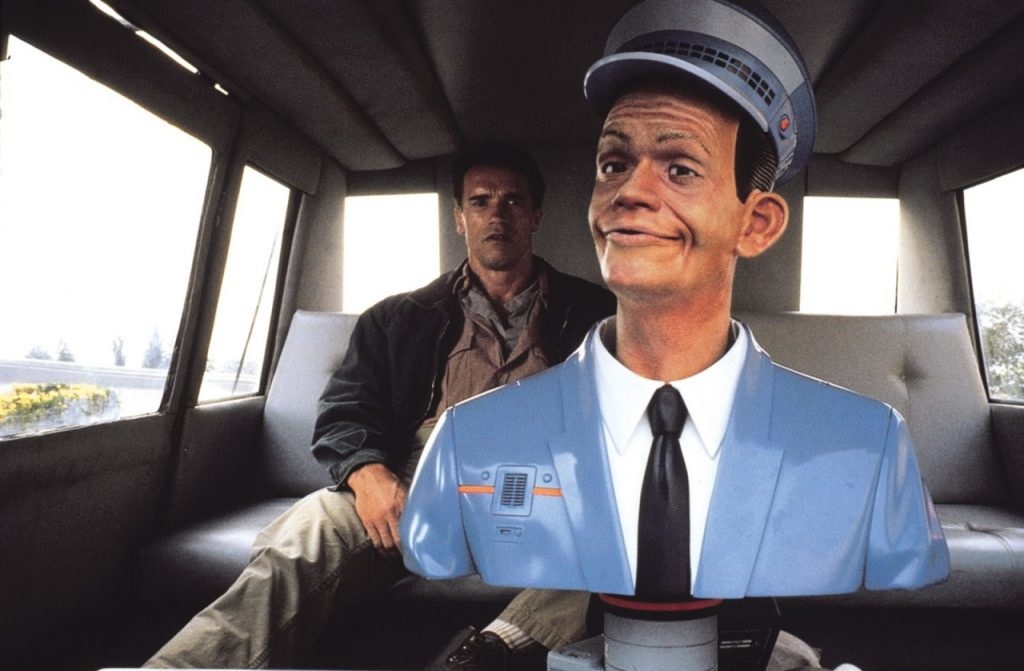
Even his optimistic works on autonomous vehicles, including cars, trucks and motorcycles, warned that robots needed to depend on us lest they become completely independent, if not rebel against us.
He wasn't that far away from Asimov’s 3 laws of robotics. He dreamed up an analogue memory system and an early warning system for his self-driving cars, which are close to the memory, self-learning mechanism that made PCs and robots work in Heinlein’s The Door Into Summer (1957).
That novel, incidentally, helped give birth to actual personal computers. (Watch The Commodore Story, 2018). And I’d wager Breuer’s Paradise and Iron (1930) did the same for modern self-driving cars.
Breuer also wrote in the Czech language, although he was more comfortable in English, and had lots of old-world problems – and wisdoms – making their way to the new world. He often had his heroes returning either to the old way of living or revelling in nature.
You can tell he was a sentimentalist at heart and wanted to help his people back home, but fully embraced the frontier mindset in the US.
Breuer was a true sci-fi purist. He was increasingly disconcerted by the rising clout of the pulps, feeling this was downgrading SF and shifting from futurism and morality-driven stories about progress to cheap action-adventure stories.
He slowly lost faith in the genre and reduced his output. Growing family work duties were also getting the better of him. He finally had a nervous breakdown and had to be locked up in a sanatorium.
That wasn’t the first time this happened to him; he finally passed away on 14 October 1945, still in his prime, aged 56. His parents outlived him, dying in their 80s in the 1950s.
His married life, arranged by his parents, didn’t go so well in the end either. He did have a strong personality, a man constantly on the move and eager for new challenges, new career turns and new avenues of knowledge to explore.
You felt the energy and excitement as you read Jaroslav Olsa’s book, waiting for the next accomplishment, only to be shocked at his premature death.
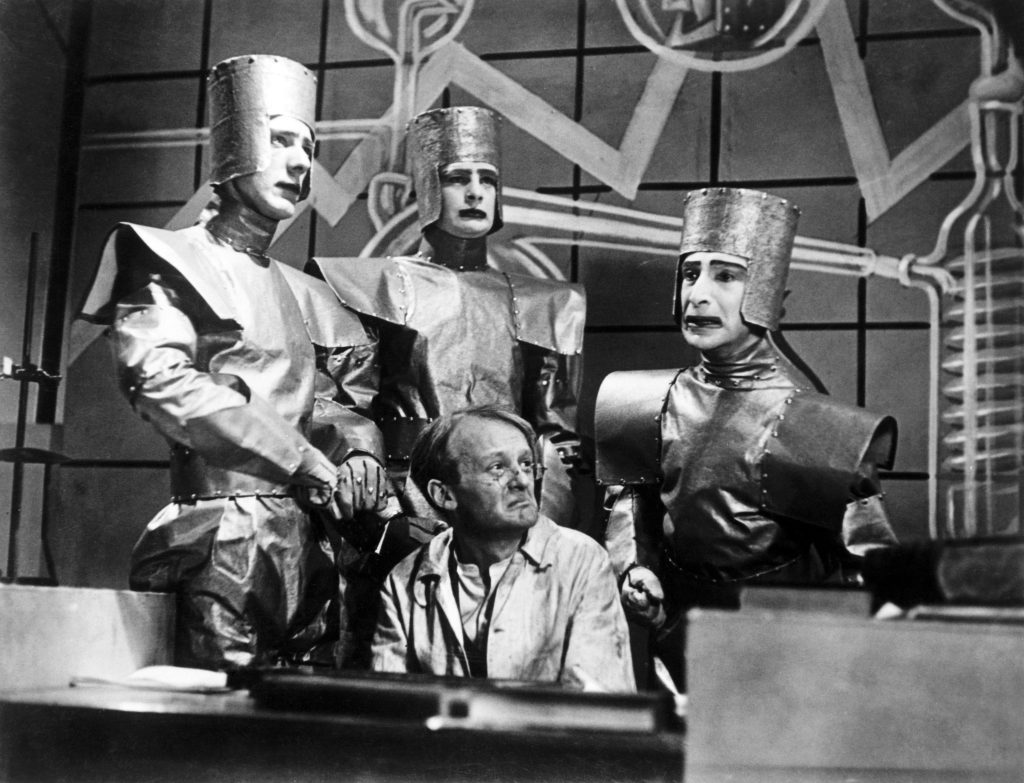
LEGENDS OF THE FUTURE: A screenshot from the 1938 BBC adaptation of Karel Čapek's 'Rossum’s Universal Robots', still a classic to this current day.
Reading Breuer’s story is interesting for a whole other reason. Lots of authors in the Arab world, certainly in Egypt, are medical doctors. And not just sci-fi authors.
Part of the explanation for this is that the Majors that guaranteed you a career in the past were usually medicine and law. In the case of SF, having a medical background helps, given the scientific background you need for the genre.
And the fact that Miles Breuer did everything he did in his multiple careers was part of his family duties, giving you a similar picture of Arabic family life; the extended family either employing you or bankrolling your education.
It’s good to see that tradition can help birth the future. Well, minus the cousin marrying!