It was a small phrase in a large diplomatic room, the kind of remark that normally disappears into the background of political noise. During recent discussions at the White House under President Donald Trump, U.S. envoy Mike Huckabee reportedly described Hezbollah as the “bad kid” in the neighbourhood — someone throwing rocks through windows while everyone else is trying to live in peace.
By Nadia Ahmad
It was not a formal doctrine or policy statement. It was an offhand metaphor. But in diplomacy, especially when it touches the Middle East, even casual language tends to travel further than intended. It shapes perception long before it shapes policy.
On the surface, the image is simple: one disruptive actor inside an otherwise functioning environment. But the region it refers to rarely fits that simplicity.
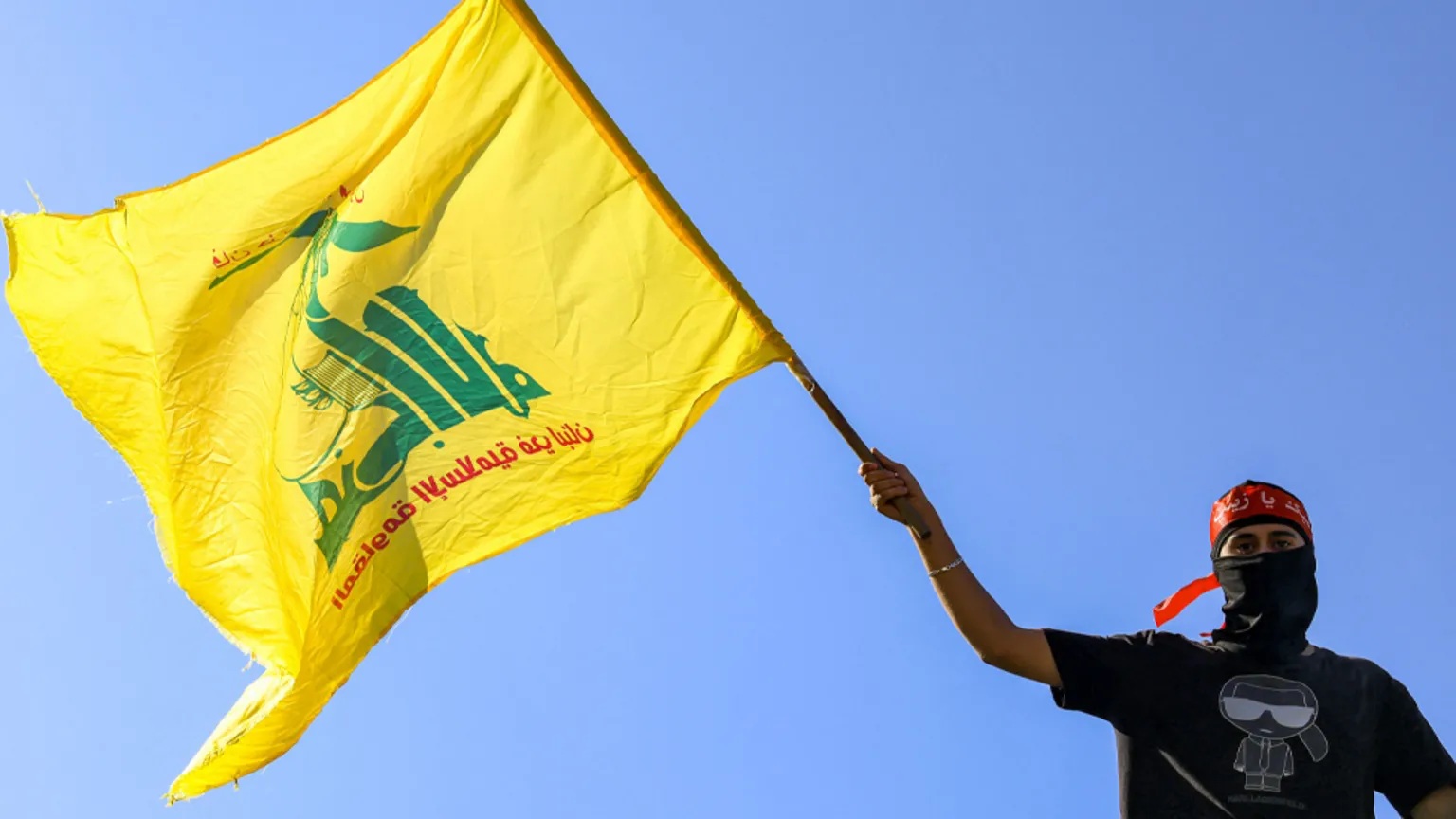
Hezbollah is not a marginal presence in Lebanese politics. It is deeply embedded in Lebanon's structure, operating across several layers simultaneously. It functions as a political party with parliamentary representation, a military organisation with significant armed capability, and a social network that provides services in areas where the state is often absent or weakened.
It also maintains strategic and political ties beyond Lebanon, most notably with Iran, placing it within a wider regional system of alliances and deterrence relationships.
This combination makes it difficult to describe in conventional diplomatic terms. It does not fit neatly into familiar categories like state or non-state actor, internal political force or external proxy, legitimate institution or armed militia.
Instead, it exists across those categories at the same time.
The “bad kid” metaphor compresses that complexity into behaviour. It turns a layered political actor into a simple figure of disruption inside a presumed orderly space. That framing is not unique to this case — it reflects a broader habit in international discourse of translating political complexity into everyday social language.
But that translation is never neutral. It shapes what is seen, and just as importantly, what is left out.
A child throwing stones implies a functioning neighbourhood. It assumes clear rules, recognised authority, and a shared understanding of order. It suggests that if the disruptive actor is corrected or contained, normality will return.
Yet in Lebanon, that assumption is itself contested.
The Lebanese state formally exists, with institutions, borders, and international recognition. But its authority is fragmented. Power is distributed across sectarian political structures, economic networks, religious institutions, external regional influences, and armed organisations operating with varying degrees of autonomy.
Governance is not fully centralised. It is negotiated, layered, and often inconsistent.
Within that environment, organisations like Hezbollah are not simply external disruptions to a stable system. They are part of a political structure in which authority itself is divided.
This does not resolve questions of legitimacy. It complicates them. The state is present but uneven. Non-state actors are influential but contested. External actors shape internal dynamics, and internal divisions reshape external alignments.
What emerges is not a clear line between order and disorder, but rather a fragmented political landscape in which different forms of authority overlap.
This fragmentation is not unique to Lebanon, but Lebanon remains one of its clearest expressions.
The consequences extend beyond domestic politics. The relationship between Hezbollah and Israel has been one of the most persistent fault lines in the region. Along the Lebanese–Israeli border, tension, deterrence, and periodic escalation have shaped security dynamics for decades.
From Israel’s perspective, Hezbollah is primarily understood through national security concerns and border stability. From Hezbollah’s perspective, its identity is tied to historical narratives shaped by past conflicts and regional confrontations.
These perspectives do not meet easily. They operate within different historical frameworks, even when they unfold across the same geography. Between them sits a fragile balance that has sometimes prevented full-scale war, but never removed the underlying risk of escalation.
That dynamic cannot be separated from the wider regional context. Over recent decades, the Middle East has experienced repeated cycles of conflict, state weakening, and the rise of hybrid political actors. In several cases, armed organisations have gained influence not only through military power, but through political participation, social services, and integration into fragmented state systems.
Hezbollah is one such actor, but it exists within a broader pattern in which traditional state authority has been partially eroded in some areas. At the same time, alternative centres of power have emerged.
This does not replace the state system. It complicates it.
And it complicates diplomacy in turn.
International responses to such actors often shift between different frameworks: security threat, political reality, proxy force, or destabilising influence. These categories are applied inconsistently, reflecting the difficulty of fitting hybrid organisations into inherited diplomatic language.
Simplified metaphors such as “bad kid in the neighbourhood” emerge from this difficulty. They provide clarity where reality is fragmented. They make complex systems easier to communicate in public and political settings. But they also flatten the problem's structure.
The underlying assumption in such metaphors is that stability is the default condition and disruption is the exception. Yet in parts of the region, stability is not a given state. It is a negotiated outcome shaped by fragile institutions, shifting political balances, and external pressures.
When instability is framed primarily as behaviour, attention tends to shift toward managing actors rather than addressing the conditions that produce instability in the first place.
From a European perspective — particularly in policy discussions across the EU — the challenge is to maintain clarity without oversimplification. The issue is not to avoid metaphor altogether, but to ensure it does not replace the reality it is meant to describe.
At the centre of those discussions remains a consistent concern: stability.
Preventing escalation, protecting civilian populations, and strengthening the capacity of state institutions to function under pressure.
Along the Lebanese–Israeli frontier, those concerns are especially sensitive. Even limited incidents can carry the risk of wider escalation in an already volatile environment. International actors continue to focus on de-escalation mechanisms and maintaining deterrence stability, while supporting governance structures that reduce reliance on armed non-state actors.
Yet even these policy goals are shaped by language. The way actors are described influences how risks are understood and how responses are prioritised.
That tension is not easily resolved. It is part of modern diplomacy itself.
The “bad kid in the neighbourhood” remark matters less as a statement than as an indication of how persistent the search for simplicity remains in the face of sustained complexity.
It reflects a broader tendency in international discourse: to translate fragmented political realities into familiar moral and social frameworks. But in doing so, it risks obscuring the very conditions that make those realities difficult to manage.
The Middle East today is not a clearly ordered neighbourhood with a single disruptive actor. It is a layered political space where authority is divided, legitimacy is contested, and stability is continuously negotiated.
And in that space, language does not just describe reality. It helps shape how that reality is seen.