I recently made the mistake of watching the second Dirty Harry movie, Magnum Force (1973), where Officer Callahan (Clint Eastwood) paradoxically has to take down a bunch of trigger-happy cops. I’ll list the sequel's disabilities below, but it gave me good reason to check out the far superior 1971 movie. And what did I find? The psycho in that movie was using a .30-06!
By Emad Aysha
It seems whoever dreamed up the Charlie Kirk assassination grew up watching too much late-night television. Fortunately, the original Dirty Harry (1971) is quite an experience and always a reward to rewatch. You keep finding extra layers and lessons.
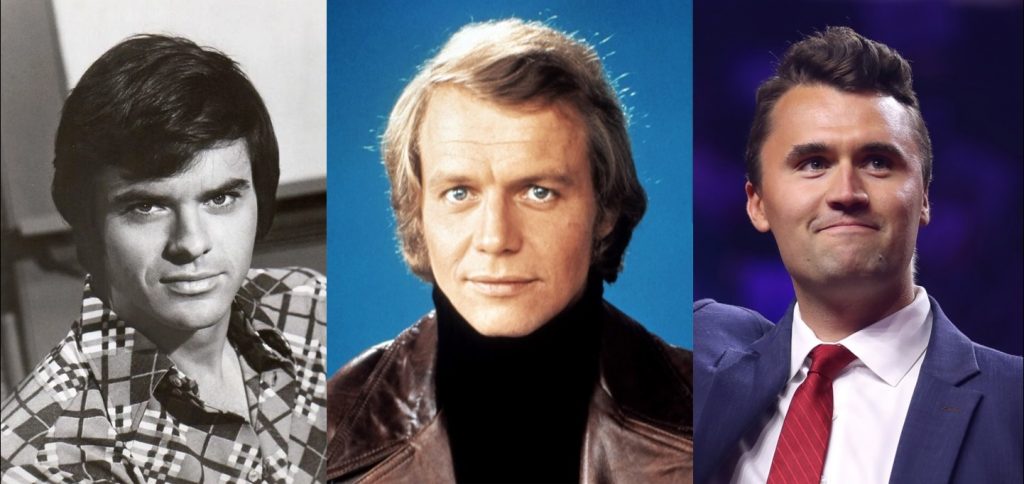
MEMORY LANE: Robert Urich and David Soul have sadly passed away. This article is a testament to their legacy, as it is to Charlie Kirk’s.
For one, they got the psycho character, Scorpio (Andrew Robinson), down to a T. So much so, in fact, that he disqualifies the likes of Tyler Robinson and Lee Harvey Oswald from the charge of lone nut.
Scorpio may be crazy, but he’s a smart guy and actually knows how to get a proper rifle with a deadly calibre, and the kind that you can dismantle and put into a specially designed suitcase.
Not to mention using a silencer on it so nobody can tell where he’s shooting from and track him down as he tries to escape. Would you say the same for somebody using a Carcano? Or somebody who wears sunglasses and a hat to hide his identity from the cameras, and conveniently leaves his fingerprints everywhere?
Another interesting feature of Scorpio is how weak he is deep down. He has a tremendous ego and enjoys dominating and fooling people, but once he gets wounded or people disobey him, he loses his cool. Compare the scene with the shopkeeper to the school bus sequence.
Oswald, by contrast, was kept in custody for three whole days, without a lawyer, and he never slipped up once. Tyler Robinson is playing it cool, too, from what I hear, which doesn’t fit the raging, uncontrollable, wife-beating psycho one bit.
Dirty Harry is brilliant, not just at psychology but also sociology, showing the American dream going awry in the 1970s. It’s not a coincidence that Scorpio kills a 10-year-old African American boy and shoots up a neon Church sign. The school bus likewise is a mixed race group of kids, with the kind of irresponsible self-centeredness of the badguy threatening it all.
He does want a $100,000 after all, not exactly your typical serial killer who murders for the purity of it. He’s basically a glorified janitor who lives where he works, and the first person he kills is a woman in her own personal swimming pool.
There’s always more to the movie than meets the eye, and that’s not discounting the visual aspect of this film either. The cinematography has a docudrama style, with few close-ups and a rich sense of colour and lens flares.
Again, the camera documents the crumbling of society, evident in the seedier parts of town and in a sense of industrial decline. The end sequence does happen at a factory, and earlier on, Callahan keeps bumping into miscreants along the way.
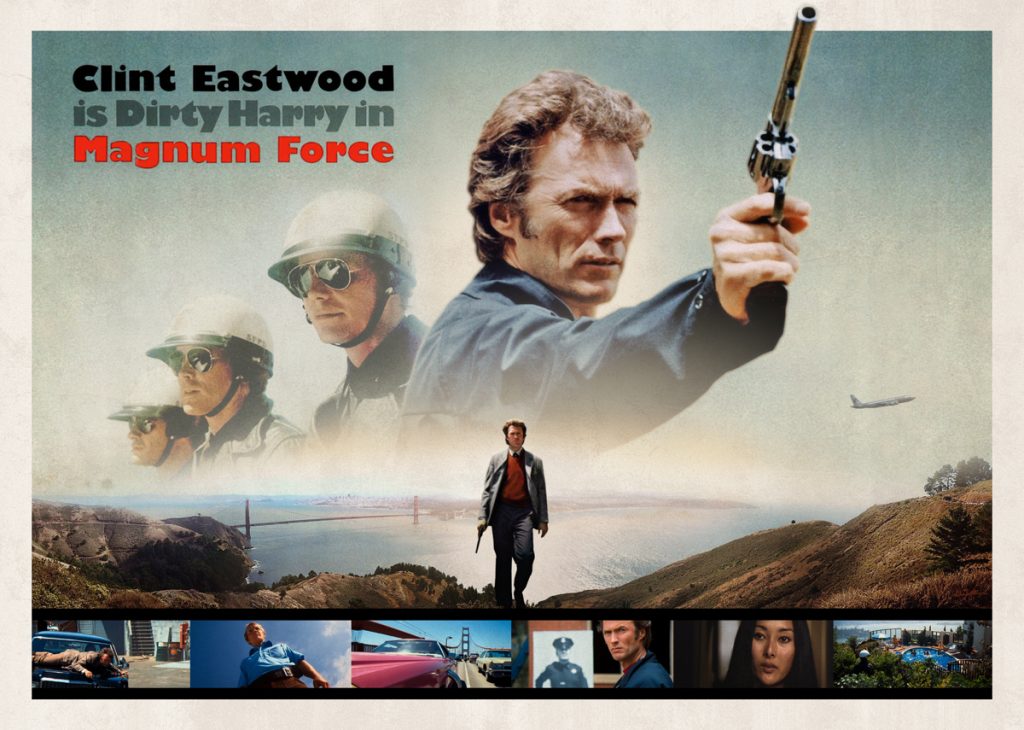
CLASH OF TITANS: The bent cops here are up against Harry Callahan. Talk about the unstoppable force meeting the proverbial immovable object.
That includes a guy who calls himself Alice, and a bunch of opportunists who try to rob him (white and black guys together.) There’s also an air of law and order breaking down and people having to take justice into their own hands, such as the scene where Callahan gets beaten up as a peeping Tom.
Clint Eastwood is the ultimate foil for the society he lives in, the unsung hero who is tough as nails but understanding, sensitive and even a tiny but vulnerable. Thank heavens the same carries over into the second movie, with an interesting role reversal, since now he’s the one upholding the law in the face of vigilante cops.
The problem with the sequel is that it's so damn clichéd, from the title sequence with Callahan’s gun and famous line, with public officials mouthing off forced swearwords throughout the movie.
The film also meanders endlessly, giving you entire sequences that contribute nothing to the plot, while the plot itself is underbaked. You guess straight away who the bad guys are – the four cops practicing their shooting skills in front of Callahan.
Interestingly, there are all types of military personnel, including rookies. It’s their lack of experience that gets them killed in the end, when they have to deal with a seasoned cop like Callahan.
The scene where he karate-kicks a guy to death is a classic, and the motorcycle chase sequences are pretty cool, too. But they come too little and too late to save the movie. Callahan’s partner, Earlington Smith (Felton Perry), is a nice addition, but he takes up too much time and then gets killed off unceremoniously when you most need him.
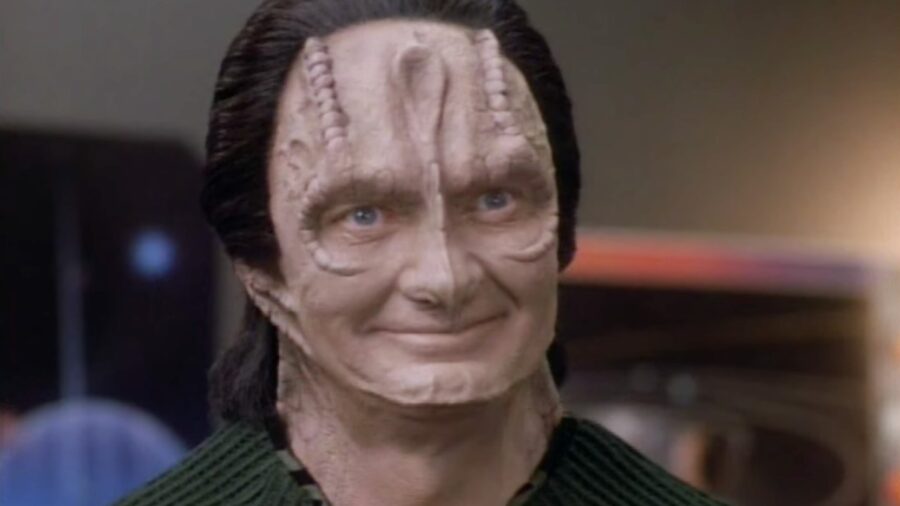
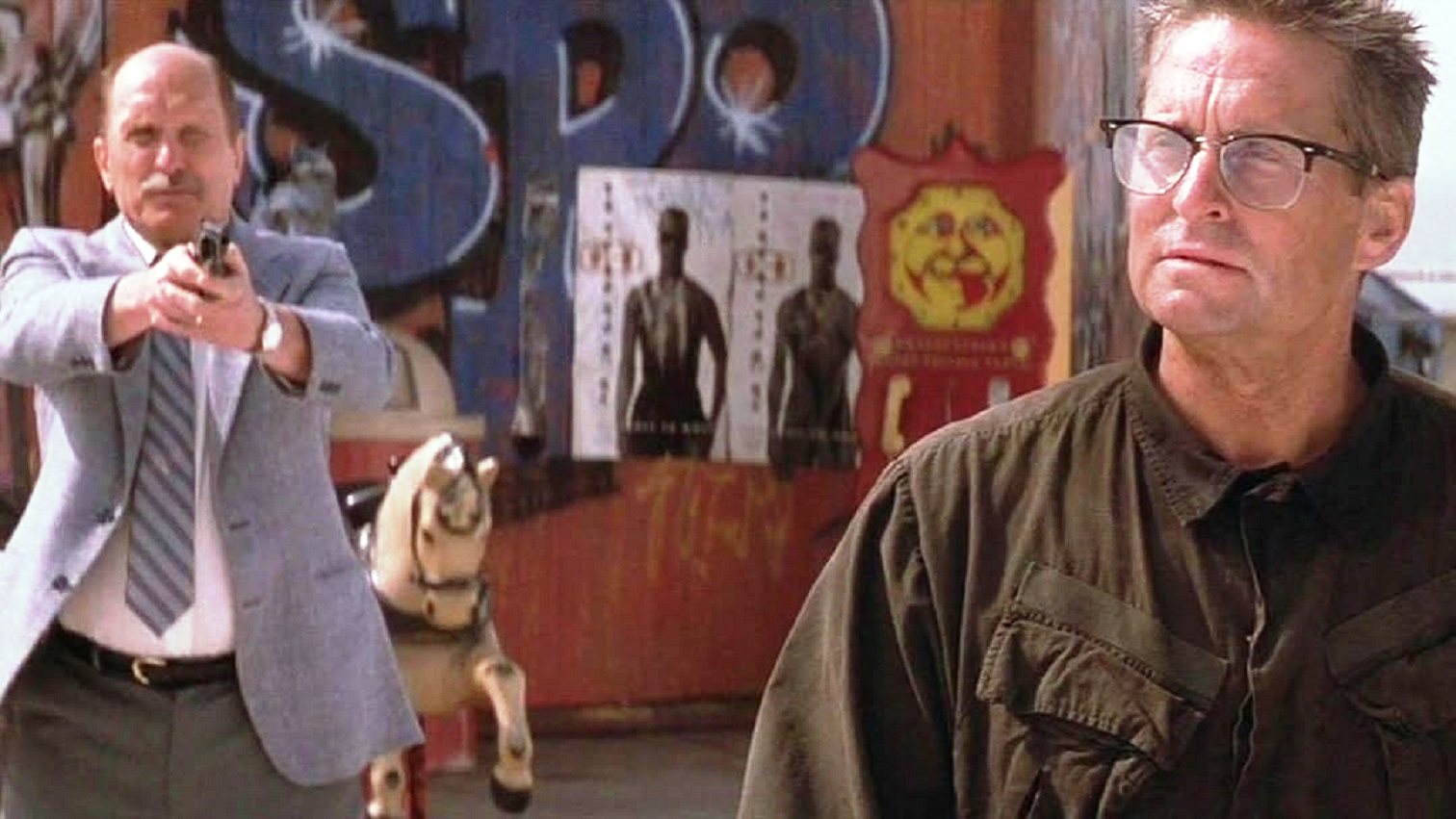
SCI-FI MAINSTAY: Andy Robinson also played the beloved if shifty character of Elim Garak in ‘Star Trek: DS9’. A talent for all seasons.
You also quickly guess who the red herring is: Callahan’s traffic cop friend, Charlie McCoy (Mitchell Ryan), a burned-out old-timer himself. This character had potential too, played by a pro actor, but again goes nowhere.
That’s what you get from director Ted Post, the guy responsible for Beneath the Planet of the Apes (1970), the worst movie in that franchise.
On the plus side, the bad guys are compared to a death squad, like they have in Brazil, which implies that America’s crimes abroad are coming back to haunt it. They are Vietnam vets, after all.
They’re also portrayed almost as a cult. They even sacrifice one of their own when taking down a notorious criminal and his goons. That’s scary stuff, and tells you how these hidden power structures operate and how desperate they are to remain concealed.
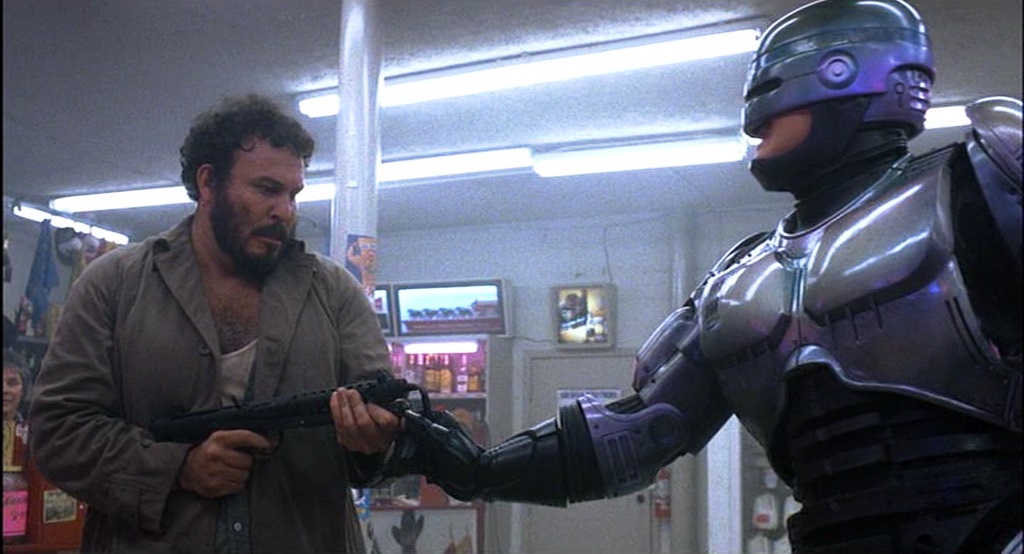
Amazingly, all the actors became big names in cop shows, with David Soul from Starsky & Hutch and Unsub and Robert Urich from SWAT and Spencer for Hire. (Felton Perry is from Robocop, incidentally.)
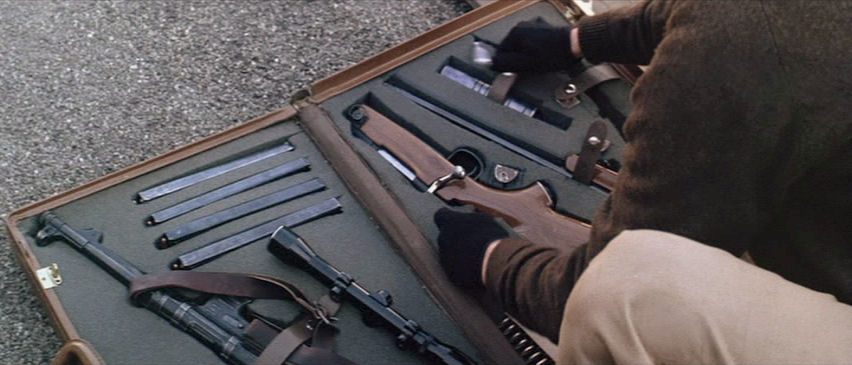
TOOLKIT OF TERROR: Scorpio hard at work, with a 'portable' .30-06. Scriptwriters are always one step ahead of investigators, aren’t they!?
But, more to the point, the best way to expose real-world plots is to unravel the lacklustre types' plot in a movie like Magnum Force. It’s either that or justice becomes a cliché itself!