What you don’t want to hear is that putting the foundation of my new life in Paphos (Cyprus) in place turns out to be one of the most exhausting experiences of my life. What you don’t want to hear is that happy stories are often preferred when someone moves to a new world, as I do from Amsterdam (the Netherlands).
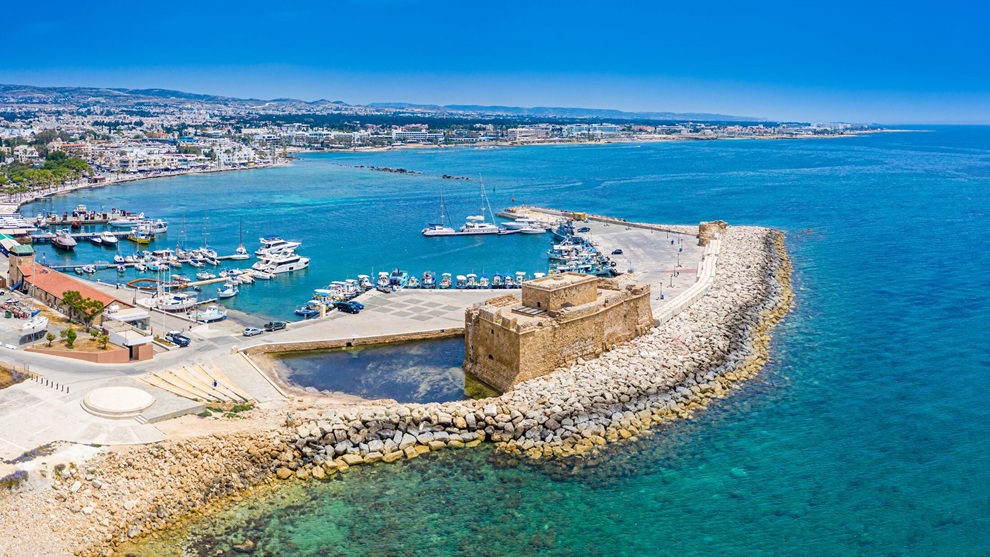
The Insta-perfect photographs of places overlooking the Mediterranean, and the reassuring idea that leaving one country for another is an elegant act of reinvention—which, of course, it is—have undeniable appeal. What you don’t want to hear is that there is much more to it than that.
What you don’t want to hear is that it can be deeply destabilising. Finding the Insta-perfect version of Paphos comes with a few hurdles. While buying a house remotely, I experienced a dramatic collapse of confidence and an erosion of certainty.
Parts of that process leave a mark that will be impossible to forgive for many years to come. I’m literally traumatised. After weeks of sleepless nights, as discussed with the house doctor, my neighbour asked if I was sick when he saw me walking my dog on the street. Let’s not go there.
Some parts are unheard of in the Netherlands. For instance, early possession of a mortgaged home. One that came out of nowhere, as I was told that the property was ‘free of debt’ before my digital viewing. Yes, I bought a house I didn’t visit in person. People who know me know that this isn’t typically me. And I’m not rich, so I cannot afford to make mistakes.
In the Netherlands, full transparency is the norm. Buyers and sellers are in touch all the time and are very direct in their communication. If buyers ask sellers about the mortgage, sellers provide direct answers on the amount, bank, and other related matters. I’m now heading in the right direction with this, but there’s still a long way to go with the rest of the process.
In the Netherlands, the sale of a home can be done within one week and doesn’t require lawyers, only a notary. The agent leads the process. In Cyprus, it’s a process of about six to seven months for a regular resale, with lawyers, and the agent moves to the background. Although another agent stepped in and supported me on an ongoing basis, as my friend said, the agent shouldn't have disappeared entirely. In any case, the long-form communication between lawyers, so the ‘legalisation’ of this process, is nothing less than a culture shock.
The purchase confronted me with how well I understood the rules in Amsterdam—no rocket science, no-nonsense—and with the social privilege I had. I wouldn’t have to ‘prove’ anything to anyone, because of my track record and the tens of thousands of personal relations all over the world who can vouch for me. But also simply because people treat each other differently in real estate deals.
Mostly, I wouldn’t have trouble with selecting people for services. I would be able just to trust, and they would trust me back. Now, the unconscious competence and familiarity need strengthening while I broaden my network in Cyprus. Luckily, it exists, so I’m not starting from scratch! But it’s not yet what I need it to be. Ask me in a year.
What you do want to hear is that Cyprus is a blessing. There’s a softness to daily interactions that much of northern Europe has, in many ways, lost. What you do want to hear is that life feels less hurried in Paphos, with more space for authenticity, and a healthy distance from the accelerated problems facing the Netherlands—and, increasingly, much of Europe.
What you do want to hear is that Amsterdam shaped me. It challenged me intellectually, sharpened me professionally, and gave me opportunities for which I remain grateful. But it also trained my nervous system to operate at a pace that was no longer sustainable, while the growing clash between norms and values became increasingly difficult to reconcile.
What you do want to hear is that I didn’t move to Cyprus to escape life, but to improve it. More than anything, I came to restore my health, protect my vitality, and create the conditions for a life that feels more aligned with who I am and how I want to live.
Cypriot philosopher Nektarios Savvides wrote that identity emerges most visibly inside liminal spaces. Those unstable psychological territories where a person no longer fully belongs to what came before, but hasn’t yet integrated into what comes next. Mentally and physically, that’s what I’ve been going through.
At night, fully awake for hours on end, while my instincts could initially barely tolerate the procedures of my purchase—rightly so, because my instincts protected me (I’m a business woman and not a Barbie doll, ‘stupid’ foreigner, or cash cow; how hundreds of foreigners are treated and scammed with real estate all over the world is evil)—I realised migration is existential because it rearranges a person’s relationship with certainty itself.
Cyprus exists in a permanent dialogue between worlds. Europe and the Middle East intersect here culturally, historically, and psychologically. Cyprus often feels simultaneously peaceful and unsettled. That tension gives it intellectual texture. It makes me think of the Cypriot thinker Chrysoula Vasilou and her interpretation of topos, the philosophical idea of place.
For Vasilou, belonging is rooted in memory, participation, and emotional recognition. It cannot be bought. A person may own a house and still feel psychologically adrift, while someone with few possessions may experience a deep sense of rootedness. Modern migration narratives often overlook this paradox, even though it lies at the heart of what it means to settle somewhere truly.
Meanwhile, relocation has become aestheticised. Entire industries now market fantasies as social media has transformed migration into visual lifestyle branding. The deeper questions remain unresolved, including what it means to belong. I haven’t moved solely for Insta-perfect Paphos. I don’t yet entirely understand why Paphos, but my inner calling to move there has been unmistakeably clear, so I answered. I’m in Cyprus to belong within tension.
I haven’t learned Greek. I have mercy if there are misunderstandings, adjustments, and observations. That vulnerability is precisely the point. German philosophical anthropologist Helmuth Plessner argued that human beings are fundamentally artificial creatures who construct routines, systems, and social structures to protect themselves from existential instability. Moving to Cyprus means putting those things together.
It’s an honour to be there, but I have no idea how it’s going to work out in terms of aligning values. Transparency and integrity are what I live by. What you see is what you get with me. I have very much a take-it-or-leave-it attitude in life, as I like to spare myself the unnecessary noise and the disgrace people cause each other. I already had my fair share within the family system of origin.
Now, as a 41-year-old woman, Paphos should represent joy and peace of mind. Plus, I’m extremely sharp yet fair in my communication, as I always oppose injustice. I don’t care about hierarchy and status. I don't have more respect for the president of the world than for the bakery owner around the block. I hope I can stay that way.
Mostly, for the first time, I have to ask for support from people I know nothing about. Since I always do everything myself, unless I cannot or am not allowed by law, I feel nothing less than handicapped. It goes against my nature. It’s always less perfect than when people do things themselves. Especially if people have high standards like me, asking people I’ve known forever and trust is completely different. Let’s see how I’ll acclimatise, respectfully, while staying true to myself.