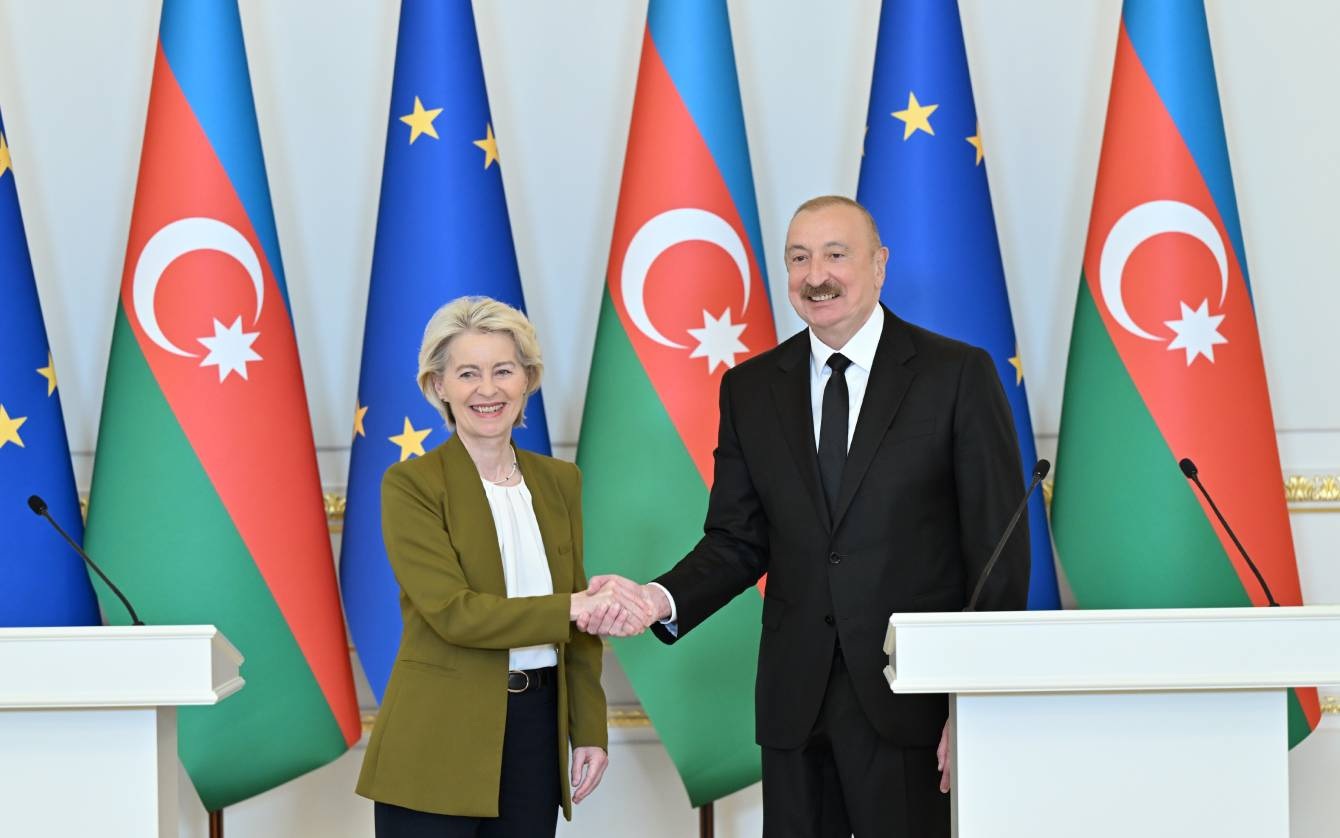
The visit of European Commission President Ursula von der Leyen to Baku on 1 July 2026 marks more than another milestone in Azerbaijan–European Union relations. It signals a broader geopolitical transformation in which the South Caucasus is increasingly viewed not as a peripheral region, but as a strategic bridge connecting Europe, the Caspian Basin, Central Asia and the wider Global South.
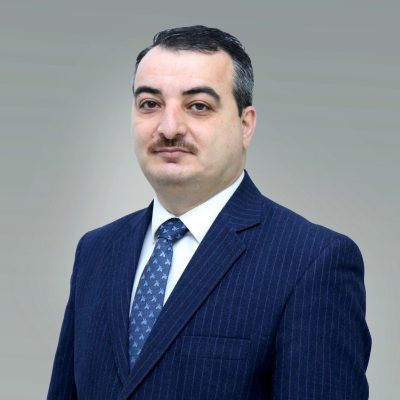
By Ilyas Huseynov
The announcements made in Baku–including the launch of an EU–Azerbaijan Connectivity Partnership, a €200 million Global Gateway investment package capable of mobilising up to €2 billion, support for transport, digital infrastructure and renewable energy, as well as preparations for a Regional Connectivity Investment Conference—demonstrate that Brussels is broadening its engagement with Azerbaijan far beyond traditional energy cooperation.
This evolution reflects a growing understanding that long-term European resilience depends not only on diversified energy supplies, but also on secure transport corridors, digital connectivity and stable regional partnerships.
For Azerbaijan, this development represents international recognition of a strategic vision pursued under the leadership of President Ilham Aliyev. Through consistent investment in transport infrastructure, energy diversification and regional diplomacy, Azerbaijan has positioned itself as the principal gateway between Europe and Central Asia.
The European Commission's decision to prioritise projects such as the Port of Baku, the Nakhchivan railway connection and the High-Level Connectivity Dialogue illustrates that Azerbaijan is increasingly perceived as an indispensable logistics and connectivity hub.
The European Union is Azerbaijan’s main trading partner. More than 40% of our trade is with the member states, and for the European Union, Azerbaijan is the main trading partner in the South Caucasus. Almost 70% of trade in the South Caucasus is trade with Azerbaijan.
At the same time, escalation in the Middle East, rising tensions between countries, and a crisis of international institutions are creating an extremely unstable external environment. In the immediate vicinity of Azerbaijan, the interests of major powers intersect, each pursuing its own strategic agenda. Under such conditions, Baku’s multi-vector foreign policy acquires particular importance.
The Middle Corridor: From alternative route to strategic artery
Perhaps the most significant outcome of the visit concerns the growing importance of the Trans-Caspian International Transport Route (Middle Corridor). Until recently, the corridor was often described as an alternative to existing Eurasian trade routes. Today, geopolitical realities have transformed it into one of the principal arteries connecting Europe with Central Asia and China.
The Middle Corridor is no longer simply a transport project. It has become an economic, geopolitical and strategic platform linking the European Union with the Turkic world. Azerbaijan occupies the central position within this emerging architecture, integrating maritime transport across the Caspian Sea with rail networks extending through Türkiye toward European markets.
The EU's Global Gateway initiative aligns remarkably well with Azerbaijan's long-term investments in logistics infrastructure. Rather than competing with regional initiatives, Global Gateway has the potential to complement ongoing efforts by supporting ports, railways, customs digitalisation and multimodal transport systems across the South Caucasus and Central Asia.
The Turkic World as Europe’s emerging connectivity partner
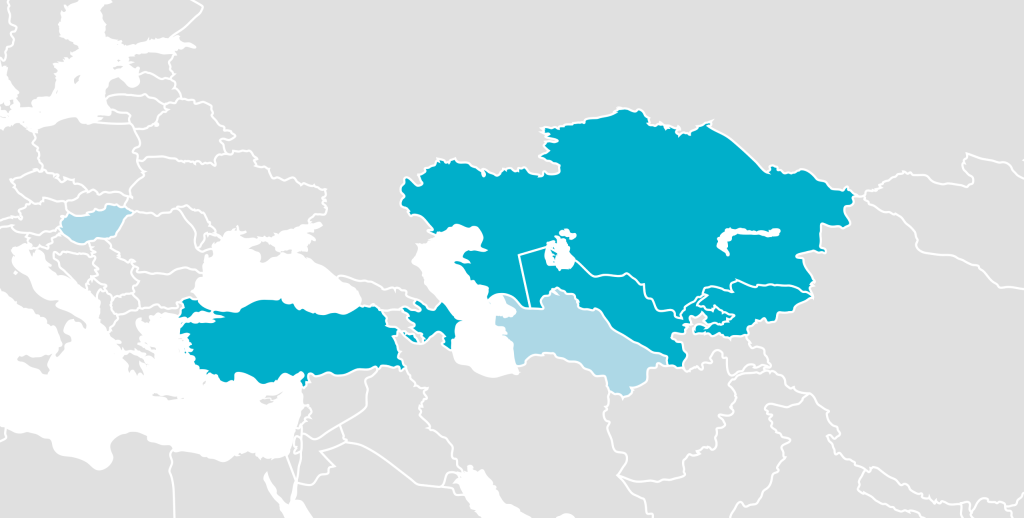
The implications extend well beyond Azerbaijan itself. As the institutional capacity of the Organisation of Turkic States (OTS) continues to expand, the entire Turkic region is becoming increasingly relevant to European economic and strategic interests.
The OTS Vision 2040 identifies transport integration, digital transformation, energy connectivity and sustainable development as core strategic priorities. Remarkably, many of these objectives now converge with the European Union's own Global Gateway strategy. Rather than representing competing geopolitical projects, these initiatives offer substantial opportunities for complementarity.
Azerbaijan’s current chairmanship of the Organisation of Turkic States creates a particularly favourable environment for advancing this agenda. Baku has consistently promoted regional connectivity, sustainable transport, digital integration and stronger economic cooperation among Turkic states.
The outcomes of the OTS Summit in Gabala provide a solid foundation for transforming these priorities into concrete regional projects involving not only Turkic states but also European partners.
For Europe, closer engagement with the OTS offers access to rapidly growing markets, diversified supply chains and secure transport routes. For the Turkic world, cooperation with the EU provides investment, technology transfer and expanded market access. The result is a mutually beneficial strategic partnership rather than a zero-sum geopolitical competition.
Energy Cooperation Enters a New Phase
Energy remains one of the strongest pillars of EU–Azerbaijan relations, but its character is changing fundamentally.
Azerbaijan has already established itself as one of Europe’s most reliable natural gas suppliers through the Southern Gas Corridor. However, discussions during von der Leyen’s visit clearly indicate that the next chapter will increasingly focus on renewable energy, green electricity transmission, and regional energy integration.
Large-scale investments in offshore wind energy in the Caspian Sea, the Green Energy Corridor linking Azerbaijan to Europe, and electricity interconnections across the South Caucasus point toward the emergence of a new regional energy architecture.
This transition also creates new opportunities for Kazakhstan and Uzbekistan, whose renewable energy potential can be connected to European markets through Caspian infrastructure.
Consequently, the Caspian region is evolving from an oil and gas basin into a future hub for clean electricity exports, positioning the Turkic states as important contributors to Europe's green transition.
COP29 Legacy and Sustainable Connectivity
The momentum generated by COP29 further strengthens Azerbaijan's international profile.
Hosting one of the world's most significant climate conferences accelerated discussions on renewable energy, green finance and sustainable transport. Today's cooperation agenda with the European Union increasingly reflects that legacy. Investments in digital infrastructure, clean energy, smart logistics and environmentally sustainable transport corridors illustrate how climate diplomacy is becoming integrated with economic development.
In this respect, Azerbaijan occupies a unique position. It is simultaneously an energy producer, a transport hub, a climate-diplomacy actor, and a bridge between Europe and the Turkic world.
A new geopolitical landscape
Equally significant is the broader geopolitical context.
President von der Leyen’s public support for the Azerbaijan–Armenia peace process demonstrates that the European Union increasingly views regional stability as an essential prerequisite for connectivity and investment. Sustainable peace enhances investor confidence, facilitates infrastructure development and creates favourable conditions for long-term regional integration.
Rather than treating the South Caucasus merely as a neighbourhood policy issue, Brussels is increasingly incorporating the region into its wider Eurasian strategy. Azerbaijan, through its balanced foreign policy and expanding regional influence, has become one of the principal architects of this emerging geopolitical landscape.
At the same time, the Azerbaijani state continues to consistently implement its own strategy, which includes not only the development of bilateral ties with Europe but also active participation in broader integration processes, such as strengthening links within the Turkic world. This multilayered diplomacy enables the country to reinforce its position across multiple directions simultaneously.
Looking ahead
The significance of Ursula von der Leyen's 2026 visit extends well beyond bilateral diplomacy. It reflects the emergence of a new strategic equation linking the European Union, Azerbaijan, the Organisation of Turkic States, and Central Asia through connectivity, sustainable energy, and regional cooperation.
If effectively implemented, the Global Gateway initiative, the Middle Corridor, the OTS Vision 2040 and Azerbaijan's connectivity strategy could collectively reshape Eurasian economic geography over the coming decade.
For Western policymakers, the key lesson is increasingly evident: Azerbaijan is no longer viewed solely as an energy supplier. It has become a strategic connector linking Europe with the Turkic world, Central Asia and the broader Global South.
As geopolitical competition increasingly revolves around resilient supply chains, secure transport corridors and trusted partnerships, Azerbaijan's role will continue to grow—not only as a regional power, but as one of the indispensable pillars of Eurasian connectivity.
Dr Ilyas Huseynov holds a PhD in Political Science. He serves as the Head of the Centre for Turkic World Studies (CTWS), which operates under the Centre for Analysis of Economic Reforms and Communication (CAERC). His research interests include the Organisation of Turkic States, regional integration and economic cooperation, economic diplomacy, digital transformation, transport and connectivity corridors, and contemporary geopolitical processes unfolding in Eurasia. Ilyas Huseynov is the author of more than 100 scholarly publications, including book chapters, articles published in peer-reviewed journals, and papers presented at international academic conferences.