There was a time when the word ceasefire meant simple things. The shooting stopped, the skies were clear, and silence itself became proof that something had changed. In that older vocabulary of conflict, peace had a sound, and more importantly, it had the absence of sound. And the sky itself used to carry a different symbolism; where birds moved, where weather arrived, where distance felt calm rather than monitored. The sky was, in its own quiet way, part of the idea of peace.
By Nadia Ahmad
But in Lebanon today, especially in and around Beirut, that meaning feels slightly shifted and not rewritten. Just… shifted. Officially, the country lives under a ceasefire framework. The language is there, the statements are there, the diplomats are there. On paper, everything has a definition.
But life on the ground, or under the sky, feels like something else entirely.
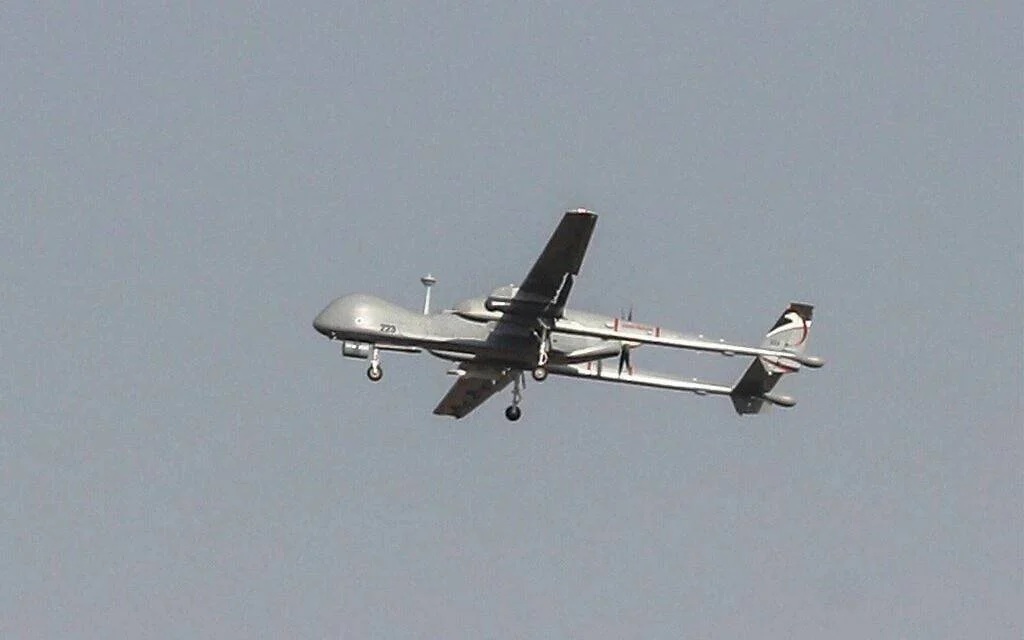
Because before the city fully wakes up, before traffic starts arguing with itself, there is often already something above Beirut. A sound you notice before you even decide to notice it. The drone buzz. Not always seen, but often heard. And once you hear it, you don’t really un-hear it. It becomes part of the background. And even silence is not fully silent anymore; it just means the sound has moved slightly further away.
That’s where something strange happens to the word ceasefire.
In Beirut cafés, in taxis stuck in long lines of traffic that never seem to end, in living rooms where the TV is on but nobody is really watching it, conversations stop for a second when the buzz passes overhead. Just a second. Then they continue, almost automatically, as if the interruption was folded into the sentence itself.
Sometimes someone looks up and says, half laughing, half serious: “So this is the ceasefire?”
Someone else answers immediately: “First cease the drones.”
And someone, trying to make it lighter: “At least give them a quieter engine if peace is the idea.”
People laugh. Not because it is funny in itself, but because what else do you do with it?
There is also a strange normality in how quickly the moment passes. The joke is made, the sound continues, the coffee is stirred again, the conversation returns to whatever it was before, as if the sky had briefly joined the table and then left without ordering anything.
It is not only ordinary people anymore either. Even diplomats in the city, the ones who usually choose every word carefully, sometimes pause mid-sentence when the buzz crosses the sky. They do not comment on it, at least not openly, but the pause is there. Tourists too. They come expecting sea, sun, Beirut stories, nightlife, Mediterranean softness. They hear it within hours. They look up. They ask what it is. And the answer is never dramatic, just normal. Too normal.
That “too normal” reaction is often what surprises them most.
Because the sky was always supposed to be the soft part of life. Birds, weather, distance, calm. That was the image. But now, for many people here, the sky feels slightly reassigned. Not completely. Birds are still there. Planes still come and go. Clouds still do what clouds do. But there is another layer on top of it all, something mechanical, repetitive, persistent enough to become part of memory without asking permission.
And so looking up is no longer just looking up. It carries a small question with it now. The sky did not change. But the meaning of it did. And maybe that’s the uncomfortable part.
Because ceasefire used to be something you could almost feel physically. You could open a window and sense it. You could tell children “it’s quiet now” and mean it fully. Not a partial way. Not a “quiet except…”
But now everything feels slightly in-between.
Life continues. Always. That part is very Beirut. Cafés are full even when the world is not calm. Traffic is loud even when politics is silent. The sea front is busy even when nobody agrees on anything.
And above all that, something keeps moving in the sky.
There are moments when you notice how quickly adaptation happens. At first people look up every time. Then only sometimes. Then only when it is closer. Then not at all, except when someone else reacts. It becomes part of the city’s background learning system. Not discussed, just absorbed.
In one café near the coast, an old man once said without much drama, “We used to look at the sky for weather. Now we look at it for other people’s weather.” Nobody asked him to explain. It was understood.
In another place, younger people joked that if silence ever fully returns, it might feel suspicious at first, like something is missing rather than something is gained. That is what long transitions do to perception. They don’t just change reality; they change what normal feels like.
Even visitors begin to adapt. On their first day they ask questions. On their third day they stop reacting every time. On their fifth day they are already sitting with coffee when the buzz passes, only occasionally glancing up, as if learning a new etiquette without being told.
There is also something else that slowly becomes clear when you stay long enough. It is not just the presence of the sound, but the way it rearranges attention. Conversations shorten slightly when it passes. Laughter comes a bit quicker afterwards, as if people are unconsciously repairing the atmosphere. Even silence between sentences feels different, less complete, more aware of what is above.
And yet life refuses to collapse under it.
That is the part outsiders sometimes misunderstand. Beirut does not pause for its interruptions. It folds them in. It continues. It insists on continuity even when continuity is imperfect. Cafés remain full, conversations remain loud, arguments remain political, jokes remain immediate. The city does not wait for ideal conditions. It never really has.
Maybe that is why the word ceasefire becomes unstable here. Because it suggests an ending that feels clean, and what people experience is not clean at all. It is layered, partial, uneven.
Not war, not peace.
Something in between, with sound still in the sky.
And maybe that is where the humour becomes necessary again. Because humour is not decoration here; it is structure. It is how people keep distance from what is too close.
So they joke. They normalize. They continue conversations mid-buzz, mid-interruption, mid-everything. Maybe that is the real definition forming here, without anyone officially deciding it.
A ceasefire that does not feel like silence anymore. A ceasefire where the sky is not empty,… present in a different way. And still, now and then, someone looks up and says it again, the same line, like it is both a joke and a definition:
“First cease the drone buzz"