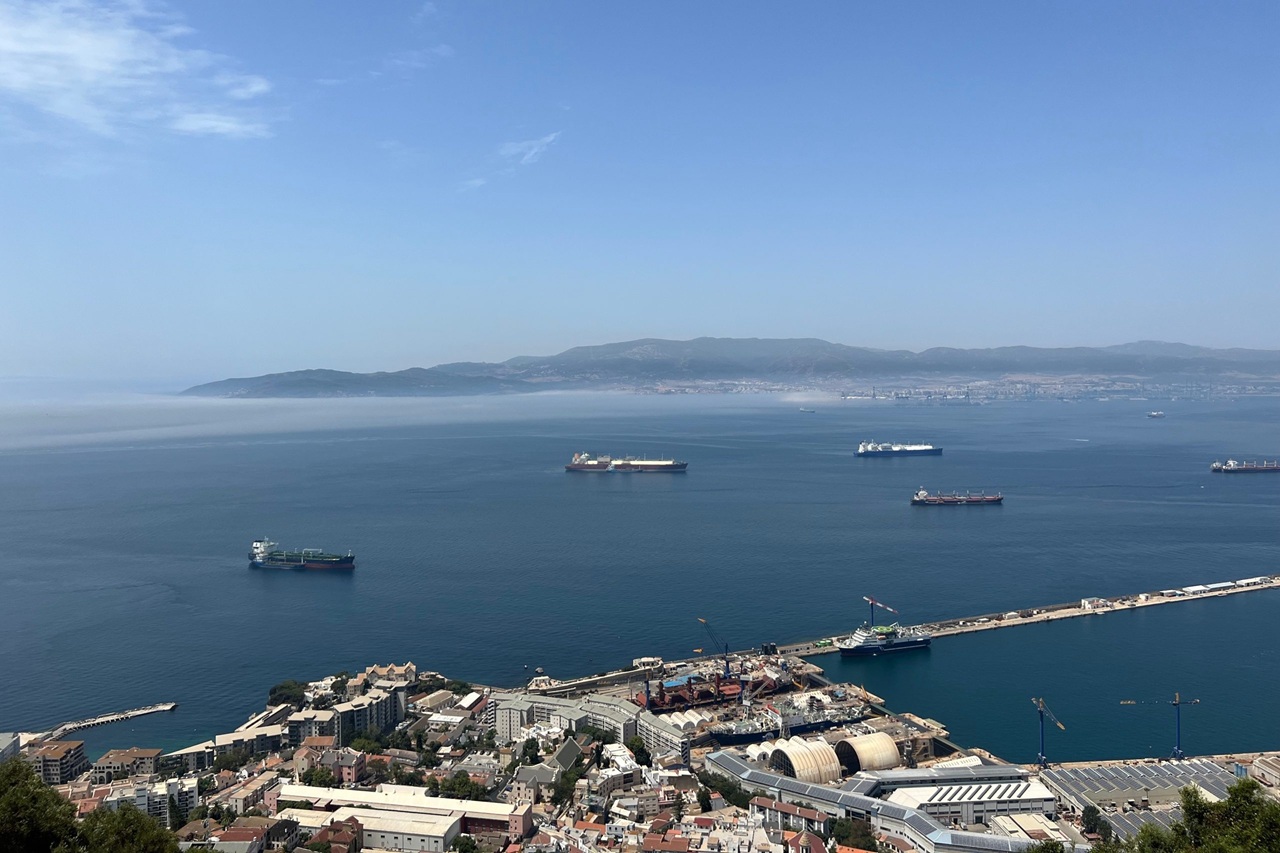
At dawn, the Strait of Gibraltar looked as indifferent as it had for thousands of years. The same narrow stretch of water that separates Africa from Europe reflected the morning sun with a deceptive tranquillity. Tourists admired the coastline, fishermen prepared their nets, and ferries followed their familiar routes. Yet, history has a habit of choosing ordinary mornings to announce extraordinary moments.
By Nadia Ahmad
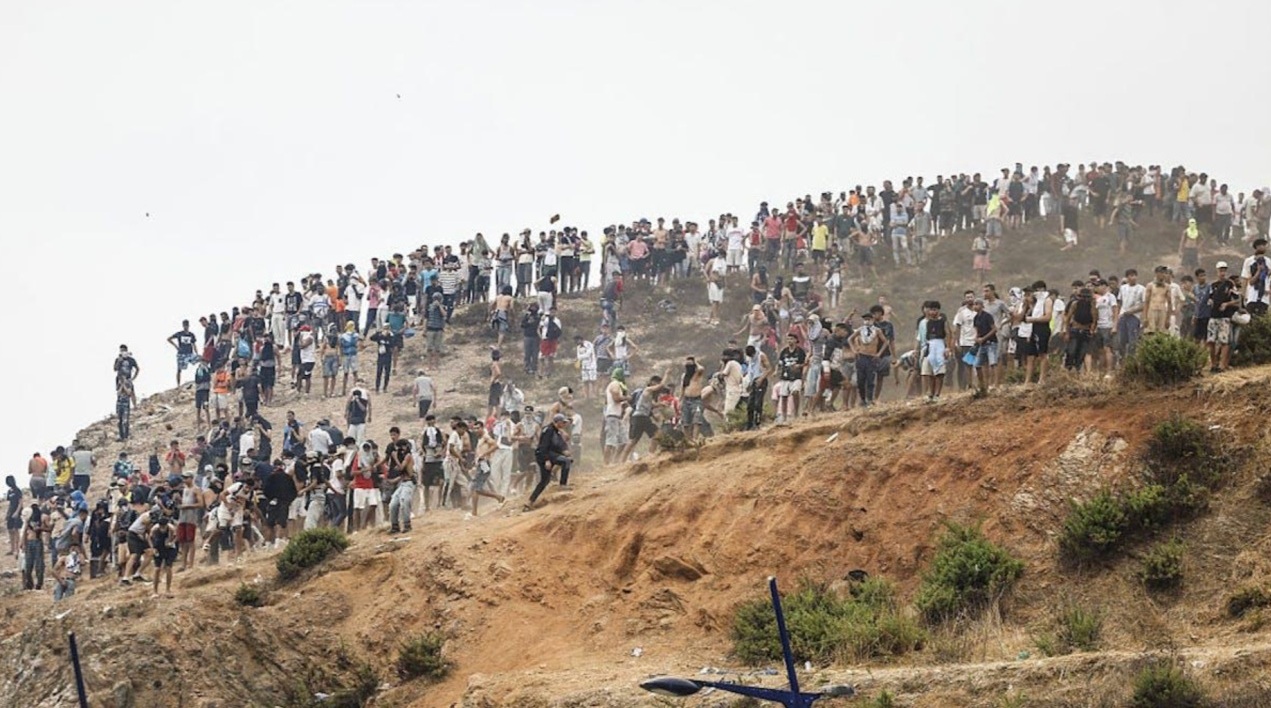
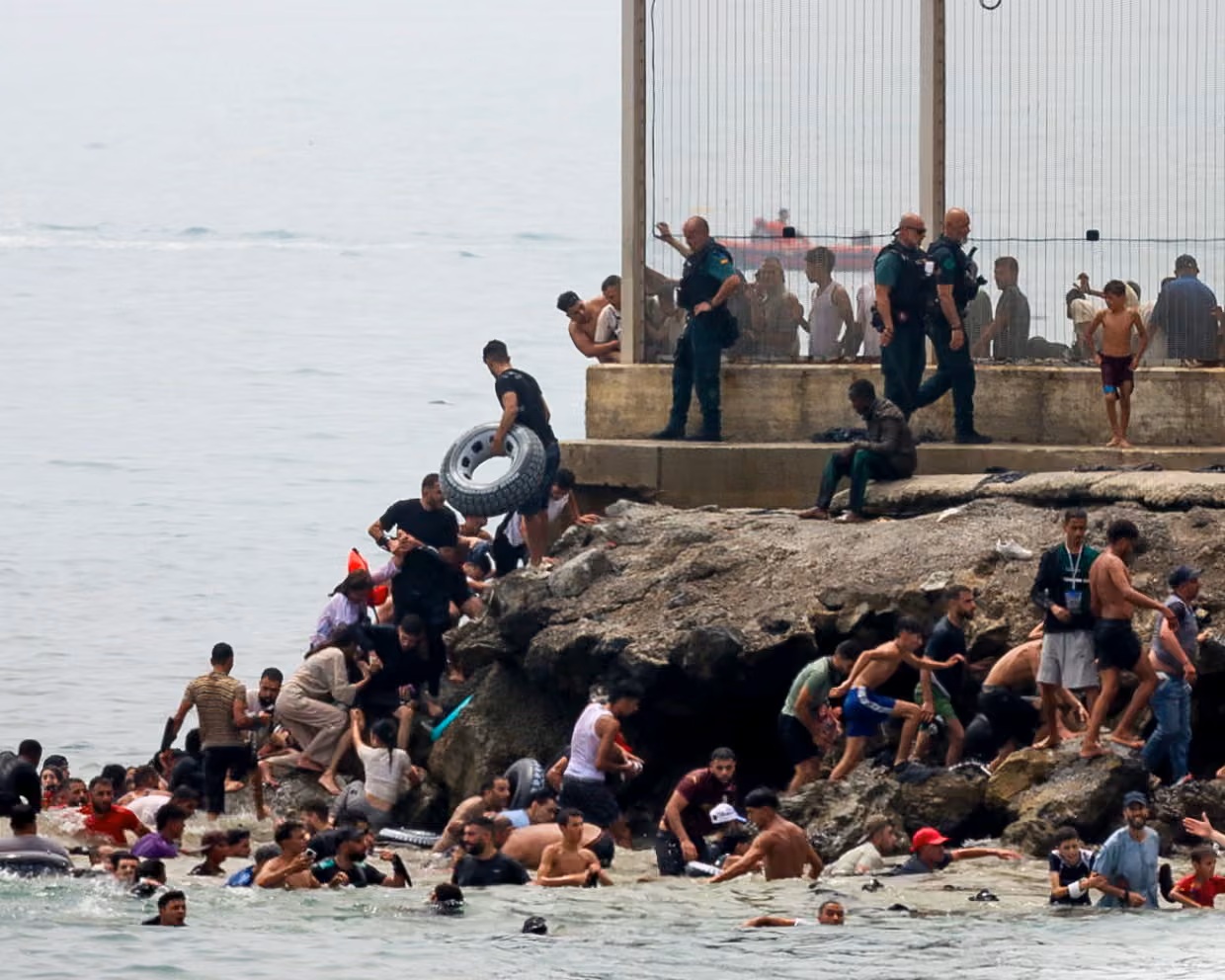
Then came the headlines. Tens of thousands of men crossed from Morocco toward the Spanish enclave of Ceuta in a single day, producing one of the largest migration surges Europe has witnessed in recent years. For politicians it was another border emergency.
For security services it was a logistical nightmare. But for many Europeans, the event awakened something far older than a debate over asylum policy or border management. It stirred a memory.
The sea between Morocco and Spain has never been merely a geographical frontier. It has always been a bridge between civilisations, religions, empires and ambitions. Every crossing across that narrow passage carries with it echoes of previous crossings.
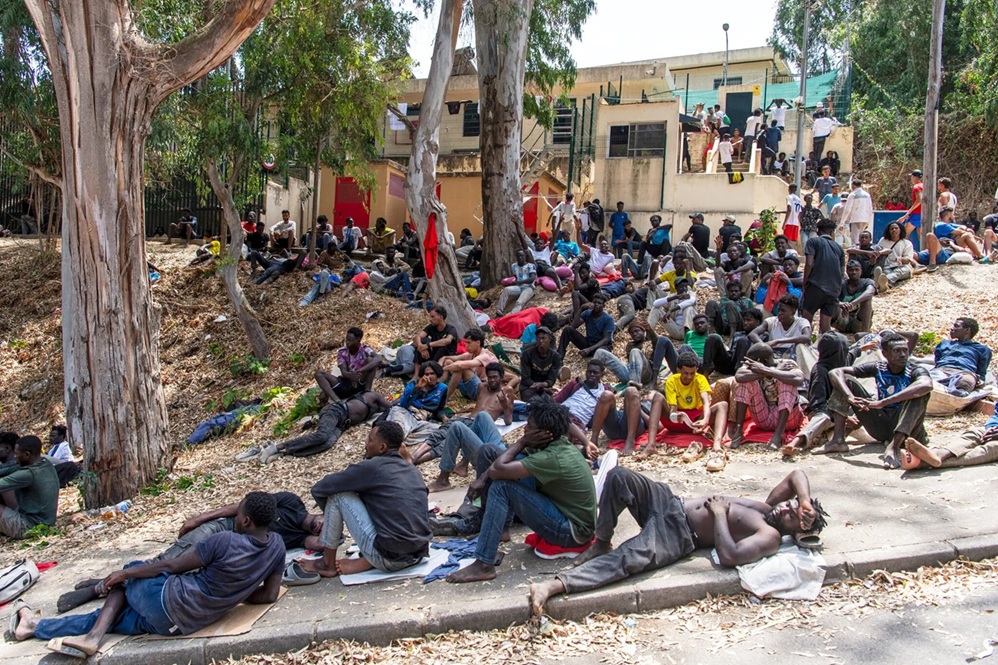
That is why the latest images from Ceuta resonated so deeply. Europeans were not simply watching migrants reaching their shores. Many felt they were watching history knock once again at the gates of the continent.
More than thirteen centuries ago, another crossing from North Africa transformed the destiny of the Iberian Peninsula. In 711, Tariq ibn Ziyad led a force across the same waters and began a chapter that would become known as Al-Andalus. The comparison should not be exaggerated.
Today's migrants are not an invading army, nor is Europe on the verge of reliving the eighth century. Yet history is rarely remembered through precise facts alone. It survives through symbols, collective memory and powerful images.
That is why the word "Andalusia" still possesses an emotional force far greater than its geographical meaning. It represents one of Europe's longest encounters with another civilisation, an encounter that lasted centuries before the Reconquista finally redrew the political map of Spain. Most Europeans believed that chapter had been permanently closed.
Yet every major migration crisis across the Mediterranean seems to reopen the old book, reminding the continent that history never disappears completely. It simply waits for the right moment to return to public consciousness.
Perhaps this is why migration has become much more than an economic or humanitarian question. Increasingly, it is discussed as a civilizational question. Europeans are no longer arguing only about labour markets, refugee quotas or border controls. They are debating identity, historical continuity and the future cultural character of their own societies. The latest events in Ceuta have once again transformed a practical policy issue into something far more profound: a conversation about Europe's memory itself.
The road to Ceuta did not begin on the beaches of northern Morocco. Like most turning points in history, it began years earlier, with a series of decisions taken in distant capitals, each one appearing reasonable in isolation, yet together producing consequences few had fully anticipated.
The first great watershed came in 2015, when Chancellor Angela Merkel opened Germany's doors to more than a million refugees and migrants. To her supporters, it was a defining humanitarian moment that demonstrated Europe's moral responsibility in the face of war and human suffering. To her critics, it marked the moment Europe abandoned the principle that borders are the foundation of sovereignty. Regardless of where one stands, few now dispute that the decision transformed European politics. It reshaped elections, accelerated the rise of anti-immigration parties, and turned migration into one of the defining political issues of the twenty-first century.
Yet the roots of today's migration pressures reach even deeper.
Long before the refugee crisis dominated European headlines, Libya had already become a warning. The fall of Muammar Gaddafi in 2011, following the NATO-backed intervention, left behind a fractured state whose Mediterranean coastline increasingly became a gateway for migrants seeking Europe. Gaddafi himself had often portrayed Libya as a barrier protecting Europe from uncontrolled migration from sub-Saharan Africa. Whether one accepted his rhetoric or not, the collapse of Libyan state institutions undeniably altered migration routes across the Mediterranean in ways Europe continues to grapple with today.
Syria added another chapter to the story. The country's devastating civil war displaced millions, sending waves of refugees toward neighbouring states and eventually toward Europe. The conflict drew in regional and global powers, producing consequences far beyond Syria's borders. Today, the Syrian president in exile in Russia, Bashar al-Assad, has become a symbol not only of a fallen regime but also of a geopolitical era whose aftershocks continue to shape European politics.
None of these events alone explains what happened in Ceuta. History is rarely that simple. But together they formed a chain in which each crisis amplified the next. A revolution in one country, a civil war in another, a humanitarian decision in Berlin, instability across the Mediterranean, and demographic pressures in Africa gradually converged into a single reality confronting Europe.
It is little wonder that many Europeans no longer view migration merely through humanitarian or economic lenses. They increasingly see it as the cumulative outcome of decades of strategic choices—some driven by idealism, others by intervention, others by necessity, and many by circumstances beyond anyone's control.
In retrospect, Europe's migration debate resembles less a sudden storm than a river whose tributaries were gathering strength long before the flood reached the continent's shores.
That is why the images from Ceuta resonated so powerfully. They were not perceived as an isolated incident. They became, for many Europeans, the latest chapter in a much longer story whose opening pages had been written years earlier in Berlin, Tripoli, Damascus and Brussels.
It is precisely at this point that Europe's migration debate ceases to be only about migration.
Across the continent, the discussion has evolved into something far deeper: demographics, identity, sovereignty and the uneasy question of whether Europe still possesses the confidence to define the limits of its own civilisation. The conversation is no longer confined to ministries of the interior. It now unfolds in cafés, universities, churches, television studios and around family dinner tables. Migration has become the prism through which Europeans increasingly interpret almost every political crisis.
This explains why a single episode in Ceuta can produce political shockwaves far beyond Spain. It is not simply about one border. It is about the symbolic frontier between Europe and Africa, between memory and modernity, between history and the future.
Unsurprisingly, competing narratives have emerged. Human rights organizations emphasize humanitarian obligations and the plight of those fleeing poverty or instability. Advocates of stricter border controls argue that uncontrolled migration risks overwhelming social cohesion and public confidence.
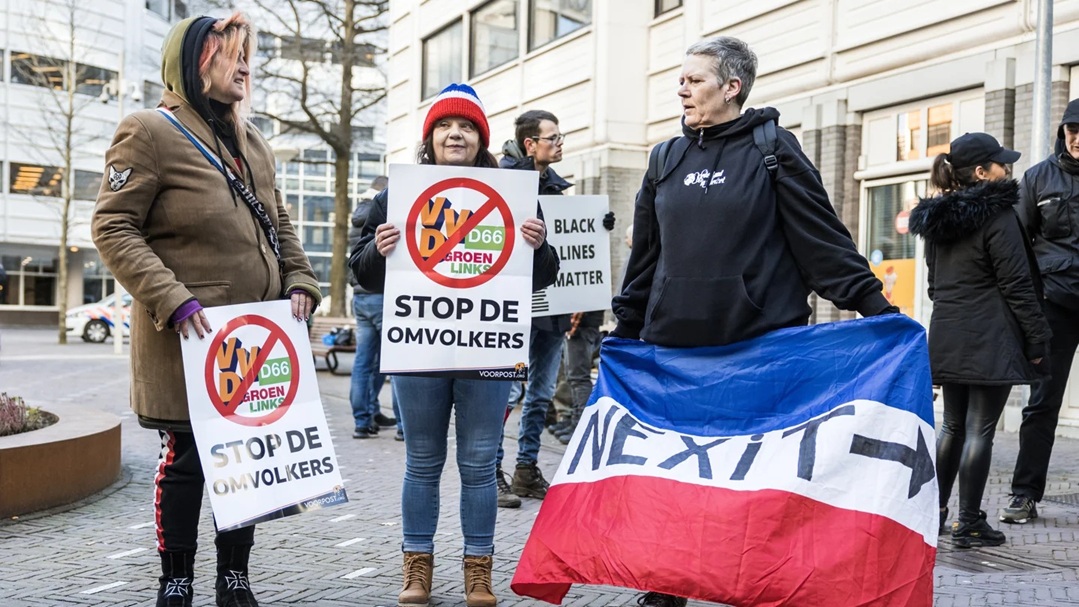
Between those positions lies a widening political battlefield that has reshaped elections from Italy to the Netherlands, from France to Germany.
As always happens during periods of uncertainty, alternative explanations flourish alongside mainstream analysis. Some commentators point to demographic trends in Africa, others to economic inequality, while some political voices in the United States and Europe have alleged that transnational activist networks, including organisations associated with George Soros, have encouraged more permissive migration policies. Supporters of those claims view them as evidence of ideological influence; critics dismiss them as conspiracy theories or as unsupported interpretations. Whatever one's position, the very existence of these competing narratives illustrates how profoundly migration has polarised Western politics.
Behind all these arguments lies an uncomfortable reality that Europe can no longer ignore. Africa is the world's youngest continent. Europe is among its oldest. One is experiencing rapid population growth; the other faces ageing societies, shrinking workforces, and declining birth rates. Geography has ensured that these two demographic worlds meet across a strait barely fourteen kilometres wide at its narrowest point.
Perhaps this is why the latest crossings stirred emotions that statistics alone cannot explain. Europeans were not merely counting arrivals. They were measuring the distance between the continent they inherited and the continent they believe they are becoming.
History rarely announces its return with fanfare. More often, it arrives quietly, disguised as a policy debate, a humanitarian emergency or a border incident. Only later do societies realise they were witnessing something larger than the headlines suggested.
The waters of Gibraltar remain as calm today as they were centuries ago. But calm seas have often carried history's most consequential journeys.
If there is one lesson that Europe has learned repeatedly, it is that geography is far more patient than politics. Governments change. Elections overturn yesterday's certainties. Coalitions rise and fall. Yet the Mediterranean remains where it has always been, connecting continents as much as separating them.
For centuries, Europeans celebrated the Mediterranean as the cradle of commerce, philosophy and cultural exchange. Today, it has become the stage upon which Europe confronts one of its greatest political dilemmas. The same sea that once carried merchants, pilgrims and explorers now carries desperate families, human traffickers, hope, fear and political symbolism—all in the same fragile boat.
This explains why the debate has become so emotionally charged. It is no longer a question of whether Europe should show compassion. Most Europeans agree that genuine refugees deserve protection. The harder question is whether compassion can coexist with secure borders, social cohesion and democratic consent. Increasingly, many voters fear that governments have offered generous moral language without convincing strategic answers.
The irony is striking. For decades, Europe sought to export stability beyond its borders through diplomacy, humanitarian aid and, at times, military intervention. Yet instability has shown a remarkable ability to travel in the opposite direction. The consequences of distant conflicts do not remain distant for long. They eventually arrive at Europe's ports, railway stations, schools, labour markets and ballot boxes.
That is the deeper meaning behind the images from Ceuta, not a prophecy that Al-Andalus is returning, nor evidence that Europe is destined to repeat medieval history. Rather, a reminder that history has an extraordinary capacity to shape political imagination. Civilisations are influenced not only by what happens to them, but by what they remember.
"The Resurrection of Andalusia" is therefore not the resurrection of a lost caliphate. It is the resurrection of a question that many Europeans believed had been settled forever: where does Europe end—not only geographically, but culturally and politically?
Every generation imagines that its defining challenges are entirely new. Yet history has a mischievous habit of recycling old questions in unfamiliar forms. The actors change, technologies change, slogans change. But the underlying dilemmas often remain remarkably similar.
As the sun sets once again over the Strait of Gibraltar, the water reveals no preference for those who cross it. It simply reflects the sky above. The choices, however, belong to Europe. Whether the continent responds with renewed confidence, deeper division, or a new political consensus will determine not only the future of migration, but the future story Europeans tell about themselves.
History does not always return with banners, cavalry or conquering armies. Sometimes it arrives in overcrowded boats, carrying smartphones instead of swords. And sometimes the most powerful resurrection is not that of an empire, but of a memory that a civilisation believed it had long since left behind.