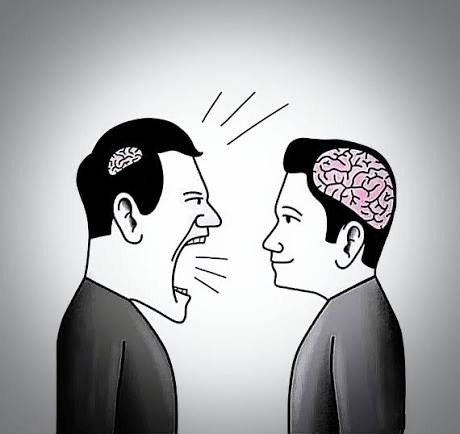
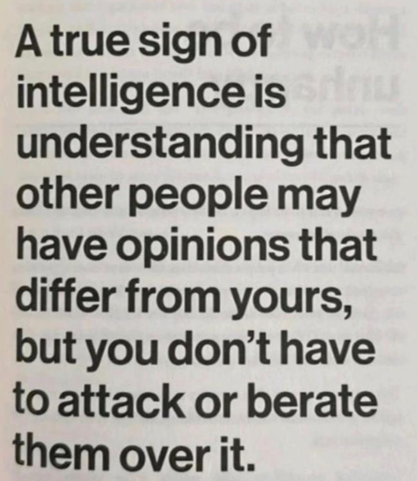
A quote crossed my desk recently that stopped me mid-scroll: *"A true sign of intelligence is understanding that other people may have opinions that differ from yours, but you don't have to attack or berate them over it." It's a simple line. No jargon, no framework, no five-step model. And yet it captures something most leadership training spends entire workshops trying to teach and still fails to land.
We tend to associate intelligence with being right — with having the sharpest answer in the room, the fastest comeback, the most airtight argument. But the longer I spend in boardrooms, negotiation tables, and project sites across industries, the more I've come to believe the opposite is true.
The smartest people I've worked with are rarely the loudest defenders of their own opinion. They're the ones who can hear a contradicting view, sit with it, and respond without needing to dismantle the person who offered it.
This isn't just a nice sentiment. It's backed by serious research. Harvard Business School professor Amy Edmondson has spent decades studying what separates high-performing teams from mediocre ones, and her conclusion is strikingly close to that quote: teams thrive not because everyone agrees, but because people feel safe enough to disagree.
Edmondson calls this "psychological safety", the shared belief that a team is safe for interpersonal risk-taking. In her research and in her book *The Fearless Organisation*, she found that the highest-performing teams weren't the ones with the fewest mistakes or the least friction.
They were the ones where people could voice a dissenting view, admit an error, or challenge a superior's idea without fear of being attacked, humiliated, or quietly punished later. Disagreement, handled with respect, isn't a threat to performance, but it's a precondition for it.
That single distinction between disagreeing and attacking is where most teams, and most careers, quietly derail. Here's what I've learned separates the two in practice:
When someone challenges your proposal, your strategy, or your numbers, they are rarely challenging *you*. Treating every differing opinion as a personal attack is the fastest way to shut down the honest feedback you need to make better decisions.
The instinct to correct someone is almost always faster than the instinct to understand them. Pausing to ask "help me understand how you got there" does more for your credibility and your relationships than any counterargument ever will.
You don't need the other person to agree with you by the end of the conversation. You need them to walk away respected, and you need to walk away having genuinely listened. Consensus is optional. Respect is not.

None of this means conflict avoidance. Edmondson herself is careful to draw that line. Psychological safety isn't about being nice for the sake of being nice, or letting bad ideas go unchallenged.
It's about creating the conditions in which the *best* ideas can surface, because people aren't spending their energy managing fear instead of contributing ideas. The teams, boards, and clients I respect most are the ones who argue hard about the problem and never once make it personal.
In a region and an industry where relationships often outlast any single deal, contract, or project, how you disagree says more about your judgment than what you disagree about.
Anyone can win an argument by raising their voice. Far fewer people can gracefully lose one, hold their position with conviction, and still leave the room with the relationship intact.
That, in the end, is the real sign of intelligence: not the ability to be right, but the discipline to stay respectful when you are, and the humility to learn when you're not.