Israel's northern horizon is changing, and this time the name causing concern in Jerusalem is not Tehran; it is Ankara.
Israeli Defence Minister Israel Katz has now openly warned Turkish President Recep Tayyip Erdoğan against what he described as “dangerous adventures” in Syria, insisting that Israel would not allow its security to be threatened. The warning came as tensions between Israel and Turkey escalated sharply following an Israeli strike on Syria's Abu al-Duhur airbase, where a Turkish military delegation had visited only hours earlier.
By Nadia Ahmad
Israel said it acted because Syria was moving toward allowing a Turkish military presence at the base. Ankara and Damascus rejected the allegation, while Washington has been working to establish a deconfliction mechanism between Israel, Turkey and Syria. The irony is difficult to miss.
A Syria that was supposed to be strategically transformed after Bashar al-Assad's exile to Moscow is now becoming the stage for a confrontation between Israel and Turkey. The chessboard has changed, and the players who thought they were making the cleverest move should look again at their position.
When Assad left Damascus, the strategic calculation seemed straightforward to many in Washington and Jerusalem. The Syrian regime had been one of the central pillars of Iran's regional network. Its territory had provided the land bridge through which Iranian influence reached Lebanon and Hezbollah. Its military relationship with Tehran made Syria an important component of the strategic environment Israel had been confronting for decades.
Removing that structure therefore appeared to offer an opportunity. But there was one problem with the calculation.
A state can be hostile without being unpredictable. A secular state can be an adversary without becoming an ideological extension of a transnational movement. And when an established state disappears, the space it occupied does not disappear with it. Someone else inherits it. Turkey is now making an increasingly convincing claim to that inheritance.
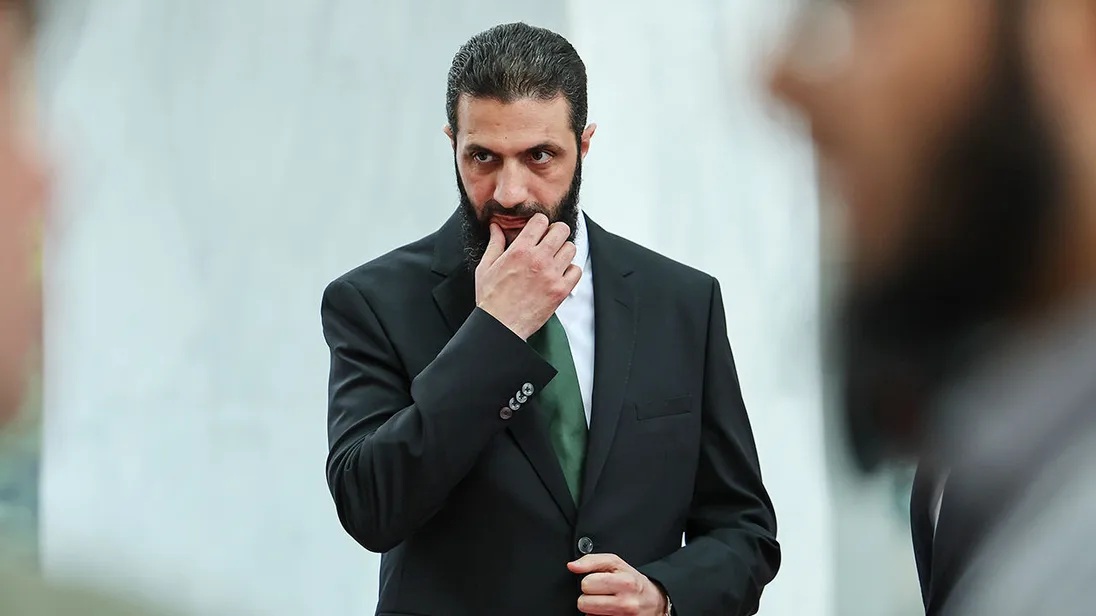
Ankara has become one of the principal external supporters of Syria's new leadership, helping rebuild military capabilities, providing training and equipment, and developing an increasingly close political relationship with President Ahmed al-Sharaa's government. The rehabilitation of Syrian military infrastructure, including the Abu al-Duhur facility, has now become sufficiently sensitive that Israeli and Turkish interests are colliding directly on Syrian soil.
This is the paradox at the heart of the new Middle East. Israel and the United States wanted the Iranian shadow reduced in Syria. They may instead have opened space for a Turkish one.
This does not mean that Ankara and Tehran are interchangeable. They are not. Turkey has its own interests, its own ambitions and its own interpretation of Sunni Islamism. Nor does it mean that Damascus and Ankara are one political entity. They are not. But ideology matters, and after October 7, Israel has less reason than ever to treat Islamist ideology as merely another language of Middle Eastern politics.
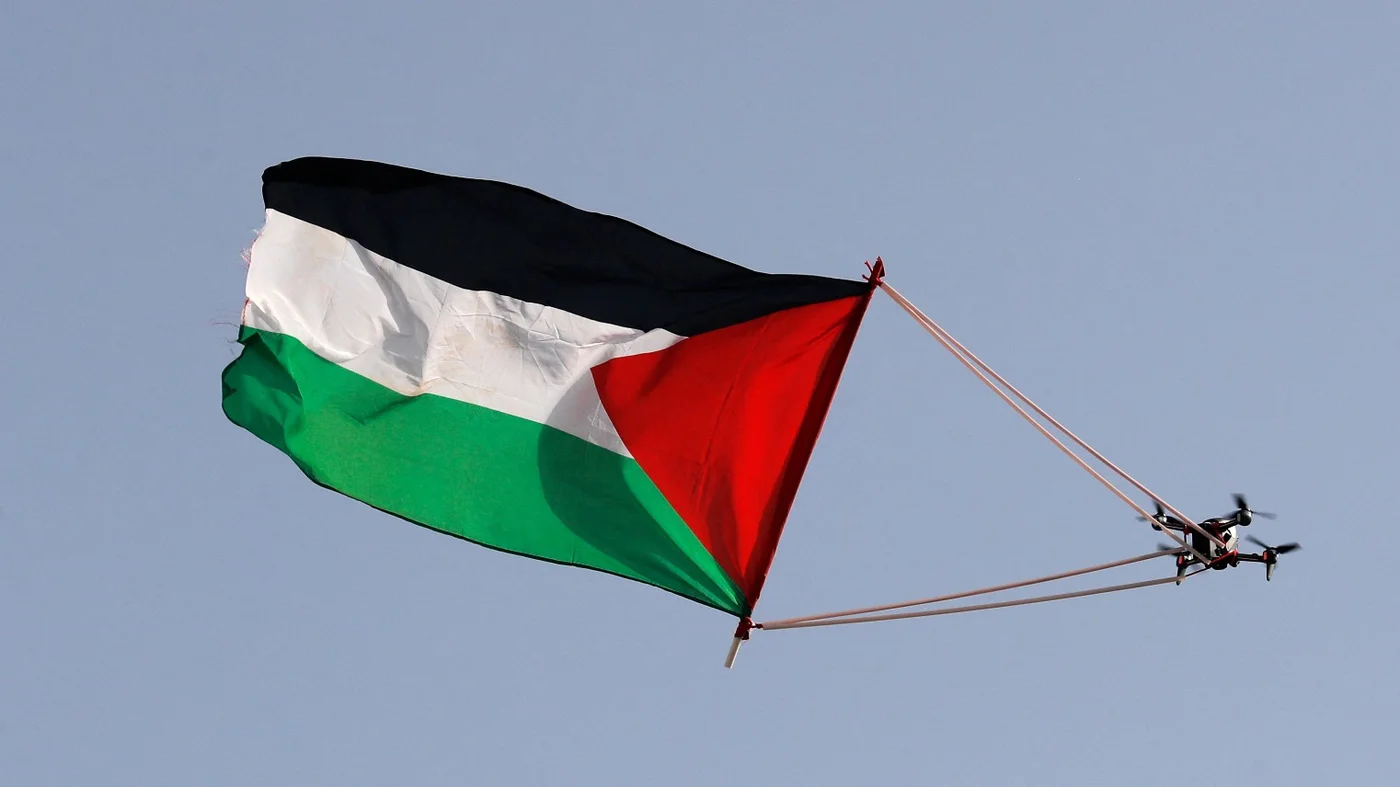
Turkey's relationship with Hamas is therefore central to understanding the new equation. Ankara has maintained high-level political relations with Hamas and does not designate the organisation as a terrorist group. Turkish officials have repeatedly hosted Hamas representatives, while Hamas has increasingly sought closer relations with Syria's new government. Reporting has described Turkey as becoming an increasingly important centre for Hamas political activity.
The significance is not that Hamas and the Syrian government have suddenly become one organisation. They have not. The significance is that the political environment surrounding Israel is changing.
For years, Hamas possessed a strategic relationship with Iran. Today, Turkey offers Hamas something different: a powerful NATO-member state with enormous regional ambitions, direct influence in Syria and growing involvement in Lebanon. And Syria offers something even more important. Depth.
The Hamas problem was once largely a Gaza problem. The Iranian problem was a Syrian and Lebanese problem. Turkey was an Eastern Mediterranean problem. The emerging map threatens to connect them. For this reason, the ideological character of the new Syria matters more than the diplomatic language emanating from Damascus.
The present Syrian leadership has attempted to transform itself from an insurgent movement into a governing authority. It wants recognition, reconstruction, international investment and normalised relations. Those objectives are understandable. But political transformation does not erase ideological genealogy.
The movement that produced today's Damascus leadership emerged from the Sunni Islamist insurgency and the world of jihadist politics. Its leaders may now speak the language of sovereignty and statehood, but the movement's historical origins remain part of the strategic equation.
Israel has learned, painfully, that ideological movements cannot always be understood by the suits they eventually wear. The old Syrian state presented a very different problem.
The Assad system was certainly hostile to Israel. It was closely aligned with Iran and supported Hezbollah. But it was also a secular Arab state operating through conventional institutions of power. Its frontier with Israel could be understood through deterrence, military calculations and the logic of states.
Israel did not need Assad to be its friend. It needed to know what kind of actor was sitting across the border. That distinction is now becoming increasingly important. The old Syrian frontier was hostile, but predictable. The new frontier is ideological, fluid and increasingly influenced by Turkey.
This is not an argument for romanticising the Assad years. It is an argument for recognising something that regime-change strategies often overlook: sometimes the strategic value of a state lies not in its friendship but in its ability to contain worse forces. And there was another dimension to Syria that deserves attention.
The country was not merely a battlefield between Iran and Israel. It was part of the Eastern Mediterranean. Syria under Assad maintained relations with Greece and Cyprus, while the wider Eastern Mediterranean gradually developed a strategic alignment involving Israel, Greece and Cyprus.
That relationship was shaped partly by the growing ambitions of Turkey, whose disputes with Greece and Cyprus have become one of the defining geopolitical tensions of the region.
The old Syrian order therefore existed within a recognisable Mediterranean system of states. The new Syria is being drawn increasingly into Ankara's strategic orbit. That changes the geometry. It also changes the meaning of Lebanon.
Turkey's growing engagement with the Lebanese government is no longer something that can be viewed in isolation from Syria. Ankara has been cultivating political and security ties with Beirut, with senior Lebanese officials visiting Turkey and both sides discussing closer strategic cooperation.
For many Lebanese who want a sovereign, pluralistic and secular state, this development naturally produces questions. Lebanon has already experienced what happens when external powers turn its territory into an arena for their competing visions. The country spent decades trapped between regional projects, while Hezbollah became the most powerful armed non-state actor in the country.
The weakening of Iranian influence does not automatically mean that Lebanon wants another ideological patron. Nor does a stronger Turkish role automatically mean that Ankara intends to reproduce Iran's model. But Lebanese secularists have every reason to ask what kind of regional order is emerging around them. Because the map now looks very different.
Turkey is involved in Syria. Turkey maintains a close political relationship with Hamas. Hamas is seeking closer relations with Damascus. Turkey is deepening its engagement with Lebanon.
And Israel is increasingly confronting Ankara over Syria and the Eastern Mediterranean. These are not necessarily parts of a single conspiracy. They do not need to be. Geopolitics rarely requires a conspiracy when interests naturally converge.
The old Syrian order therefore existed within a recognisable Mediterranean system of states. The new Syria is being drawn increasingly into Ankara's strategic orbit. That changes the geometry and the meaning of Lebanon.
Turkey's growing engagement with the Lebanese government is no longer something that can be viewed in isolation from Syria. Ankara has been cultivating political and security ties with Beirut, with senior Lebanese officials visiting Turkey and both sides discussing closer strategic cooperation.
This is where the older Abrahamic logic of the region becomes strangely relevant. The ancient stories of the Levant were always stories of borders, inheritance, exile and return. Kingdoms disappeared, peoples moved, empires arrived and departed, and the land remained. The modern secular state was, in many ways, an attempt to impose political order upon an older landscape of competing memories and identities. Zionism itself belongs to that complicated inheritance.
Israel is a modern, secular state with an ancient Abrahamic memory. Its security depends not only on military superiority but on the existence of a regional order in which states remain states. That is why secularism matters strategically even when secular governments are hostile.
A secular Syrian state could oppose Zionism while still recognising, at least implicitly, the distinction between a state and a transnational religious movement. The Islamist alternative introduces another logic. And that logic is particularly important for Syria's Christian communities.
Christians are not Syria's largest minority overall, but they constitute one of the country's historic and significant communities, with the Greek Orthodox Church of Antioch representing the largest Christian denomination among Syrian Christians. Their religious and cultural history is inseparable from the ancient Christian world of Antioch and the Eastern Mediterranean.
For these communities, the transformation from a secular Arab state into an Islamist-led political order is not merely an academic debate about constitutions. It is existential geography.
Their historical world reaches toward Antioch, Greece, Cyprus and the wider Mediterranean Christian tradition. Turkey, meanwhile, is the regional power whose strategic ambitions increasingly collide with Greece and Cyprus.
The transformation of Syria therefore carries consequences far beyond Damascus. It alters the balance between the Levant and the Mediterranean.
And this is precisely why the current Israeli-Turkish confrontation should not be reduced to a personality clash between Netanyahu and Erdoğan. Something deeper is happening. Israel and the United States made a chess move when they accepted, encouraged or benefited from the transformation of the Syrian balance. The intention may have been to weaken Iran's position and create a more manageable northern frontier.
But chess has a merciless rule: You do not control the square merely because you have removed the piece that occupied it. Someone else can move onto it. In this case, Turkey moved.
The Israeli strike on Abu al-Duhur was therefore more than another strike against Syrian military infrastructure. It was a warning to Damascus and Ankara that Israel has recognised the strategic implications of Turkish military involvement in the new Syria. The fact that Washington is now seeking a mechanism to prevent accidental confrontation between Israel and Turkey demonstrates how quickly the problem has moved from theory into practical diplomacy.
The irony is almost biblical. A strategic vacuum was created in the hope of removing one threat. Another power entered it. The Iranian bridge may have been weakened, but the Turkish bridge is being built. And the sword, as history repeatedly demonstrates, does not care who first drew it.
It changes hands. The question for Israel is therefore no longer simply whether Syria is hostile. The question is who shapes Syria, who influences Beirut, who gives Hamas political depth, and who controls the corridors connecting these arenas.
That is why the title of this story is not “Turkey threatens Israel.” The problem is more profound.
From Assad to Erdoğan, the chessboard itself has changed. Israel did not need Assad to be its friend. It needed the Syrian state to remain a state. The United States did not need Damascus to become pro-American. It needed the vacuum not to be captured by a power whose strategic interests could eventually collide with those of Washington's regional allies.
Instead, the post-Assad order has produced an Islamist-led Syria increasingly dependent on Turkey, a Turkey increasingly confrontational toward Israel, a Hamas increasingly connected to Ankara, and a Lebanon now attracting greater Turkish attention.
Perhaps none of these developments was the intended destination. That is precisely what makes the chess move so consequential. In the Middle East, the most dangerous mistakes are rarely the ones made by players who do not understand the board. They are made by players who understand the board they have today—and fail to imagine the board that their move will create tomorrow.