The withdrawal of US-led coalition forces will remove the justification used by Iran-aligned factions to retain their weapons. It will also expose whether Iraq's new prime minister possesses the authority to enforce his promises.
By Hiba Abdulwahhab
September 30 may become one of the sharpest turning points in Iraq's post-2003 history. On that date, the remaining forces of the US-led international coalition are scheduled to leave the country. Their withdrawal should close a long chapter of foreign military presence. Still, it will also remove the principal justification invoked by Iran-aligned armed factions for maintaining weapons outside state control.
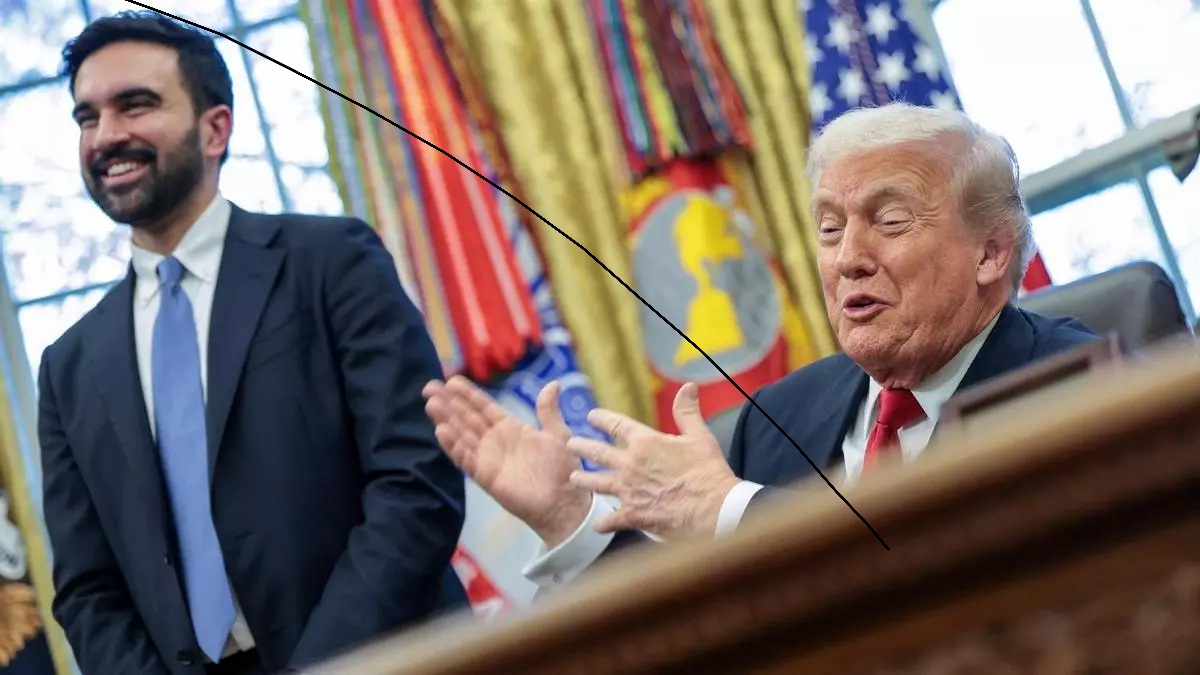
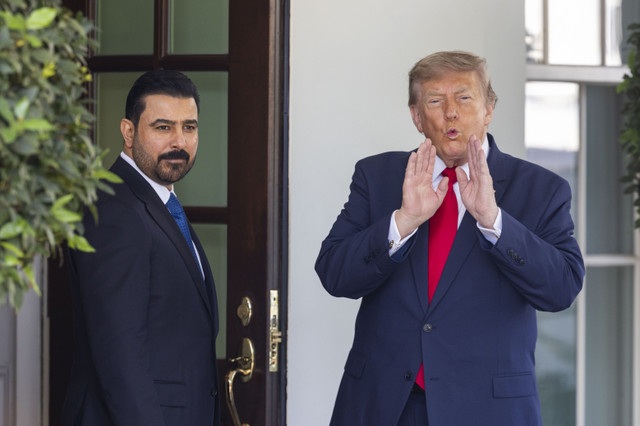
Prime Minister Ali al-Zaidi has tied all of his political credibility to this exact moment. During his visit to Washington in July, he declared that after September 30, there would be no weapons held outside the authority of the Iraqi state.
US President Donald Trump gave him an unusually warm welcome, touting "an American administration welcomed tremendous chemistry" between the two men, and the promise determined to reduce Iranian influence and end the Iraqi factions' capacity to threaten US interests and neighbouring states.
With the deadline approaching, Baghdad is already signalling a different interpretation, one this piece returns to in detail below. The apparent retreat raises one critical question: can al-Zaidi guide Iraq through the approaching turning point, or will the competing demands of Washington, Tehran, and Iraq's armed political establishment overwhelm his young government?
Al-Zaidi entered office under unusual circumstances. Months of political deadlock followed Iraq's latest parliamentary election. The Coordination Framework initially nominated former Prime Minister Nouri al-Maliki. Still, President Donald Trump publicly opposed al-Maliki's return and warned that the United States would no longer support Iraq if he were elected. Under intense internal and external pressure, the Framework abandoned his candidacy and selected al-Zaidi as a replacement.
A businessman and banker with no prior political experience, al-Zaidi appeared to offer Iraq an alternative to its familiar political class. His economic background suggested that he might approach the country as a struggling company requiring restructuring to reform the financial system, fight corruption, attract foreign investors, and implement more effective management.
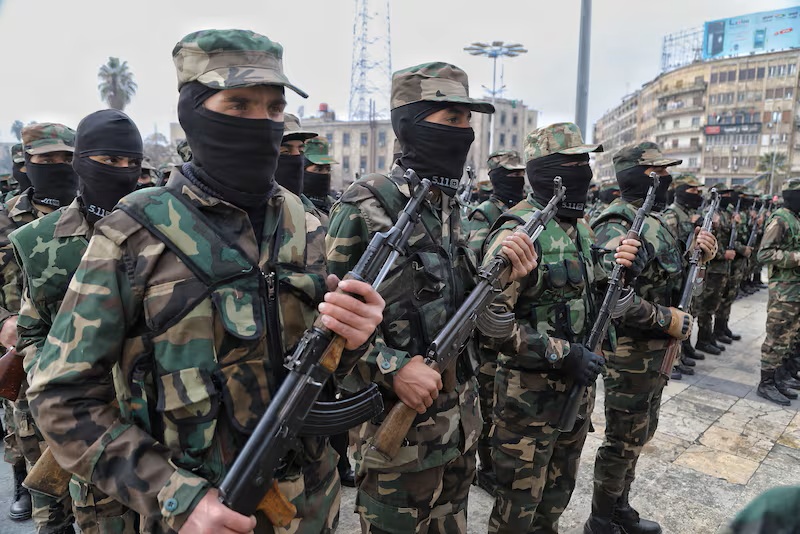
But Iraq's crisis is not simply managerial. The country's political parties, state institutions, armed factions, and economic networks have become deeply intertwined. Some of the factions al-Zaidi is expected to bring under state control already possess parliamentary representation, government positions, independent sources of revenue, and military capabilities that can rival those of the state.
More importantly, several factions belong to or are protected by the same Coordination Framework that brought him to power.
Washington's support and regional opportunity
Nevertheless, al-Zaidi has tools that many of his predecessors lacked. Trump offered him an unusually warm reception in Washington, praising his leadership potential and speaking of the "tremendous chemistry" between them.
US envoy Tom Barrack has also voiced his support for Baghdad's efforts to disarm and dismantle armed groups operating outside the state's authority, part of a joint US-Iraq statement committing both governments to the complete disarmament and disbandment of factions operating outside state control.
American support provides more than just political encouragement. Washington has considerable financial leverage over Iraq through its influence over dollar transfers and Iraq's access to its oil revenues. The threat of sanctions, financial restrictions, or action against militia-linked individuals and institutions gives al-Zaidi a strong argument he can use with Iraq's political leaders; failure to act will lead to severe costs for the entire country, not just the factions themselves.
The regional environment may also work in his favour. Armed groups operating from Iraq have been accused of attacking neighbouring countries, leading to increased Gulf concerns that Iraqi territory could become a platform for a wider regional conflict.
On the other side of Iraq's border, Syrian President Ahmed al-Sharaa is attempting to rebuild a state long fractured by war and foreign influence. Although Iraq and Syria have very different political systems, both countries are now being led by relatively young figures who have received support from Washington and face immense pressure to move beyond the conflicts and proxy networks of the previous era.
Their rise offers the possibility of a regional transition, but Iraq's entrenched armed factions make al-Zaidi's task particularly difficult.
Iran's last important arena
Iran has many reasons to resist this transition strongly. Following the setbacks to its influence elsewhere in the region, Iraq has become one of Tehran's last and most important arenas of political influence and strategic depth.
Iran-aligned Iraqi factions are not simply local allies; they provide Tehran with military leverage, political access, and the ability to influence Iraq's relations with Washington and its Arab neighbours. All of these reasons further strengthen Iran's resolve to keep its connections with these armed factions.
In August, Quds Force commander Esmail Qaani made an unannounced visit to Iraq, meeting with Iraqi politicians, security officials, and factional commanders. The visit itself was widely reported, though many of the details of what was discussed circulated only as claims across Iraqi media and social media.
According to Al Jazeera, Qaani communicated Tehran's position that the factions should not surrender their weapons "at present" and reportedly encouraged a political settlement rather than a confrontation between the government and factions that refuse to comply.
Qaani's message directly challenges the expectations al-Zaidi carried home from Washington. The prime minister now stands between an American administration demanding measurable action and the Iranian leadership determined to preserve its remaining regional assets. Within Baghdad, political figures fear that forcibly disarming the factions could end up triggering an intra-Shia confrontation that the government might not be able to control.
Baghdad reinterprets the deadline.
This pressure may explain the government's reinterpretation of September 30th. Iraqi officials now describe the date not as the point by which the weapons issue will be resolved, but as the beginning of a long process. Gradual disarmament is not necessarily a surrender.
Realistically, factions cannot be dismantled overnight, and a negotiated process may prevent bloodshed while allowing fighters or units to be integrated into legitimate institutions. A careful strategy could separate factions willing to comply from those determined to preserve independent military power.
However, gradualism becomes dangerous when it lacks a timeline, an enforcement mechanism, or a measurable outcome. Previous Iraqi governments repeatedly promised to bring weapons under state control while allowing the factions to expand their political, economic, and military influence. If September 30th passes with another committee, another dialogue, and another open-ended promise, it will demonstrate that Baghdad has postponed the problem rather than resolved it.
The contradiction is politically significant. In Washington, al-Zaidi presented September 30th as the moment after which weapons would no longer remain outside state authority. Back in Baghdad, the same date was recast as the starting point for an undefined, gradual process. Whether this shift reflects political realism or an early retreat will depend on the measures his government announces and enforces.
The test after September 30th
Al-Zaidi does not need to collect every weapon in Iraq by September 30 to prove that his policy is credible. However, he does need to announce an enforceable roadmap. This roadmap should include the registration and transfer of heavy weapons, the closure of unauthorised military facilities, financial oversight of faction-linked institutions, a clear timetable for integration or demobilisation, and legal consequences for groups that refuse to comply.
The greatest danger after September 30 is not only a confrontation between the government and the militias. Iraq could also face American sanctions, further attacks on its neighbours, declining foreign investment, and deeper erosion of state authority. Al-Zaidi must avoid both an uncontrolled domestic conflict and another empty compromise that leaves the balance of power unchanged.
September 30 will therefore test more than one government commitment. It will reveal whether Iraq is finally prepared to move from managing armed factions to building a state that possesses genuine control over the use of force. Al-Zaidi has Washington's support, regional interest in his success, and a rare opportunity to begin closing Iraq's post-2003 chapter.
Whether he can save Iraq from this turning point will depend not on what he promised before the deadline, but on whether the roadmap above- registration of heavy weapons, closure of unauthorised facilities, and real legal consequences for holdouts- actually materialises in the months that follow.