Every week brings a new tool that promises to write faster, analyse deeper or decide quicker than we can. In the energy and engineering world where I have spent more than two decades, the conversation has moved from “Will AI change our work?” to “What part of our work will still need us?”
The honest answer is reassuring, but it comes with a condition. The skills that keep professionals valuable are not flashy. They are the quiet, human capabilities that technology amplifies but cannot replace.
Research and teaching at Harvard Business School point in the same direction. Amy Edmondson’s work on learning organisations, Francesca Gino’s research on curiosity, and Clayton Christensen’s reflections on purpose and accountability all suggest that long-term success depends less on what you know today than on how you think, connect and take responsibility.
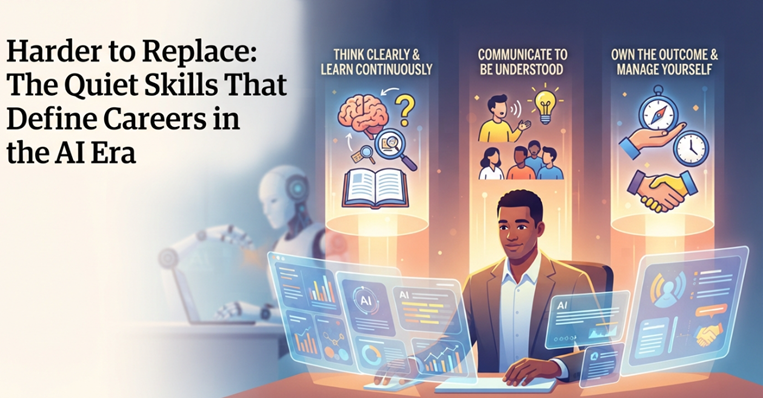
I group these skills into three pillars.
Think clearly and learn continuously. Information is no longer scarce; judgement is. Critical thinking means questioning assumptions, checking the evidence and separating facts from emotion. Not everything we hear deserves to become our opinion. Harvard Business School has long taught that good decisions come from disciplined analysis, not volume of data. Equally important is learning how to learn. Gino’s research shows that curiosity improves decision-making and reduces costly errors, and Edmondson’s studies show that teams that learn openly adapt faster. The most valuable professional isn't the one who knows everything, but the one who can quickly master the next thing. Adaptability is Intelligence for me, and it completes this pillar. Plans change, markets shift, and new tools appear overnight. Those who adjust without waiting for perfect certainty stay relevant, because they never prepared for only one version of the future.
Communicate to be understood, not to impress. Being good at your work isn't enough if people don’t understand what you mean. In large projects, misunderstanding is often more expensive than technical error. Clear communication means saying it simply, listening properly and asking better questions. Writing is its most visible form: clear writing is clear thinking made visible. Whether it is a proposal to a client, a management report, or a short email to a partner, simple and structured writing helps people understand faster and decide better. In my experience, the professional who can turn a complex technical issue into three clear lines is often the one leadership trusts most.
Own the outcome and manage yourself. No one will always remind you what matters. Self-management means organising your time, energy, focus, emotions and commitments. Motivation comes and goes; systems keep you moving. Ownership is the natural next step: see the problem, take responsibility, find a solution and follow through. Christensen encouraged leaders to judge themselves by the commitments they keep, not by titles or results alone. In every organisation I have worked with, the people who are remembered are not those who wait to be told the next step, but those who calmly say, “I’ll figure it out.”
Artificial intelligence will keep getting faster. It will draft our documents, analyse our data and suggest our options. That is good news, because it frees us to focus on what makes us human: judgement, clarity, learning, adaptability and responsibility.
None of these skills requires a new degree or an expensive tool. They require daily practice: asking one more question before deciding, rewriting one email to make it clearer, reflecting on one lesson learned, and keeping one promise we made to a client or colleague.
The future will not belong to those who compete with machines. It will belong to those who use them wisely while becoming more thoughtful, more trustworthy and more accountable themselves.
The question is not whether AI will change our careers. It is whether we will grow fast enough to lead the change.
Corporate Expert Writer, Business Professional in Energy/Water/Oil/Gas, Specialist in Coaching/Training, Association of Project Management UK Fellow Member. The professional who believes that adaptation to various social or corporate environments is the only way to survive and strive. Master the rules of the game in order to reach the top and change the rules.