Yerevan hosted an international conference this week on the fate of missing persons, presented as an exercise in “humanitarian dialogue and cooperation.” In Azerbaijan, this conference reopened the wounds from the past conflict. For more than thirty years, about four thousand Azerbaijani families have been waiting for Armenia to tell them what happened to their relatives. A conference on the missing, hosted by the country that holds most of the answers to this question and still keeps them to itself, is hard to take at face value.
By Vasif Huseynov
The larger point goes beyond one event in Yerevan. The peace process has moved further over the past year and a half than most observers believed possible. The Joint Declaration signed in Washington on 8 August 2025, with the US President in attendance, and the initialling of the peace agreement that same day closed a chapter that had been open since the early 1990s.
Yet a treaty text does not, on its own, settle a war's legacy. If normalisation is to mean anything for ordinary people, the two countries have to address the questions still beneath the diplomacy. The fate of the missing is the most painful.
The initialled peace treaty text itself acknowledges this. Its ninth article commits the parties to cooperate on missing persons and enforced disappearances, covering information exchange, the search for and return of remains, and investigations. That is exactly the framework the issue needs. Whether it works depends almost entirely on Armenia.
There has been some movement. Since February 2025, the two state commissions on missing persons have met directly and exchanged information. Baku has given Yerevan a list, built from witness testimony and other sources, of Azerbaijanis who were taken prisoner or hostage during the First Karabakh War and kept hidden from international organisations.
During these contacts, the Armenian side promised to hand over the locations and coordinates of more than 200 burial sites, mass graves among them. That promise remains unfulfilled.
The broken promise tells us two things. First, the information exists. For years Yerevan insisted it had nothing to share; now it turns out it does. Second, the knowledge is not confined to state archives.
Former senior Armenian military figures, among them former deputy defence minister Gagik Melkonyan and Samvel Babayan, have said publicly, and more than once, that they know where Azerbaijanis were buried. None of what they know has reached Baku.
Some cases should be simple. The International Committee of the Red Cross registered 54 Azerbaijani prisoners during the first war. Even their fate is unclear. The remains of 17 were returned. The bodies of 33 others, who reportedly died in captivity, were never found.
These were people the international system knew by name. If their cases cannot be closed, what can the families of the thousands who were never registered expect?
Why doesn't Armenia cooperate?
Burial sites tell stories of war crimes, inhumane actions and horror, and that is probably part of the answer to why Armenia prefers to keep silent rather than fulfilling its commitments. Since 2020, 32 mass graves have been uncovered in the liberated territories, and forensic examinations have found evidence of torture and other crimes against civilians and soldiers alike. Opening the remaining sites would very likely bring more of this to light.
Avoiding that may be a political instinct, but it is not compatible with the commitments Armenia has signed.
The problem also has a dimension that is often overlooked: landmines. Mines have been found around some of the mass graves, which slows down and endangers every search. Armenia has handed over some minefield maps, but only under pressure, and they are inaccurate. In a similar way to their denials in the case of mass graves locations, Armenia officially insisted it did not possess the maps of minefields until it had to change course under pressure.
For several critical areas, no maps were provided. For the line of contact Armenia built after 2020, there has been nothing. The scale of the problem became obvious after the September 2023 anti-terror operation, when more than half a million mines were found in the newly liberated areas. In the three years after the 44-day war, more explosives were laid than in the entire period after the first war.
To this day, deminers in Karabakh and East Zangezur keep finding mines and improvised booby traps, and not only on old military positions. They turn up near residential areas, along roads, in forests and on riverbanks, in farmland and even in village cemeteries. These devices were clearly meant for civilians who would one day come home, not just for soldiers. Accurate maps and burial-site data are therefore not two separate requests.
Azerbaijani impatience is not directed at Yerevan alone
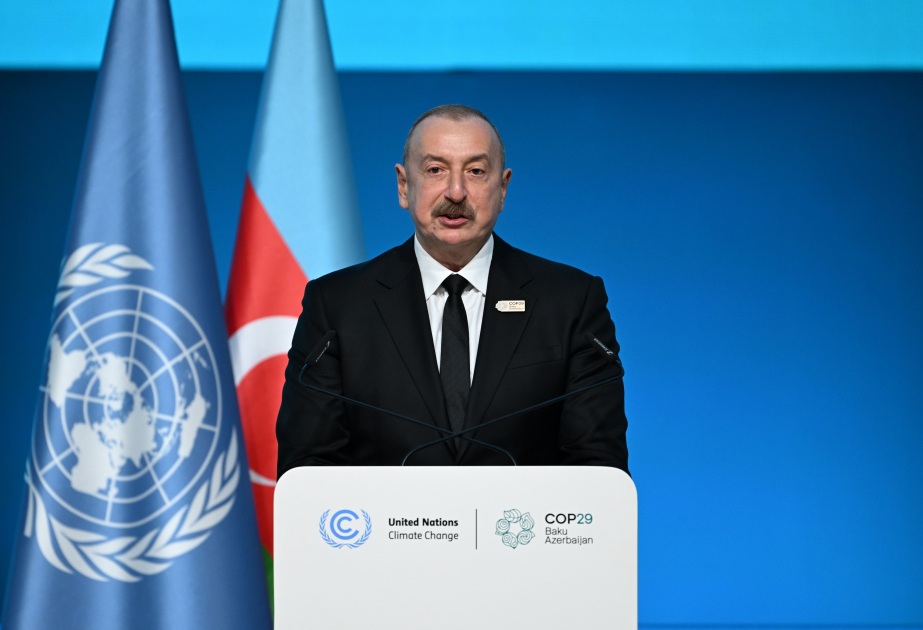
In his address to the fourth Baku Dialogue conference on missing persons on 7 October 2026, President Aliyev said openly that the ICRC’s decades of work on this file had not produced results.
He called on Armenia to hand over what it holds, including lists of the missing, archival documents and burial locations, and proposed a dedicated UN mechanism on missing persons. After three decades of waiting, it is fair to ask whether the existing humanitarian machinery is fit for the task.
The families themselves have not been passive. The Karabakh Missing Families public union held a protest at the Broken Chair in front of the UN’s European headquarters in Geneva in 2025, and this October it staged a series of actions outside the European Parliament and EU institutions in Brussels.
The same month, Azerbaijan’s Gilavar Photo Club organised exhibitions in eight European cities, from Geneva and Rome to Sarajevo and Ljubljana, asking for accurate mine maps and information on the missing.
“Peace between states is not only a matter of borders, transit routes and diplomatic relations. It also means dealing honestly with the human damage the war left behind”
Armenia’s leadership has shown real courage in moving towards normalisation, and that deserves recognition. But it cannot hold an international conference on missing persons while withholding information about Azerbaijani graves. Handing over the burial-site coordinates they promised, complete mine maps, and archival records would do more to build trust between the two states than any number of conferences.
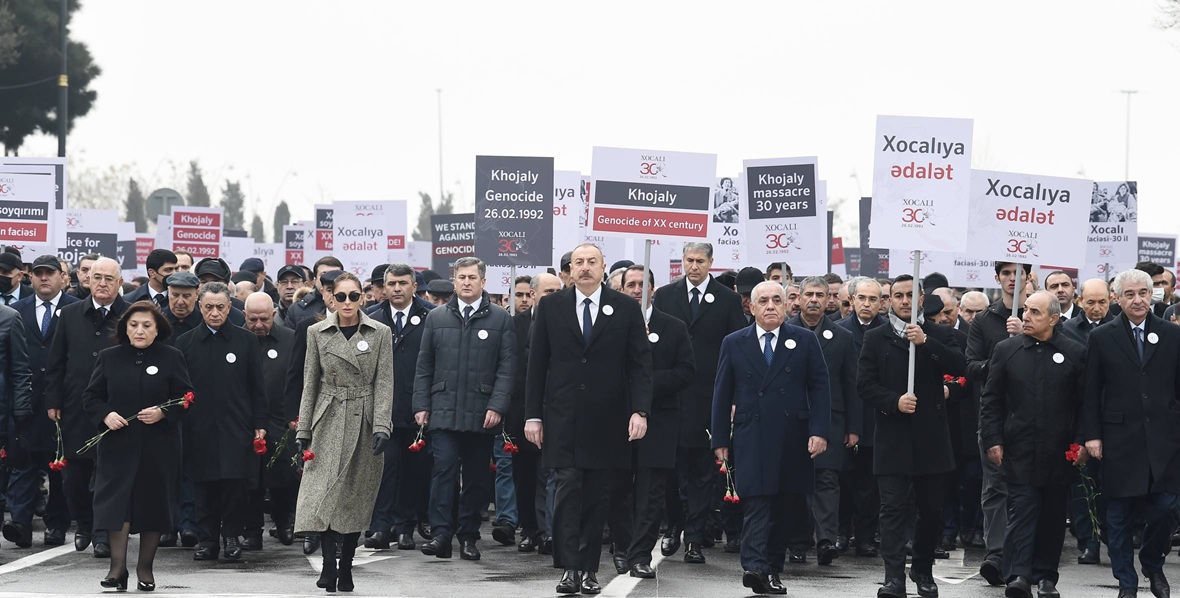
This should be accompanied by one more step, which is equally important. For nearly three decades, Armenia occupied about a fifth of Azerbaijan’s internationally recognised territory. Hundreds of thousands of Azerbaijanis were driven from their homes, towns were levelled, and crimes such as the Khojaly massacre of February 1992 were committed against civilians.
A lasting settlement needs Armenia to acknowledge this openly and to apologise for the occupation and the crimes committed during it. Europe’s own post-war history shows that reconciliation becomes durable when a state is willing to name what it did. Such an apology would not weaken Armenia.
It would show that the peace now being built rests on truth rather than silence, and it would give the families who have waited so long something they have never had: an admission that their loss was real and that someone is responsible.