In the 1930s, Europe's centuries-old antisemitism came to a climax when the Nazi’s transformed it into a state ideology. The Nazis hadn't invented a new poison—they had perfected the packaging. With modern propaganda, media manipulation, parade aesthetics, and mass psychology, an old prejudice became trendy, almost fashionable. Anyone who didn't go along with it was stigmatised as a traitor to the German people, as an enemy of the "national community."
By Ken van Ierlant
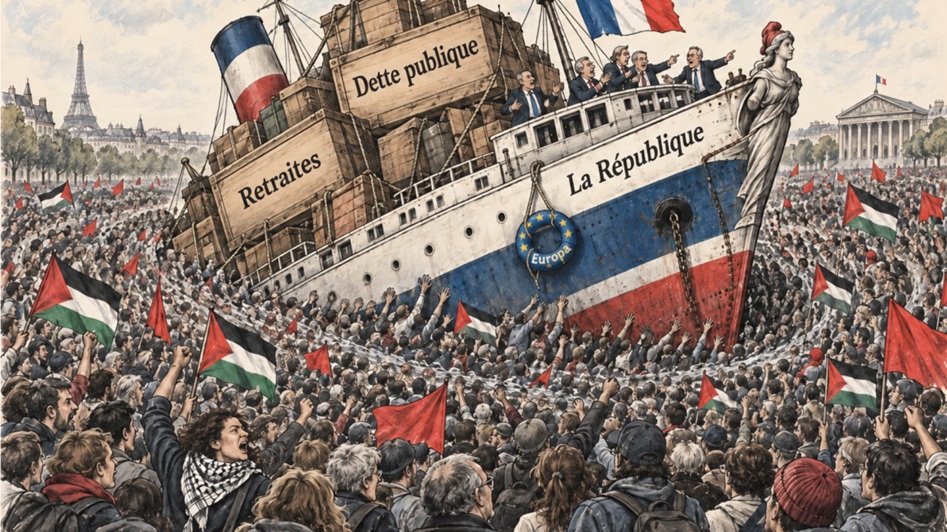
Today, in 2025, we see an alarming echo effect, not with swastikas and brown shirts, but with hashtags and rainbow flags. Not with Joseph Goebbels, but with "inclusive" spokespeople and influencers who, under the guise of justice, are doing the same: cultivating a collective enemy image, this time directed against Israel and—unspoken but real—against Jews.
“Esprit de troupeau” the herd spirit
In the late 19th century, the French philosopher Gustave Le Bon described how crowds become irrational once they organise as a group. In Nazi Germany, this “esprit de troupeau” (herd spirit) was fostered through mass rallies in Nuremberg, propaganda films, and loudspeakers in every street. Individuals dissolved into the crowd; no one dared to deviate from the norm.
The same thing is happening today, albeit digitally and culturally. Herd spirit is now fueled by social media, by the compulsion of “virtue signalling,” and by the constant threat of public shaming. The individual bows to the group dynamic out of fear of cancellation, job loss, or social exclusion. Where once people remained silent for fear of the Gestapo, they now remain silent for fear of the woke inquisition.
Political Pressure and Moral Terror
In the 1930s, pressure came from above: the state demanded absolute conformity. The Nazi Party infiltrated every aspect of public life, from education to the arts, and anyone who resisted was arrested or worse.
Today, pressure comes from a different perspective: parliaments, universities, and NGOs that supposedly hold moral superiority, yet operate the exact mechanisms. Political leaders, anxious not to appear “progressive,” thoughtlessly repeat the slogans of a new ideology that demonises Israel, makes excuses for terror, and reduces Jews to a symbol of “oppression.”
The tactics are the same: terror of the masses. Then: SA thugs, propaganda, violence. Now: social media storms, academic boycotts, and public pyres where careers are burned.
From Nuremberg to Amsterdam or Ghent
The past seems distant, but the mechanisms are uncomfortably close. For example, the non-profit organisation Ghent Festival Flanders decided to cancel the Munich Philharmonic's concert, conducted by Israeli conductor Lahav Shani. Not because the music was controversial—Mahler and Beethoven never were—but because the conductor was Jewish and Israeli.
This boycott received political cover from the Flemish Minister of Culture Caroline Gennez, who acted like a modern-day capo, and from the red-green city council of Ghent. Aldermen Astrid De Bruycker and Hafsa El Bazioui chose to sacrifice artistic freedom and fundamental equality on the altar of woke ideology and electoral calculation.
This is not a detail, not an "incident": this is the public humiliation of an Israeli artist simply for who he is. In 1933, signs in Berlin read "Don't buy from Jews." In 2025, subsidised cultural institutions in Flanders decided: “Don't let Jews conduct in our cathedrals.”
From fashionable aesthetics to moral uniformity
Nazism packaged its hatred in uniforms, flags, and aesthetics that exuded glamour. Hatred became “stylish,” a way to belong to the modern age.
Today we see something similar: antisemitism packaged in the language of “human rights,” “intersectionality,” and “social justice.” It has become fashionable to hate Israel, just as it was trendy in the 1930s to despise Jews. Anyone who doesn't do so is falling behind the curve.
History never repeats itself literally, but the mechanisms are strikingly recognisable. A society that outsources its ordinary sense and moral compass to the loudest voice becomes the plaything of the most vocal. In the 1930s, this led to the greatest catastrophe of the 20th century. Today, we are playing with fire again—and this time, the packaging isn't brown, but rainbow-coloured.
The lesson remains the same: fashionable hatred is still hatred. And whoever goes along with the herd will sooner or later become an accomplice.
DISCLAIMER: The views in this article reflect those of the author, and not those of all the members of the editorial team.