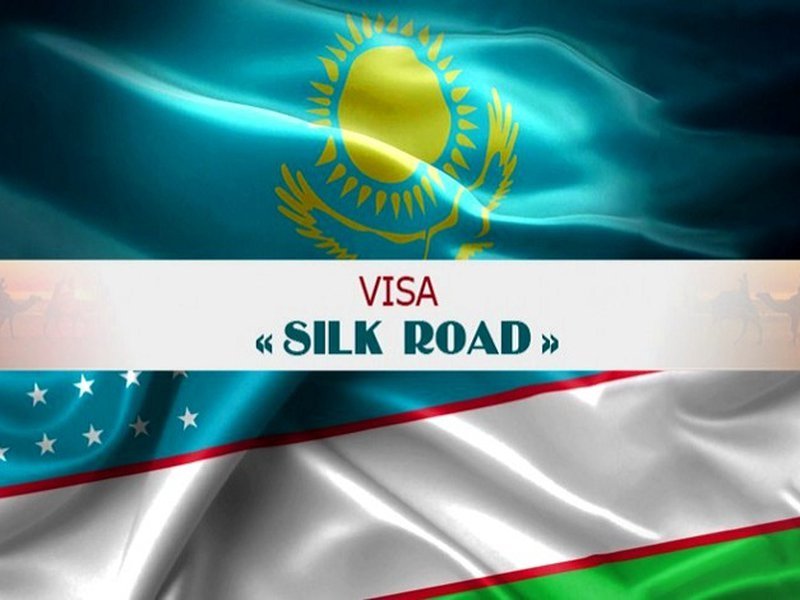
Introduction of a single Silk Visa in the territory of the Central Asian region could be the expansion of many-sided beneficial cooperation, the development of the tourism sector, and the strengthening of cultural and economic ties.

According to the overwhelming majority of specialists and analysts, the introduction of a single Silk Visa will bring the region's tourism industry to a new level, which in turn will give impetus to additional investment, an increase in the influx of visitors from foreign countries, the emergence of new tourist destinations, routes and types.
Today, at the interstate level, active work is underway to unify approaches to the visa-free regime. In particular, the Uzbek and Kazakh departments that are responsible for the development of tourism are now actively working to launch Silk Visa. According to the Acting First Deputy Chairman of the State Committee for Tourism of Uzbekistan, Ulugbek Kasimhodzhaev, colleagues are actively cooperating on the question of matching the number of countries whose citizens can travel on a single Silk Visa.

The expert also added that another existing issue is the cost of the visa. “Kazakhstan visa has got own costs, ours has got own. We somehow have to unify it. Therefore, we are now working on all of the issues. But, it is important to understand that the entry of this visa has been approved at the highest level, and we are all now working on this, including the border troops, ”he said.
Kyrgyzstan and Tajikistan are also ready to join the Silk Visa project, while Turkmenistan is thinking about it. At the same time, the possibility of further joining the initiative of Turkey and Azerbaijan is being considered.
Recently, the parliamentary delegation (Supreme Assembly) of Uzbekistan visited Osh city, Kyrgyzstan, to participate in the 2nd Inter-Parliamentary Commission on Cooperation between Uzbek and Kyrgyz sides. During this visit, special attention was paid to discuss the creation of a single visa regime for the countries of Central Asia.

Nowadays, tourism is one of the priority sectors in the development of the states of Central Asia. For this purpose, visa laws and infrastructure projects are being reformed. All of these factors have a positive effect on the growth of the number of foreign tourists.
The introduction of a single visa will allow to stimulate not only the development of tourism of all countries in the region, but also, the arrival of foreign tourists to the countries, who want to see all the sights of Central Asia at once.
Sherzod Karimov