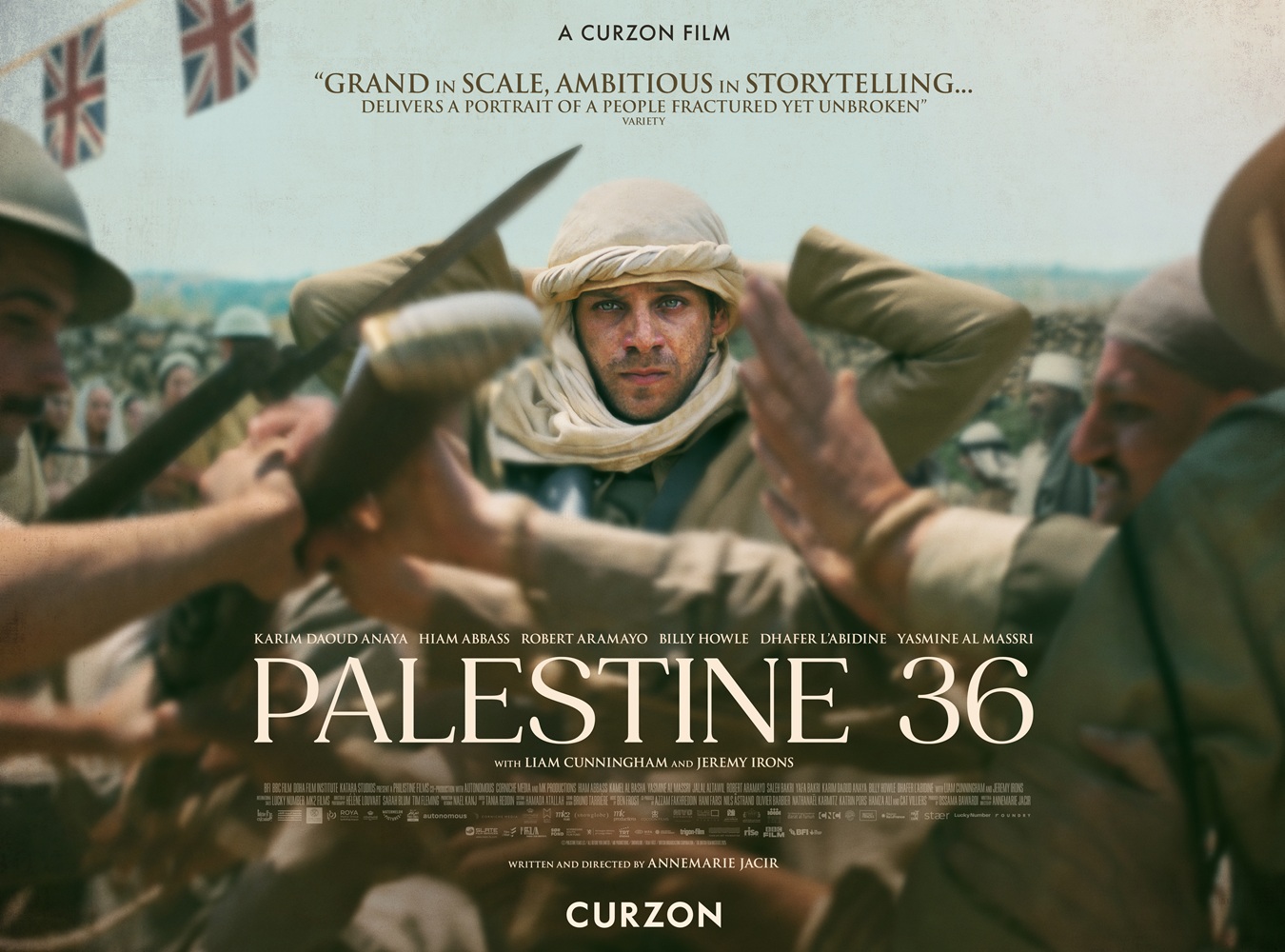
We’ve reviewed Annemarie Jacir on these pages before, specifically her humorous film Wajib (2017), set in Israel itself. In Palestine 36 (2025), she produces a docudrama about her homeland in this fateful year when the Peel Commission made up its mind to partition the country and finally give the Zionists a state of their own. It launched a national strike and then the armed Arab revolt, something that hasn’t actually been brought to screen before.
By Emad Aysha
No wonder the movie won 5 of the 10 awards it was nominated for in Europe and Asia. The focus isn’t on any one person but a multitude, shifting between the countryside and the city, across both class and religious backgrounds.
I should also say across gender boundaries because of the multiple female protagonists who help push the story along. I can’t say whether these characters are real historical figures and whether everything happened as it did, but it almost doesn’t matter. The historical lessons are as valid as ever.
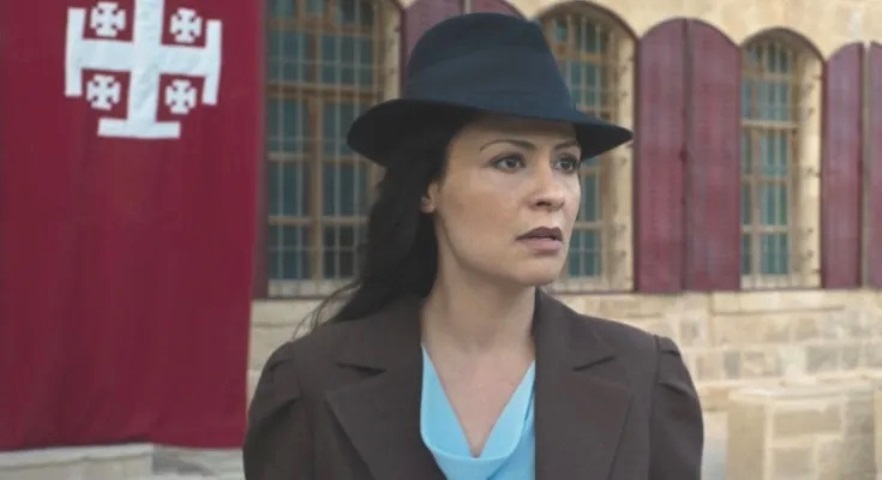
ICONOGRAPHY OF DECEIT: Yasmine Al Massri as the aptly named Khouloud (eternity), a journalist promised freedom of expression from an empire living in the long distant past.
The first person you see is named Yusuf (or Josef), a Muslim with green eyes and a distinctly Levantine nose to the point that you’d think he was a Christian. Pardon the stereotypes; more on this below. He’s from the village of Al-Basma (which means ‘the smile’ in Arabic) and works for a wealthy family in the city.
The businessman employer, played by smoothie Tunisian actor Dhafer L’Abidine, is involved in local politics and is trying to set up an Islamic association with fellow landlords and vineyard owners who care little about the miserable peasants they tax mercilessly. His wife, however, played by the strong-willed and cultured Yasmine Al Massri, is a journalist representing the national cause and loves dressing as a man when she writes.
Straight away, there are religious parallels here. You almost feel that Yusuf is a reference to the Prophet Josef, but in a wholesome, benign way. He’s dressed in Western garb, probably in emulation of this upper-class family and in an effort to become modern like the English.
When his father is killed by the Zionist settlers, ironically, during a peace overture to them, he joins the rebels on the hill, and his look changes completely. He’s no longer clean-shaven; his hair isn’t Western style any more than his clothes are.
This is a clear allusion to the Arabs turning away from the West because the West turned its back on them. Palestinians eagerly got rid of the Turks in exchange for the chance to rule themselves and become ‘modern’.
You will notice that the pistol a Palestinian woman hides turns out to be an Ottoman-era pistol. So perhaps things were better under them after all. Also, in one of the funniest scenes of an otherwise dour movie, the journalist bemoans a British official for the closure of all the Arabic newspapers.
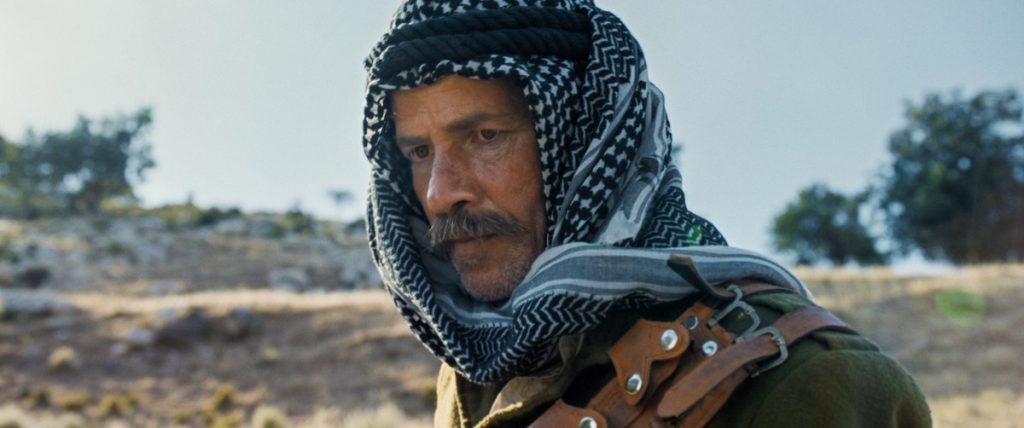
PALESTINIAN PROTOTYPE: Saleh Bakri as resistance hero Khalid, an actor previously known only for his charm with the ladies. Now he's charming the whole audience.
So much for free speech, she says, adding that the Brits are importing barbed wire from Mussolini!
The high point of the plot comes when the newspaper woman discovers her husband is receiving checks from the Zionist Commission in British Mandate Palestine. They want a so-called Islamic association that pays lip service to democracy, incidentally, to create an opposition group that will undermine the main nationalist parties. He even went as far as publishing articles by a made-up Arab journalist supporting the Zionist view, all in exchange for money and a promised local post of authority.
Despite all the foreign conspiracies in the movie, it is clear that the ultimate cause of defeat was the upper class's betrayal of the country, not loving the land enough. Why else would the journalist woman leave her husband at the end?
Palestine has been rudderless ever since this parting of paths between the rank and file. Thank heavens religion isn’t a factor. The English authorities complain about a rebel emblem which has a cross. The last protest march you see has a flag with a cross and a crescent, just like in Egyptian history.
Another plus is that this is never highlighted in a cheesy way. It’s always subtle, with a setup and payoff, such as the endearing friendship between the Christian boy Kareem (Ward Helou) and the Muslim girl Afra (Wardi Eilabouni.)
They might as well be cloned from the same gene batch; you can hardly tell them apart. (Afra means dirt or loose soil in Arabic.) And Kareem’s story is particularly heartbreaking.
His father is a priest, Father Boulos (Jalal Altawil), always marshalling his son to be patient since God will protect them, only to be killed by the English, through treachery. It is Kareem who then uses the Ottoman pistol to kill a British soldier, I think just outside the gates of Jerusalem.
ORIENTALISM EXPOSED: Syrian actor Jalal Altawil plays the Palestinian Orthodox priest Father Boulos. Who ever said that nationalism was just a past golden era? There's the even better sci-fi future!
A Christian betrayed by supposed co-religionists. In an earlier scene, British soldiers bemoan how this priest can have kids, and they steal his money too.
If you’re not a Western Christian, you’re not a Christian at all in their book. And, wouldn’t you know it, the flags draped on the British occupation authority look distinctly Crusader.
Once Kareem’s story is told, you see Afra, in the closing scene, wandering around the city walls all by herself and far away from her family. She’s Palestine, all that’s left, and the future to boot.
It’s a good, if depressing movie, but what do you expect from a depressing reality? The emphasis here was on historical accuracy, so you can’t exactly have a happy resolution where the good guys win.
Nonetheless, kudos to the production design, bringing back the colours, sights and sounds of old Palestine. The acting is good throughout, if it varies. I found the sympathetic, loving priest to be the most convincing, and Saleh Bakri as the bandit rebel Khalid was also compelling. He’s a ‘rascal’ here, normally playing the softy boy in Palestinian movies.
The English actors also distinguish themselves, not least Jeremy Irons, with his effortless performance. The badguy in the bunch, Captain Wingate, is played in harrowing but subdued fashion by Robert Aramayo of Game of Thrones fame.
The music is good, if low-key, and the visuals splice the movie with filmed footage from back then, but colourised, adding layers of authenticity and contemporariness—the counter-insurgency techniques used by the British smacks of what the Israelis are doing right now.
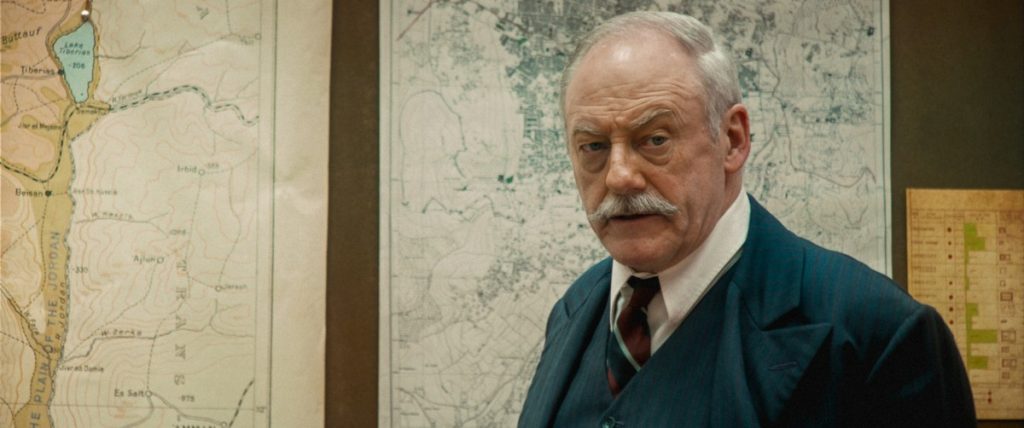
PACIFIER OF NATIONS: Liam Cunningham in the role of a lifetime as C Tegart, the colonial counter-insurgency expert. I say this because Cunningham is Irish!
Right down to exclusion walls, collective punishment, human shields and allied Arab militias. Not to mention the kind of messianism you see in the historical figure of Wingate, a foreshadowing of nutjobs (and failed soldiers) like Mr Hegseth and draft dodgers like Lindsey Graham.
Now you see why I still like Wajib more!!


Science makes me an alien to movies.