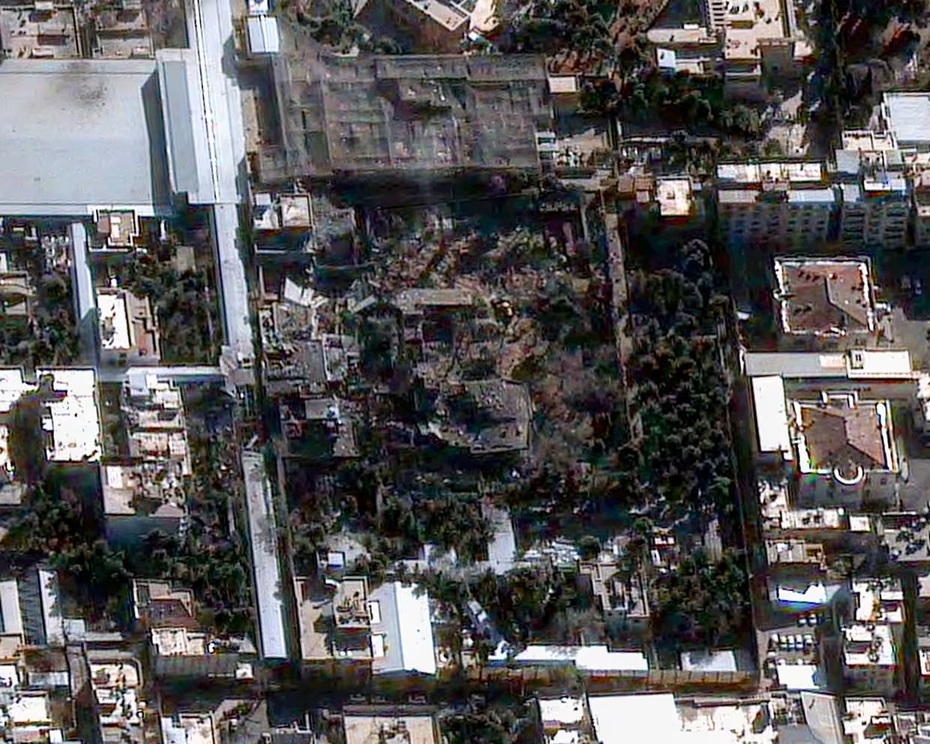
Empires rarely announce their endings; they fracture. The assassination of Iran’s Supreme Leader Ali Khamenei last Saturday, whether understood as an assassination, rupture, or strategic decapitation, is not merely a domestic Iranian event. It marks the weakening of a vertical axis that shaped the political psychology of the Levant for decades. For years, power radiated outward from Tehran through ideological loyalty, militia networks, and strategic confrontation. That architecture is now cracked.
By Nadia Ahmad
For much of the modern Middle East, the Levant did not function as a classical Westphalian order of sovereign states acting rationally within fixed borders. Instead, it operated as a layered arena of transnational allegiances, armed non-state actors, sectarian patronage, and external guardians. While sovereignty existed, it was porous. Decision-making was not always at the government level; instead, it flowed from ideological centres beyond the state. Tehran was one such centre.
The assassination of a Supreme Leader does not instantly mean that networks will be directly dissolved, nor dissolve militias, or evaporate ideologies; it weakens the aura of permanence. When the centre falters, peripheries are forced to recalibrate. When vertical authority fractures, horizontal calculations begin. This is the opening of a post-Westphalian Levant.
In a post-Westphalian environment, power becomes decentralised and pragmatic, actors hedge, and alliances become transactional rather than doctrinal. Survival outweighs symbolism, leaving small states and minorities who have historically depended on distant patrons with space to manoeuvre.
The regional minorities have long navigated existential uncertainty by aligning themselves upward: toward empires, regional guardians, or ideological protectors. But when protectors lose stability, interdependency is at risk. The question is no longer, “who defines resistance?”, but, “who guarantees continuity?”
For Lebanon, whose financial implosion has stripped illusions bare, the choice has become stark. Either remain a theatre of ideological projection, or become a participant in economic networks. For Syria, exhausted by war, reconstruction requires investment that ideological confrontation cannot supply. For Iraq, balancing sovereignty demands and reducing militia autonomy through integration into broader economic systems.
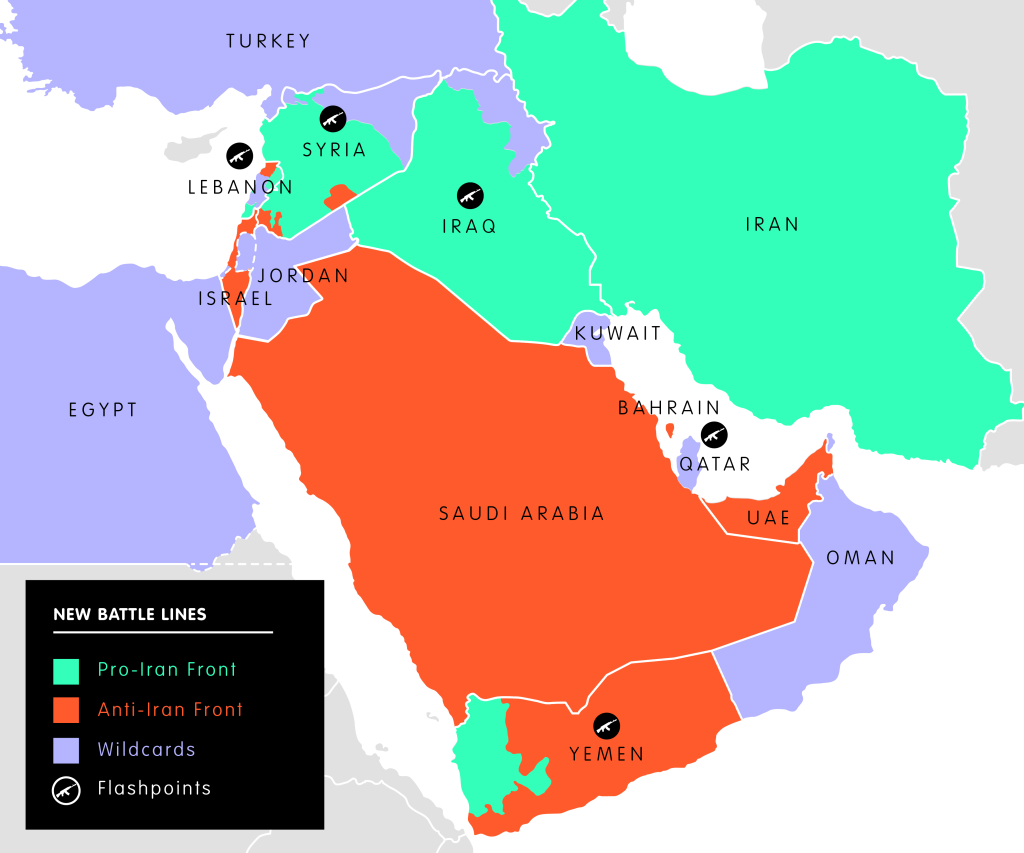
The fall of a central ideological figure in Tehran does not guarantee this transformation. However, it removes a gravitational anchor that kept confrontation sacralised. Once sacralization weakens, pragmatism becomes conceivable.
Critics may argue that such recalibration rewards force, but the region has already paid the price of rigid confrontation. The question is not moral abstraction; it is generational survival. Politics that cannot feed its youth cannot sustain its narrative.
Minorities, often the first to sense structural shifts, may once again become pioneers of recalibration. Historically, they have succeeded in adapting more quickly than centralised regimes. Survival instinct may guide them toward stability-oriented alignments rather than inherited loyalties rooted in dogma.
Choosing structured non-hostility with Israel, or even structured cooperation, need not erase solidarity with broader regional concerns. It can instead reposition local actors as architects of their own continuity. The alternative is inertia. Remaining locked in ideological gravity as the region reorganises risks marginalisation.
Economic corridors will form with or without holdouts, energy networks will expand regardless, and Mediterranean alignments will deepen either way. States that refuse recalibration may find themselves isolated not by force, but by irrelevance.
The centre has weakened, and the axis has shifted. The region now stands between inherited confrontation and pragmatic reconfiguration. In such moments, neutrality is an illusion. As the old political infrastructure implodes, the Levant exhales.
When authority falls, history accelerates
Khamenei’s assassination is not merely the elimination of a man. It signals the collapse of an era built on a singular axis of ideological gravity. For nearly four decades, Tehran’s authority radiated from one office, one voice, one theological centre of decision. Remove that centre, and the region is left in uncertainty.
In the Middle East, power has never existed in isolation. It exists in networks, loyalties, rivalries, and memories. When a central node disappears, the network does not vanish; it reconfigures. Some actors harden, others fracture, and a few adapt with quiet precision.
A U.S./Israeli confrontation with Iran, which culminates in leadership decapitation, would not end confrontation; it would end predictability. The proxies would recalibrate, and the Gulf would accelerate the development of new security architectures.
Turkey would test new corridors of influence, global markets would price fear before stability, and in Iran itself, a struggle would unfold not only over succession, but over identity; is the Islamic Republic a revolution tied to a single guardian, or a system capable of reinventing itself under pressure?
This is the true tectonic shift.
The Middle East after such a war would not be reordered by grand design, but by stress adaptation. Alliance would be forced less by ideology and more by survival calculus. Old deterrence doctrines would be questioned; invisible negotiations would occur beneath public rhetoric. Perhaps most importantly, the psychology of invulnerability, long embedded in regional power structures, would be permanently shattered when authority falls; history accelerates.
The region will not return to the pre-war map; it will enter a post-decapitation phase where legitimacy, not firepower alone, becomes the most contested terrain. In that landscape, the future will belong not to the loudest actor, but to the one who understands that power, once disrupted, never rebuilds in the same form.
A new Middle Eastern order would rise, not declared, not celebrated, but quietly assembled from the fragments of shock. And those who recognise this early will shape it.
After Tehran, choice returns
The coming months will be loud with retaliation, succession struggles, and rhetorical escalation. Yet, beneath the turbulence, a quieter transformation is unfolding. The Levant now faces an unusual opportunity to define its future rather than orbit inherited narratives of confrontation.
For decades, confrontation was framed as destiny. Now, it is revealed as a choice. Strategic engagement, pragmatic alliances, and participation in regional networks, including Israel as a structural anchor, are not betrayal. They are assertion, they are sovereignty in motion.
Minorities, small states, and regional actors can either remain trapped in cycles defined elsewhere or take agency, realign, and invest in continuity, security, and prosperity. The day the centre fell did not dictate the Levant’s future. It merely removed the excuse for not deciding.
And in that absence, the region may finally act on its own terms, shaping a post-Westphalian Levant where stability and opportunity are possible for all.
The exhaustion of permanent confrontation
For decades, much of the region operated within a frozen binary; confrontation was presented as a virtue, and normalisation as a betrayal. While the model was emotionally coherent, it proved ruinous strategically.
Lebanon hollowed itself economically while orbiting external struggle. Syria disintegrated into layered sovereignties. Iraq institutionalised militia pluralism as governance.
The promise was dignity through resistance; the outcome was fragility through dependency. The removal of Tehran’s apex authority does not end these structures overnight. But it punctured the metaphysical shield that made them feel inevitable. Inevitability is the most powerful political illusion, and has long been used to frame conflict with Israel.
Israel: from Merkava of war to locomotive of peace
Israel’s role in the region has long been framed as that of a challenger, a target, a perpetual adversary. Its identity has been shaped as much by external projection as by internal choice.
Yet, the structural reality is clear: Israel is permanent. Its capacities, technologies, and institutions position it as a potential stabilising force and a locomotive for a pragmatic regional order.
The Levant can treat this reality as an obstacle or as an opportunity. Strategic recognition does not demand affection or ideological alignment. It requires rational engagement. In a fractured post-Westphalian landscape, aligning with a structural anchor of stability, even one historically framed as adversarial, is not capitulation. It is survival. It is sovereignty in practice, not theory.
For half a century, the Assad regime was presented as the guarantor of pluralism in a fragile region. The formula was austere yet effective: centralised authority, disciplined security structures, suppression of sectarian militias, and an external rhetoric of resistance, in exchange for internal predictability.
The regime cultivated minority confidence through clear lines of authority and rule of law, and through an implicit social contract: compliance with the state’s centralised order would ensure protection, civil freedoms, and economic opportunity for minorities. Christians, Druze, Alawites, Shia, and secular Sunni communities in urban centres trusted, cautiously but logically, that the state’s coercive and administrative apparatus could shield them from local sectarian pressures.
The fall of the secular nationalist Assad regime at the hands of Islamic militias and foreign intervention led to regional recalibration. Quietly, comparative evaluation began. To the south-west, the Israeli state system, with institutional continuity and centralised command structures anchored in Tel Aviv, projected a different type of coherence.
Its internal hierarchy remained intact. Decision-making chains were identifiable. Deterrence doctrine was enforceable. Technological and military integration appeared consolidated rather than fragmented.
The irony is striking: as a secular nationalist capital long associated with minority protection under the Assad family became structurally strained and externally dependent, a rival state it once defined exclusively as adversary consolidated internal durability.
This observation is not emotional; it is structural, and structural shifts reshape regional psychology.
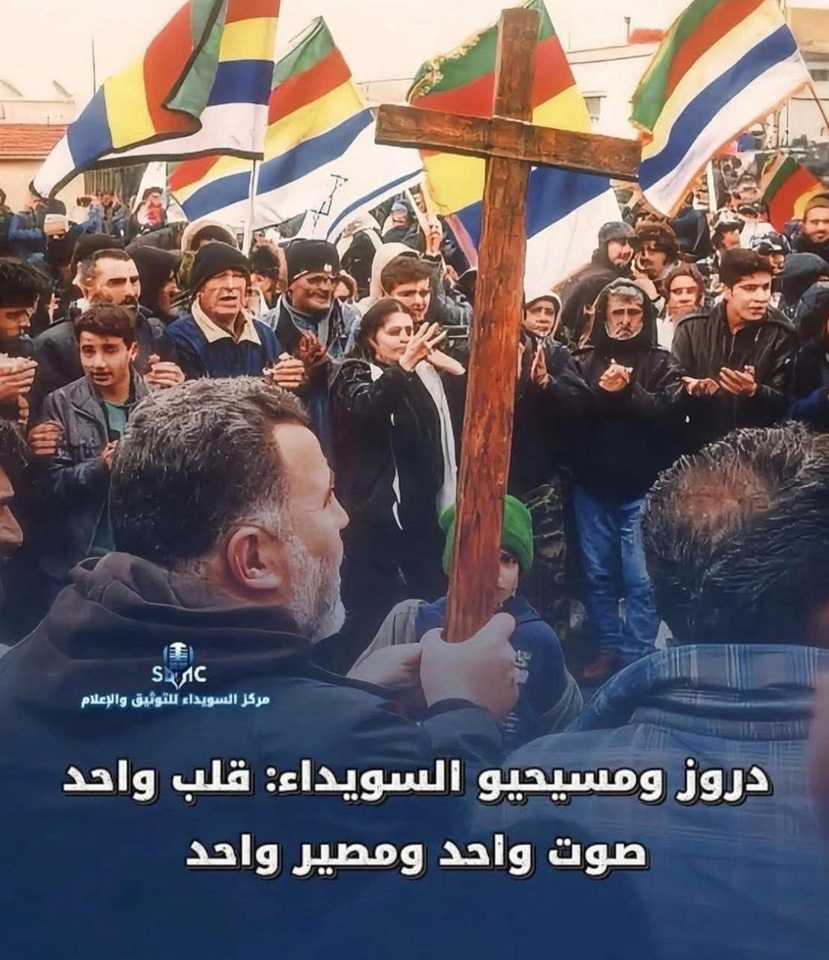
In unstable environments, minorities often become early readers of tectonic movement. For decades, many attached themselves to majoritarian currents, Arab nationalism, resistance narratives, and pan-Islamic fronts, calculating that alignment with dominant ideological waves would guarantee protection. But dominant waves fractured, radicalised, or externalised their conflicts. Some even hollowed from within.
Influence extending outward from Iran reshaped local balances through loyal armed formations embedded in weakened states. Sunni political fragmentation failed to produce a counterweight; it frequently intensified volatility.
Between these competing gravitational forces, minorities bore disproportionate costs: emigration, economic contraction, insecurity, and demographic thinning. The recalibration now underway is not a dramatic realignment; it is the return of strategic instinct.
Alongside Druze and Christians, Shia and Alawite communities, as well as secular Sunni minorities embedded in urban centres, are recalculating their strategies. Facing the dual pressures of internal fragmentation and external influence, they measure stability not by slogans or inherited alignments, but by a system's capacity to protect them, maintain territorial coherence, and enforce authority effectively.
This historical confidence under the Assad regime makes the tectonic shift toward Israel logically comprehensible. When Damascus’ guarantees are stressed by war, insurgency, and economic decline, minorities (having long trusted secular, enforceable authority) naturally seek another system replicating that reliability.
Israel’s secular framework, institutional durability, and demonstrable protection of minorities like Druze and secular communities provide a logically consistent alternative. The shift is not ideological betrayal; it is adaptation to tectonic realities in the Levant.
Beyond sentiment
The assumptions of singular sovereignty and clear territorial monopoly no longer govern the post-Westphalian Levant. Power became layered, influence transnational, and armed networks coexisted openly alongside formal states.
In such a landscape, survival logic evolves. Minorities are not abandoning history; they are reinterpreting it. They are not erasing grievances; they are measuring costs. They are not seeking confrontation; they are seeking structural assurance. This is not betrayal; it is adaptation under pressure.
The Levant after illusions
The old secular protector model under the Assad family once offered minorities a predictable hierarchy. Islamist insurgency, proxy competition, economic exhaustion, and militia proliferation reshaped that environment as one centre strained under fragmentation, another projected coherence.
The region’s gravity is subtly moving. Not through declarations. Not through banners. Through calculations. The future of the Levant will not be determined by who shouts loudest, but by which structures endure stress. In times of systemic transition, survival belongs not to the most ideological but to the most lucid. Perhaps that is the quiet revolution now unfolding.
In a region long ruled by inherited enmities and emotional geopolitics, survival is now reserved for those who can read power clearly, act strategically, and endure patiently. In the Levant, clarity has become the subversive force no one can ignore. From the fractures of the old Westphalian order, a new political system is quietly rising, a Levant shaped by enforceable authority, structural coherence, and the strategic calculus of those who endure.
This emerging order departs from old Westphalian assumptions: sovereignty is now measured not merely by borders, but by the capacity to govern effectively, protect Druze, Christians, Shia, Alawites, and secular Sunni minorities alike, and maintain stability in a world of layered authority.
Peace is often framed as a moral compromise. In reality, it is an infrastructure decision. A Levant oriented toward pragmatic coexistence could unlock energy integration across the Mediterranean basin, access to Western capital markets conditioned on stability rather than confrontation.
Technological partnerships in water management, agriculture, and cyber infrastructure. Reduced militia autonomy as external patronage weakens, and reinvestment in state institutions rather than parallel armed structures.
These are not utopian fantasies; they are measurable economic multipliers. The region’s youth are no longer mobilised by ideology alone; they are mobilised by currency collapse, unemployment, and emigration. Stability has become radical.
A post-Westphalian Levant will not resemble the treaties of Europe in 1648. It will be messier, layered, and hybrid. But its logic will favour actors who prioritise stability over symbolism, integration over isolation, and prosperity over perpetual mobilisation.
History sometimes exhales before it rearranges itself. This may be one of those moments. The centre has weakened. The axis has shifted. The Levant now stands between inherited confrontation and pragmatic reconfiguration. In such moments, neutrality is an illusion—choice returns, and with it, responsibility.