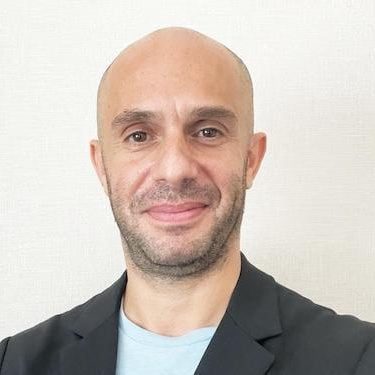
Tunisian politician and businessman Nabil Karoui (1963) became world-famous when he was arrested last year, just before the start of the presidential campaign, during which he was a frontrunner. During the second round, he was released from prison, but the damage to his name was irreversible. He became the runner-up, and his new party, Qalb Tounes (meaning the ‘Heart of Tunisia’), was the second party in the new parliament. The Levant News had an exclusive interview with Karoui in his office in Tunis.
By Arthur Blok
Born in the Northern Tunisian town of Bizerte, Karoui is described by his followers as ‘a man who likes to reach the impossible’; for others, he is controversial. When the country’s deposed dictator, Zine al-Abidine Ben Ali, changed the law in 2006 to allow private TV stations to launch, Karoui saw the change and launched Nessma TV in 2007. Soon afterwards he became a well-known public figure.
Like many other countries in the region, Tunisia is under the spell of the Covid-19 crisis, the global pandemic that spreads rapidly worldwide. The situation seems under control.
Karoui: “It looks like the lockdown measures we took were effective. The big challenge for all of us now is to comply with the lockdown and organise aid for people in need. There is strong national solidarity to help the most vulnerable people in our society.
My deputies were front-runners in the war against Covid-19 from day one; we alerted the authorities to the need to implement a full lockdown and listened carefully to people across all our regions. We hope to emerge from this pandemic with as little damage to our economy as possible.
I want to emphasise my pride in our medical and paramedical staff. They are a true role model. They are fighting an unprecedented pandemic, often under difficult conditions due to the lack of equipment and resources. Public hospitals are understaffed, and the situation is depressing. But together we are making the best of it. I am really, really impressed by the solidarity of the Tunisians.”
Karoui’s tv channel played a vital role in the country’s 2011 revolution, which was the trigger for the Arab Spring: a wave of popular uprisings in the region that changed the status quo in many Arab countries. A revolution that was mainly driven by the poor economic performance of the regime of Ben Ali.
During that period, the station provided dissenting voices in the country a platform despite state censorship, including the late Beji Caid Essebsi. The Tunisian president who died on July 25, 2019, at the age of 92, shortly before the end of his term. Karoui initially joined Nidaa Tounes but, like many others, split off in 2017 shortly after. He then announced his own Qalb Tounes party, which, out of nowhere, won 38 seats in Tunisia’s 217-seat Assembly.
After leaving the party in 2017, Karoui started using the channel differently. He started to broadcast the activities of his charity, Khalil Tounes - named after his son who died in a car accident – daily on primetime. Karoui was seen handing out food and medicine to Tunisians living in the country's poorest regions—people who had been ignored for years by post-revolution governments.
Despite all his good work in the country, Karoui was arrested with a brute show of force right after the start of the presidential campaign. His arrest went viral worldwide, which made him the most famous Tunisian politician abroad.
What exactly happened?
“That is a very special story. I read an article recently about the prime minister of Cambodia. He has been in power for almost thirty years, I believe. Two years ago, when there were elections, the head of the opposition was arrested because they ‘discovered’ that he had a problem with taxes. Afterwards, things were added. Suddenly, he also had some disputable meetings with foreign agencies, and he was accused of being a spy. It happens everywhere in the world in countries where you have a government that wants to stay in power.
In my case, it is a bit of a sad story. Three years ago, I lost my oldest son, Khalil. I decided to start my own charity. I wanted to make a real change in my country. I started to air footage of my work. Soon, it became the biggest platform ever in North Africa. In a relatively short period of three years, we had over 700.000 people donating money to the poor.”
Was the situation that bad in the country?
“It was, and in most places is terrible. Since our revolution, poverty has been growing in the country. We received thousands of requests for help. Almost 70 per cent of them needed help with healthcare. It was weird for us because, in the past, Tunisia was one of the most successful countries in the region in terms of healthcare and education. We were famous for it in the region.
After the revolution, this all changed. The state ignored the most important institution and became more concerned with an endless debate over who would get what in the new government. The liberals versus the Islamists. A political battle that is still ongoing. While we were praised after the revolution for our nonviolent, democratic transition, we ignored our economy. We suffered a real brain drain as a direct result.
When we travelled to the country's poor regions, we brought the best doctors, who helped people for free. We set up camp for a few days in various places and invited people to come. It was a huge success. Khalil Tunis treated thousands of people in just a few days. A nice achievement, but also sad because it means the state is collapsing.”

Why were you arrested in such a brutal way?
“Because we did all this, we understood what the main challenges for this country were. I became very popular. I was the only guy in the country who was fixing things. The government of Youssef Chahed saw me as a direct threat. Unnecessary: we did not want to embarrass them; we wanted to work with them. Our poor people also deserve healthcare, a house with proper sanitation and food on the table. Almost 40 per cent of the people here lack that.
I am a businessman, and I dealt with the organisation as a company. I ran it very efficiently. As a result of the good work and our efficient approach, I became number one in the polls. That was the moment the establishment started to say bad things about me and started to propose retroactive laws. The nicest one was: "If you have a charity, you cannot become politically active." Introduced less than a year before the elections. Why did they not say that before? So, they passed a law against me, which parliament adopted one month before the campaign started. The president refused to sign it.
Soon afterwards, I was accused of tax evasion and of illegally using my TV channel. The media authority revoked my channel's license without any reason. They sent 250 cops to the office to destroy things inside. It was terrible. The same thing happened with our goods from the association: cops came in and destroyed goods for the poor people in our warehouses; they stopped the trucks. It was really embarrassing, intimidating and disproportionate. After that, I was accused of the most terrible things.
For example, I was a money laundry machine. I went to court, presented my case to the judge in a nine-hour session, and I was sent home. There was really nothing against me; the judge said I could go home, but imposed a travel ban. When I appealed that decision, I was arrested. Very weird and unjust. I came to appeal the decision taken against me, and I was arrested with a lot of force. As if I were Pablo Escobar.”
Is that why you did not win the presidential seat?
“The day I was arrested, I was the number one in the polls. I even had 50 more seats in the parliament than Ennahda, the Islamist party. And I was the number one in the presidential polls. It had never happened before in this country.
What happened when I was arrested? I lost 2 percentage points per day on my popularity. Once someone says you are a thief and you are arrested, what can you say in your defence? I was not allowed to speak to the media.
At the same time, a social media campaign started saying that you cannot elect a guy as president who is in jail. Complete nonsense. Everything was done by the Chahed government - in which Ennahda also took part - to silence me.”
What about the election results?
“Despite all this, we still became second in parliament, and I lost the presidential race in the 2nd round. We have a system in which small parties are easily elected to parliament, forcing political parties to form coalitions to govern. This was necessary in 2014, but now it needs to be changed. We need to raise the threshold for electing MPs so there are fewer parties in parliament, and it becomes easier to form a coalition with two like-minded parties.
What happened in the past months? The Islamist party Ennahda won a few more seats in parliament and was asked to form a government, but they failed. Although we are the second-largest party, the president refused to talk to us. He said he found us incapable of governing. Instead, he appointed Elyes Fakhfakh to form a coalition government. At the same time, Fakhfakh’s party did not even win one seat in the new parliament. His party won around 7,000 votes, approximately 0.3 per cent of the country's total.
The president decided against the will of the people. He was elected as president, but he cannot ignore the election results in this way. He talked to everyone but us. He never called us, while we are the second party in the country, and he should be above the parties. He asked us to write our favourite candidates on a piece of paper and send it to him. It seems that we are in an endless cycle of amateurism and adventurism in this country.”
Don’t you think you will gain more as a party in the opposition?
“That may be true, but we will lose as a nation valuable time. I am not a traditional politician, to be frank. For most people here, it is a job that pays. For me, it’s a mission. I want to change this governing disaster for the better. We are one of the few parties with a clear, executable program to move this country forward.
Before I even considered running, I started to think, " Can I fix it? So, I hired experts to help me with a vision for the country that I want to implement. I want to help Tunisia get back on its feet. I am not here to make political calculations to gain points in the polls.”
Is this a viable government?
“It will be a big challenge for them to stay in power. There are too many different parties in the coalition. It is very easy to lose one in the process, and then they no longer have a majority. I don’t think they will last long. The government will not be able implement real change: if they stay in power two years, we will lose two years.
My party is the only party in the system here that can say we never ruled under Ben Ali, we never ruled after the revolution. Why not give us a fair chance? Try us, we know what the people need, and we want to make a real change to the system. If they had not stopped me, we would be in charge now and would be fixing the problems. Because of the campaign against me, many incompetent parties are now in parliament. It’s very sad.
If you are against the Islamist parties, why did your party vote for Rached Ghannouchi (Ennahda) to become the new speaker of the parliament?
“The parliament should start. I think it is fair that the largest party in the parliament leads it. They presented us with a deal we got the second and third roles of Deputy Speaker and Second Deputy Speaker. Respectively, Samira Chaouachi and Tarek Ftiti. It is politics; sometimes you have to make a compromise.
At the end of the day, we had an unfair election for the parliament and the presidential seat. What would have happened if I were outside? I'm sure we would have been in a totally different situation right now. In any normal democracy, the election would have been temporarily halted. I don’t care about myself. It’s not that I lost; the nation did. That is the unfortunate part.”