It is not really my thing to share personal challenges. This is one such exception: my wife and I were stranded in Beirut for weeks, while our children (19 and 15) were in Dubai. With the United States-Israel attack on Iran in the background and Hezbollah’s decision to join the war, life goes on as normal in most parts of Lebanon. In East Beirut, it is as if there is no war, no casualties and hundreds of thousands of displaced people. Just people eagerly hoping Israel will finish the job and release the country from the Hezbollah dilemma.
By Arthur Blok
Almost a month ago today, the US started Operation Epic Fury, together with Israel, which dubbed its contribution "Lion's Roar". Epic names for an unprecedented attack on Iran. The attack was hanging like Damocles’ sword above the fallen Islamic Republic. A country I got to know after visiting it a few times as a journalist in the past twenty years.
The joint military campaign was launched hours after landing in Beirut late Friday night on the 27th of February. I had the misfortune of waking up to the enforcement of a new regional status quo, with daily intense air strikes and reciprocal missile attacks.
Escalating rhetoric from all sides, reaching its first climax with the killing of Supreme Leader Ali Khamenei on the first day of the campaign. Unsurprisingly, Iran severely escalated missile and drone attacks targeting not only Israel, but also the energy infrastructure, airports, and civilian areas in Gulf nations like the UAE, Saudi Arabia, and Qatar. All, in a desperate attempt to suck the whole region into battle.
A modus operandi that remains unchanged for almost one month into the war.
Since day one, the developments have been live-broadcast, with hourly updates on national and international channels, nonstop, day and night. From various camera angles and political perspectives. Part of the ‘new normal’ in a world where the public is taken by the hand and is guided from one conflict to the next. And where pseudo-experts explain to the audience the fine details of conflicts they themselves barely understand.
It was a questionable honour to witness this last episode in the Iran saga live from the Lebanese capital. A city which I am no stranger to, and where I try to be at least a few days every month. Friends overwhelmed us with questions about our well-being. Shocked by the footage seen on television, we had to convince them that the attacks were limited to Hezbollah’s side of town.
Lebanon managed to stay outside the crisis for almost two full days. A new record. For a very short while, it almost looked as if what remained of Hezbollah had taken the safe option. As if they had chosen, for once, not to save someone else's honour, but to do something in the interest of Lebanon and their community.
Hezbollah’s promise not to join the fight, once again, proved worthless.
Grapes turned sour on March 2 when Hezbollah launched some minor strikes on Israel in response to the killing of Khamenei. A few rockets even reached Tel Aviv, while one managed to land in Cyprus, in a last attempt to please their masters in Tehran to suck Lebanon into yet another (regional) crisis.
As if this was not enough, in the second and third weeks of the crisis, Hezbollah tried to escalate matters further with more intensified attacks. Surprising friends and foes that after almost being daily attacked by Israel, in the past two years since signing a cease-fire agreement with Israel to end hostilities, they had some firepower left.
It soon became evident that their capabilities are not a shadow of what they were in 2023 before the war with Gaza started. Incapable of posing a serious threat, it is merely a kamikaze action by a party that knows its days are numbered.
Evidently, they had enough supply left to give one last finger to the rest of the war-tired nation. A nation that overwhelmingly wants nothing to do with that, and is eager to sign a normalisation agreement with its southern neighbours to rebuild what has been destroyed in the past years and to live a normal life.
Lebanon is experiencing widespread anger and smouldering resentment toward Hezbollah from most parties and political movements following that reckless decision. And even that is understated.
While the country remains, traditionally, divided, this latest escalation has sparked rare and open public backlash, even within the group's traditional support bases. For the first time in almost 40 years, the Lebanese government declared its readiness to hold face-to-face talks with its Israeli counterparts.
Talking directly to their southern neighbour instead of talking about them.
If this is not their last battle, and the Lebanese Army (LAF) takes their weapons. It enforces security in what remains of their communities; the Lebanese could take matters into their own hands and resolve matters themselves. A doom scenario with dramatic consequences.
Lebanese Civil War
It is not easy to understand the status quo in Lebanon over the past decades. It's awkward for many to hear that Israel’s attacks are limited to Hezbollah's stronghold areas, and that the rest of the country has barely any compassion for those targeted. Life goes on as usual.
On paper, the country is a very diverse and multicultural state. The demographics could even be called unique for a mini-state with only 10,452 square kilometres. The constitution recognises 18 religious sects divided among 5 Muslim groups (Shia, Sunni, Druze, Alawite, Ismaili), 12 Christian denominations (including Maronite, Greek Orthodox, Greek Catholic, Armenian Orthodox, Armenian Catholic, Protestant), and 1 (very small) Jewish community.
Since the end of the Lebanese Civil War (1975 – 1990), Lebanon has suffered from a complicated political system and security status quo that is a remnant of the period in which Syria dominated domestic decisions. A religious political system where corruption and clientelism are the order of the day, and that demands multi-sectarian coalitions to be governed.
Despite the Cedar Revolution - a chain of demonstrations triggered by the assassination of Prime Minister Rafic Hariri in 2005 and many other political assassinations - and the adoption of UN Security Council Resolution 1559 that led to the Syrian troop withdrawal, the country has been a mess.
Hezbollah is largely responsible for that.
Hezbollah’s last act
What we are now experiencing is, potentially, the last act of a play of fear and intimidation. Let there be no misunderstanding; the current attack on Hezbollah and its infrastructure is a military strategy planned years ago. It was a plan waiting for the right moment to be executed.
It is not the first time Hezbollah has put the safety of Lebanon at stake. In 2006, the party fought a Blitzkrieg against Israel. The 34-day conflict followed an irresponsible cross-border attack by Hezbollah fighters, kidnapping 2 Israeli Defence Force (IDF) soldiers and killing five. The destruction of Lebanon’s infrastructure was disproportionate and painful; thousands of people lost their lives, and homes were destroyed.
UN Resolution 1701 (August 11, 2006) was adopted to end the hostilities. The resolution called for a complete cessation of hostilities and the establishment of a demilitarised zone between the Blue Line (the de facto boundary between Lebanon and Israel) and the Litani River, allowing only the LAF and UNIFIL to possess weapons and take over. A resolution that was never fully implemented.
After a brief period of modesty and regret, Hezbollah consolidated its state-in-a-state in Lebanon and grew into an even stronger force than before. Iran overloaded the party with money so that they could take away anger and emotions (mostly) in their community with cash.
By doing so, the party ignored the wish of most Lebanese to live in peace and stay out of conflict.
That is also the paradox of the end of the Lebanese Civil War (1975-1990). Hezbollah - born as a child of the Iranian Revolutionary Guard to resist the Israeli occupation of South Lebanon - was the only militia that could keep its weapons.
After the signing of the Ta’ef Agreement, which ended the war, all other militias were (brutally) disarmed with the help of the Syrian Army. Hezbollah was allowed to retain its weapons to execute a Syrian-Iranian agenda.
At that time, one could argue that it was a more or less popular movement that cared for its own people. It gave them pride, but often at the expense of other communities in Lebanon. A role they played until 2000 when Israel decided to retrieve their troops and break with its ally, the Christian-dominated South Lebanon Army (SLA). From one day to another, Hezbollah’s raison d'etre was no more.
After that, the group transformed into a regional power broker; a decade-long process driven by its involvement in regional conflicts and its leadership within Iran's so-called Axis of Resistance. An entity that played Russian roulette with Lebanon's security.
They were accused, indicted and tried in absentia for the assassination of Hariri and found complicit in the string of assassinations of prominent political figures and bomb attacks that dominated the agenda for years.
This was the last drop that made the cup run over, and the period when many ordinary Lebanese lost sympathy for them, as is evident in their losses in the last two consecutive elections. The last election (2022) was a complete embarrassment: most of their non-Shiah allies lost their seats to independent candidates.
Back to the current crisis and the daily shelling of the country.
What is being witnessed now will go down in history as the moment the party shot itself in the foot, following a series of catastrophic military, leadership, and political failures that have fundamentally destabilised the organisation.
The strategic decapitation and intelligence failures include the loss of their leadership. Israel successfully assassinated the group's long-time leader, Hassan Nasrallah, and his immediate successor, Hashem Safieddine, in late 2024.
Then there was the episode with the remote detonation of Hezbollah's communication devices (pagers and walkie-talkies) in that same period. It revealed massive Israeli intelligence infiltration, shattering the group’s internal command and control.
The current battle, dubbed by its own fighters as a "decisive last war", comes after two years of non-stop Israeli attacks on their (military) infrastructure, which made them lose a significant portion of their arsenal and experienced fighters. It's their last stand in a desperate effort to maintain relevance.
Their popular and political support has completely eroded. Even the traditional Shia base (who again lost their homes and livelihood) has publicly criticised the party for dragging the country into a devastating conflict for Iranian interests.
Hezbollah’s primary claim that its weapons were the only thing preventing an Israeli invasion turned out to be a bedtime story. As Iran faces its own direct conflict with Israel and the US, its ability to subsidise and support Hezbollah as a proxy has come to an abrupt halt.
There is now increasing pressure on the government, led by former army commander Joseph Aoun and the LAF, to take over security and disarm Hezbollah under UN Resolution 1701 and the Taif Agreement.
Comparable to what happened in the early 1990s when the army, together with the help of the Syrian Army, disarmed most sectarian militias. They were disbanded or integrated into state institutions: a painful process, but a last chance for the party to preserve some dignity.
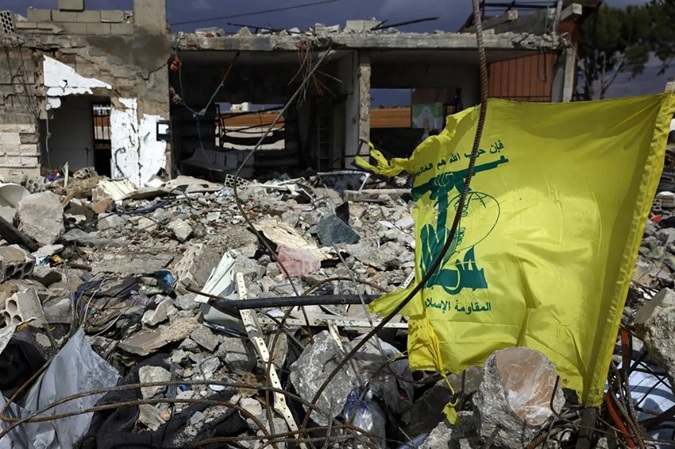
In the meantime, images of death and destruction from the Southern suburbs of Beirut and the border region with Israel flash across the world daily. Hezbollah escalates its rhetoric against the Lebanese. My wife and I made it safely back to Dubai, counting the minutes for Israel’s military campaign to come to an end. Hoping for a sustainable solution with Israel where the interest of Lebanon, for once, will prevail.