I am asked how I can stand up for Jews in general and Israel in particular, now that a United Nations commission of inquiry has concluded that the country allegedly deliberately killed children.
By Oscar Hammerstein
My answer begins with another question: who were the judges, who drafted the charges, and who set the rules of the game? Before treating a report by a UN commission of inquiry as an objective search for the truth, it is wise first to examine the commission itself.
According to the Office of the United Nations High Commissioner for Human Rights' (OHCHR) own official guidelines, members of a UN commission of inquiry must act independently and must not allow themselves to be influenced by governments, NGOs, or other parties; alleged violations by *all* parties must be investigated with equal thoroughness and dispatch, and even the appearance of the commission taking sides must be avoided.
Furthermore, prior public statements must not create the impression that a commission member has already formed an opinion. A sensible rule. It is just a pity that the UN does not adhere to it itself.
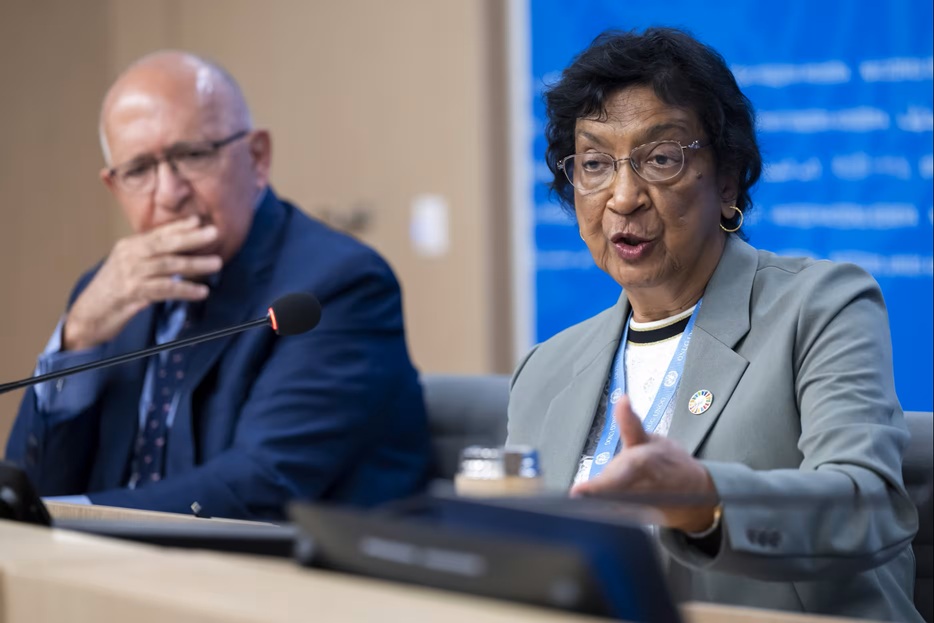
In 2021, Navi Pillay was appointed chair. She had spent years vilifying Israel and comparing it to apartheid-era South Africa. A judge at the International Criminal Court, yes, but—given her long-standing and outspoken views on Israel—an out-and-out anti-Israel activist.
Sitting alongside her was Miloon Kothari, an Indian human rights expert and former UN Special Rapporteur, despite his outspoken views on Israel. In 2022, he spoke of a "Jewish lobby" allegedly controlling social media and publicly questioned why Israel remained a member of the United Nations at all. These statements drew international condemnation, yet he was appointed to the commission anyway—or perhaps precisely for that reason?
And then there is Chris Sidoti, an Australian human rights lawyer and former national human rights commissioner. He became a member of this UN commission of inquiry despite his exceptionally harsh public judgments regarding Israel. He called the Israeli army ‘one of the most criminal armies in the world’ and described the war in Gaza as an ‘Israeli factory for producing terrorism’.
Especially in the case of an inquiry commission expected to project independence and impartiality, such categorical statements raise questions regarding ‘at the very least, the appearance of bias.’ These were not statements that came to light only after their appointment; they were public and well known. These individuals were chosen despite their views already being known.
Those making the appointments knew exactly who they were selecting. Sidoti was even reappointed in November 2025. This places the prosecutor, the judge, and the jury at the same table. Only the accused is missing—and the accused was permitted to respond only after three years of investigation, with a mere ten days to do so.
The mandate is also exceptional. Nowhere else in the entire UN system is there a comparable permanent, country-specific inquiry commission with an unlimited mandate that extends back to events predating its own establishment. Its annual budget is $4.15 million. No other country receives this treatment. Not North Korea. Not Iran. Nor Syria. Only Israel.
This fits into a much older pattern. In 1947, the UN adopted the partition plan for Palestine. When Israel declared its independence and was immediately attacked by five Arab armies, the willingness to defend that very decision evaporated. There were no soldiers—only unarmed observers.
History repeated itself in 1967. Nasser ordered his army into the Sinai, blockaded the Straits of Tiran, and prepared for confrontation. He then demanded the withdrawal of the UN peacekeeping force. No second request was needed: the Blue Helmets packed up and left even more hastily than they had arrived.
The international community had given Israel security guarantees. But when the moment arrived for those guarantees to mean something, they proved not worth the paper they were written on. Israel was left to its own devices.
Anyone wishing to understand why Israel almost invariably finds itself on the losing side at the UN need not resort to conspiracy theories. One has to count. Why does that machine always tilt in the same direction? The answer lies with two voting blocs.
The Organisation of Islamic Cooperation (OIC) comprises 57 member states. Its founding charter explicitly designates Palestine as the "central issue of the Ummah," while prioritising the "liberation of Jerusalem" above any other global crisis.
Then there is the Non-Aligned Movement, which includes 120 countries—62 per cent of all UN member states. At the 1973 Algiers summit, the movement adopted the Palestinian cause as a permanent, unifying political issue. In 1983, it established a permanent ministerial committee on Palestine to coordinate diplomatic pressure on Israel within the United Nations.
Most recently, at the 2024 Kampala summit, these positions were reaffirmed, and member states were instructed to actively champion them in the General Assembly, the Security Council, the Human Rights Council, and at the International Court of Justice.
When 120 votes move as a single bloc, the outcome is determined before the debate has even begun. Countries such as Cambodia, Laos, and Thailand—which have no direct stake in the conflict—vote against Israel as an act of bloc discipline.
The figures illustrate the result. Between 2015 and 2024, the General Assembly adopted 173 resolutions against Israel. By comparison, fewer than half that number—80—were adopted against all other countries in the world combined.
During that same period, Assad killed more than 300,000 of his own citizens in Syria. In Yemen, over 400,000 people lost their lives. In China, more than a million Uyghurs disappeared into camps, while 740,000 Rohingya were murdered or driven out of Myanmar (formerly Burma). The civil war in Sudan claimed hundreds of thousands of lives during an ethnic cleansing campaign carried out by Omar al-Bashir’s RSF.
One democracy with ten million inhabitants was condemned more than twice as often as all these cases combined: Israel.
Moreover, the Human Rights Council has a permanent agenda item—Item 7—reserved for only one country in the world: Israel. Not for North Korea, Syria, China, or Iran.
The World Health Organisation holds an annual debate in which, year after year, only Israel’s health policies are criticised. The UN Commission on the Status of Women adopts exactly one country-specific resolution each year—directed, notably, against the only country in the Middle East where women enjoy full legal rights.
In 1975, the UN General Assembly formally declared Zionism a form of racism. That resolution was revoked in 1991, yet the committees, special rapporteurs, and reporting mechanisms that stemmed from it never disappeared.
Now, read this wretched report against the backdrop of that history: a hundred pages on children in the conflict—and merely four paragraphs on Hamas, an organisation that recruits children as fighters and tunnel workers, hides rockets beneath children's beds, digs tunnel shafts under cribs, and even conceals sniper rifles inside a teddy bear at a school.
Less than four pages are devoted to the Israeli children: 38 children murdered on October 7; 32 children abducted as hostages, including a nine-month-old baby; and children who returned from Gaza stating that they had been mistreated, drugged, and abused. Israel was given ten days to respond to three years’ worth of accusations.
Moreover, the fundamental difference in how Israel’s actions are assessed lies not merely in the casualty figures, but primarily in the interpretation of the circumstances under which those casualties occurred.
Israel maintains that the fatalities result from legitimate security operations against terrorist organisations and that civilian casualties—however tragic—are not the objective of such operations. Conversely, the UN and various human rights organisations argue that, in many instances, the violence used is unlawful or disproportionate, pointing to a pattern that is insufficiently investigated and addressed.
This distinction is crucial. It makes a significant difference whether one begins by asking whether a military operation adequately distinguished between combatants and civilians, or by concluding that any minor killed is, by definition, a victim of deliberate violence against children. It is precisely the latter approach that causes the discussion to go off the rails.
There is broad consensus that armed groups worldwide employ or attempt to recruit minors. This phenomenon is not limited to Africa or Asia; it is also present in the Israeli-Palestinian conflict. While the scale and systematic nature of the practice may be open to debate, its existence is not.
The United Nations itself classifies the "recruitment and use of children" as one of the six grave violations against children in armed conflict. UN reports cite Palestinian armed groups in connection with various forms of such violations. Hamas and Palestinian Islamic Jihad are among the Palestinian groups named in this context.
This is significant because a minor in a conflict zone is not necessarily merely a passive bystander. A child remains a child, both legally and morally, and enjoys special protection; however, this does not alter the fact that armed organisations such as Hamas have been proven to use minors as fighters, couriers, scouts, lookouts, or for other military tasks.
The US Department of Labour has also highlighted the vulnerability of children in Gaza to recruitment by the armed wings of Hamas and Palestinian Islamic Jihad. Even Defence for Children International – Palestine—an organisation highly critical of Israel—identifies child recruitment as a genuine problem and documents instances where Palestinian armed groups utilise minors.
This makes the near-total absence of this phenomenon from a report purporting to examine the situation of children in the conflict all the more remarkable. Anyone truly wishing to protect children cannot focus solely on those firing at them; one must also investigate who arms them, who recruits them, who sends them into combat zones, and who benefits from their presence in areas of active fighting. History provides ample grounds for doing so.
It is well documented that during the Second Intifada, minors were deployed as couriers, messengers, and lookouts, and in some cases became involved in armed attacks and suicide bombings.
At the time, Palestinian armed organisations faced criticism from international human rights groups for these practices. In 2004, Human Rights Watch explicitly called on Palestinian armed groups to immediately cease using children in military attacks after a sixteen-year-old suicide bomber killed three Israeli civilians in Tel Aviv. The phenomenon is therefore not new; what is new, at most, is the persistence with which it is written out of the broader narrative.
This is not an attempt to retroactively label every Palestinian minor killed as a terrorist. That would be as incorrect as it is inhumane. The point is that a credible investigation must make distinctions.
Between civilians and combatants, and between deliberate violence and unintended collateral damage. Between a war crime and a lawful military operation with tragic consequences. Between a child struck at home and a minor deployed by an armed organisation.
Anyone who lumps all these categories together and then infers an underlying intent from the total death toll is not seeking the truth, but engaging in politics. When evaluating a report, one must therefore ask: what was investigated and what was not? Who were the investigators, and what mandate were they given? Which sources did they select, and which facts were barely acknowledged in the narrative?
The United Nations is not a court of law hovering above nations; it is a political organisation of states. Democracies and dictatorships alike have a voice there. Coalitions strike deals. Voting blocs trade support. Countries shield one another. And Israel faces a permanent majority that has institutionalised its political agenda over the course of decades.
It is therefore curious to react with surprise, time and again, when that same machine churns out the same product: a biased mandate; committee members whose past statements raise serious questions about their impartiality; a permanent political majority opposed to Israel; and a predictable outcome.
This is no mere incident. Nor is it a system malfunction. It is the machine itself.