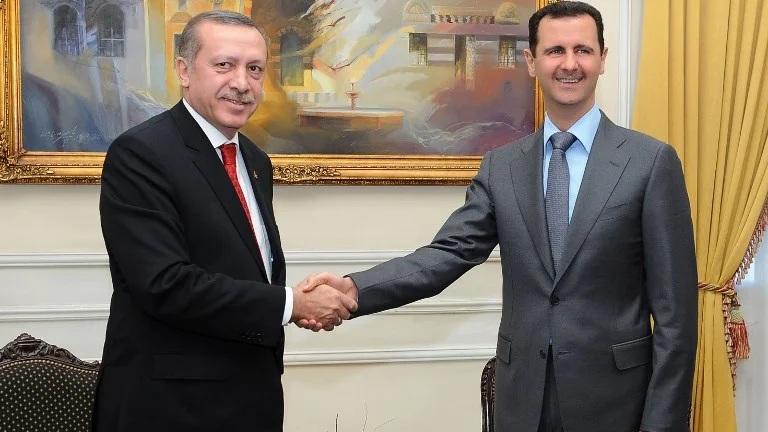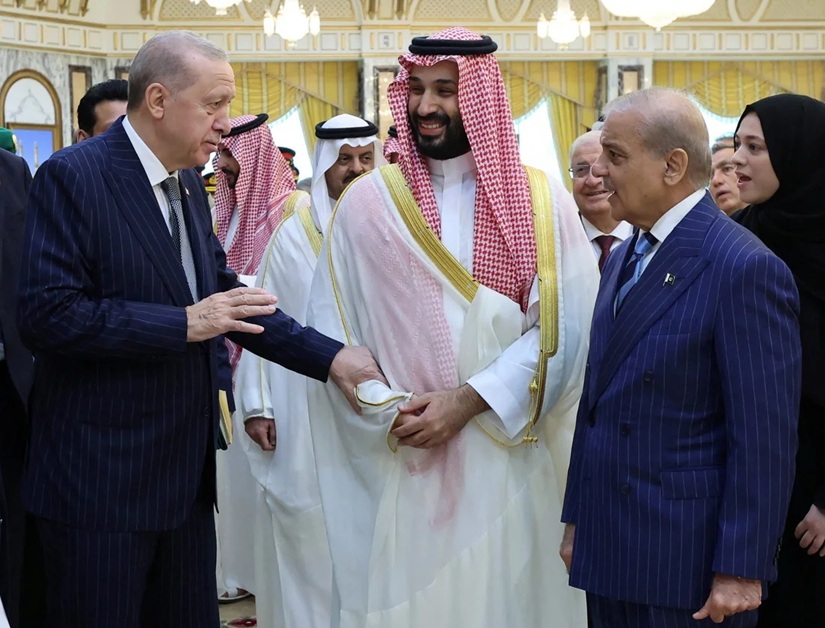
The regional ambitions of three sizeable Sunni-majority (Saudi Arabia, Turkey and Pakistan) countries to facilitate a security umbrella to replicate the NATO model in the wider Middle East can only indicate the growing threats from the Islamic Republic of Iran to regional stability. All three nations have recently experienced hostility from the Iranian regime despite their neutrality. In that context, their decision to join hands creates a new, unprecedented status quo in an increasingly polarised region.
By Farid Shukurlu
While Ankara continues to view Israel as the primary obstacle to Turkey’s regional neo-Ottoman aspirations in Syria, Cyprus, and Somalia, Riyadh and Islamabad still rely on American intervention.
However, Turkey's Foreign Minister (FM) has relationships with the Sunni bloc that are either restrained or damaged by the ongoing conflicts in the region. Having already achieved unity among two major Sunni powers, Turkey’s long-term objective is to align more regional Muslim nations with its security strategy, which seems to be far from reality.
Saudi Arabia may have an unlimited amount of oil wealth and serve as the de facto spiritual capital of the Muslim World (Ummah) due to Mecca and Madina. Still, its reputation in proxy warfare (in Yemen and Iraq) has diminished its public image.
The Pakistani military’s latest adventures against India also exposed its logistical and technological weaknesses. Still, Turkey’s domestic military industry and NATO membership could catalyse the support needed for deeper regional integration. This is especially true given Turkey's expanded footprint across different geographies.
Who are the potential candidates?
Based on ministerial testimony, Egypt is poised to be a model candidate to join the security pact, as it was one of the first negotiators of the agreement before it was publicised. The Sunni sect of Islam dominates the Egyptian population but has historically suffered from the “Muslim Brotherhood” ideology, which is now predominantly observed in capitals like Ankara.
Egypt’s attempt to help end military actions in Gaza at the Sharm El-Sheikh Peace Summit hints that President al-Sissi’s broader vision is to instrumentalise his country’s foreign policy around regional stability and development. This could mean catastrophic news for Jerusalem, whose “passive” peace with Cairo in the Sinai Peninsula would now be challenged by a coalition of unfriendly nations.
Regardless of an active peace treaty with Israel, the Egyptian perspective on the Jewish state has always been negative. While Israel and Egypt have not had major disagreements to disrupt the peace treaty, the Egyptian accession to the Mecca Agreement could alter the outcome and power balance in Israel’s backyard.
The high volatility of Hamas’ disarmament (supported by the Turkish leadership) is another factor worth assessing. From a diplomatic standpoint, Egypt is the traditional mediator between Israel and Hamas; entering this mutual security framework would give Egypt massive leverage.
Another realistic scenario would include Qatar in the Mecca Agreement. Even though Qataris and Saudis have opposing interpretations of their security environment. Islamic practice also differs between the two countries.
For instance, Qatar advances the Muslim Brotherhood narrative. It finances foreign actors to promote this ideology, while the Saudis have halted their involvement in spreading the Wahhabi movement under Crown Prince Muhammad bin Salman (MBS). These two schools of Islam were united in their goals in decolonising the Muslim World from Western powers, but they are still inherently distinctive in hierarchical governance and religious schools.
The Qataris have funneled more than 1.8B $ into the Gaza Strip since the violent civil war in which Hamas declared victory over Fatah. Additionally, they have platformed and hosted several Al-Qaeda, Taliban and Muslim Brotherhood leaders in the country since 2013. The current political shelter of Hamas is in Doha, where the Israeli Defence Forces (IDF) targeted and struck Khaled Mashal in September 2025.
There are numerous ideological reasons why the Qatari interest in a broader Sunni alliance will eventually reflect in their military doctrines:
1) They are one of the biggest fundraisers for the Muslim Brotherhood.
2) It was Qatar that bailed Turkey out of an existential financial crisis in 2018, pledging to donate 15B $ to relieve the US-imposed sanctions.
3) Turkey’s role in facilitating an oxygen pipe for Qatar in the Gulf diplomatic crisis from 2017 to 2021.
To protect the country from Iranian drone and missile attacks, it has no choice but to diversify its defence partnerships with other regional actors. The United States (US) will ultimately remain Qatar’s “Number One” strategic ally, but this does not imply that it is sceptical of the emerging military alliance, whose members are all strategic partners of the US in the region.
How will the moderate Muslim countries react to the Mecca Agreement?
The Abraham Accord countries, notably Bahrain and the UAE, recalibrate their security policies towards Israel. Unlike the Sunni alliance, their long-term commitment to regional security lies within Jerusalem’s periphery. The UAE was the most targeted state during the “Iran War”, where the IRGC focused on shelling infrastructure projects and civilian sites in Emirati cities.
Nevertheless, the Emirati wager on Israel paid off, after the IDF servicemen were deployed to operate the Iron Dome in UAE territory. This was also followed by the Israeli PM Benjamin Netanyahu’s secret visit to Abu Dhabi amid the conflict.
Even more likely is intelligence sharing between Jerusalem and Abu Dhabi. The Emirati forces actively responded to the IRGC attacks, using satellite technology. They carried out strikes on Iran’s Lavan Island, but the relevant authorities did not publicly acknowledge them.
The Emirati vision for the Middle East is to draw closer to Western countries and build a coalition with Israelis and Americans to ensure the safety and security of their country. This policy is reflected in Bahrain’s domestic crackdown on the IRGC operatives.
There is a considerable Shiite population in Bahrain whose sympathy for the Islamist Regime in Iran is undeniable. Against all odds, the ruling family of the Gulf monarchy is Sunni, which complicates the demographic stability in the state.
Nonetheless, the government of Bahrain implemented drastic measures to decapitate Iran’s ability to project influence over its native population. Forty-one arrests were made to signal defiance to Iran and those who refused to raise concerns over Iranian attacks in the region.
While Turkey and Saudi Arabia opted to tolerate or whitewash the IRGC attacks on their soil, Bahrain and the UAE acted in the opposite direction. They prioritised their national security and retaliated, using the help of Israel and the US. The Abraham Accords signatories seem to value their alliance with Israel and integration into the US-led international order more than regional security frameworks.
While tensions between Turkey and Israel remain at an all-time high over the future of Syria, Azerbaijan resembles a bridge to reconcile Baku’s two closest allies. Both countries contributed to the success of the Azerbaijani military in the 2020 and 2023 wars against Armenian separatists.
Building its foreign policy on multilateralism, Azerbaijan has mastered contemporary diplomacy. Its proximity to Turkey, Israel, and Pakistan offers a unique and complex lens on regional military alliances. Geopolitically, this is explainable by the positions of Azerbaijan’s two historical adversaries: Russia and Iran.
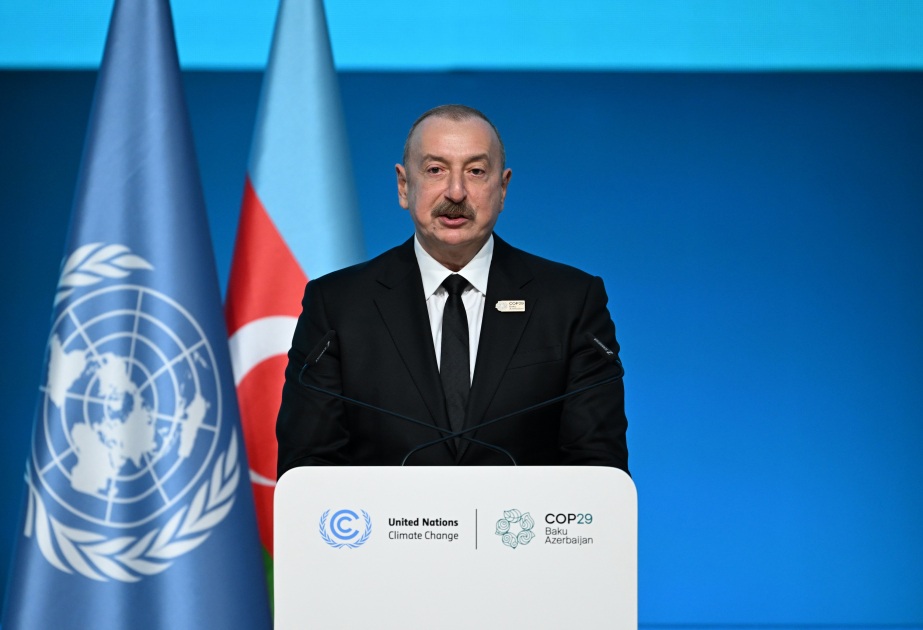
During the Iran War, the Nakhchivan Enclave of Azerbaijan was shelled by the IRGC; in response, Baku severed diplomatic ties with its southern neighbour. President Ilham Aliyev even labelled these attacks on the enclave’s international airport and civilian sites as hideous terrorist acts.
Despite this, relations have since been somehow restored, with a high level of mistrust of IRGC activity within Azerbaijan, where the State Security Services (DTX) have arrested individuals for plotting terrorist attacks on the Israeli Embassy, Jewish Community Centres, and the Baku-Tbilisi-Jeyhan pipeline.
As much as Azerbaijan is cautious about Iran’s hostility toward the country, it cannot enter military frameworks with states that it already has military alliances with. The Shusha Declaration institutionalised a collective security framework between Azerbaijan and Turkey, establishing that a threat to the sovereignty, territorial integrity or security of either state constitutes a matter of mutual concern and may trigger coordinated political and military responses from both Ankara and Baku.
The Future of the Trilateral Defence Pact.
The Mecca Accords aim to establish a Sunni NATO led by three powerful military forces, each offering different dimensions to the alliance. On one hand, Turkey has functional domestic production capabilities and is the second-largest active military in NATO. On the other hand, the Kingdom of Saudi Arabia’s fleet, after acquiring 48 F-35 fighter jets, brings advanced military technology and financial leverage to the pact.
When it comes to Pakistan, it is the only nuclear-armed Muslim nation that also has the manpower and will to broaden the alliance. Pakistani FM Ishaq Dar has confirmed interest from six to seven Muslim-majority countries in joining the Mecca Defence Agreement, potentially expanding the arrangement beyond its current members.
Dar made the statement after his country became the agreement's secretariat for three years. He also said Bangladesh has made a recent request to inquire about joining the defence framework.
Central Asian countries like Uzbekistan could also consider joining the agreement because of their close relations with Turkey and Saudi Arabia under President Shavkat Mirziyoyev, whose management transformed the country into a more Islamic society.
Moderate Muslim states' positions on the Mecca Defence Pact are likely to remain highly differentiated and driven by individual strategic calculations. For the UAE and Azerbaijan, participation in the framework could risk sending negative signals to Israel, with which both states maintain significant strategic relationships.
Moreover, despite direct and indirect Iranian pressure, neither Abu Dhabi nor Baku appears to regard the Mecca framework as sufficient to provide the security guarantees needed to protect their respective national interests. Instead, both states have pursued more diversified security partnerships and bilateral defence arrangements.
This scepticism is consistent with Sinan Ciddi and Ahmad Sharawi’s assessment that “The Mecca Defence Pact Looks Toothless. That Doesn’t Mean It’s Harmless,” particularly given the absence of an evident collective response following subsequent Iranian-backed attacks on Saudi Arabia.